
European Desalination Society Conference in Liverpool: Charting a Roadmap for a Water-Resilient Future Through the Convergence of Technology and Industry
The European Desalination Society (EDS) has announced that it will hold its upcoming conference and exhibition under the theme “Water Resilience: Desalination, Recycling and Clean Water Solutions” in May 2027 (4–7 May 2027) in Liverpool, United Kingdom. Focusing on addressing pressures arising from climate change, urbanization and growing industrial demand, the specialist gathering aims to present innovative approaches to integrating desalination and water reuse systems into the water-resource portfolios of regions around the world.
Drawing on an announcement published by WaterBriefing, this report examines the technological dimensions and trends of interest at EDS 2027.
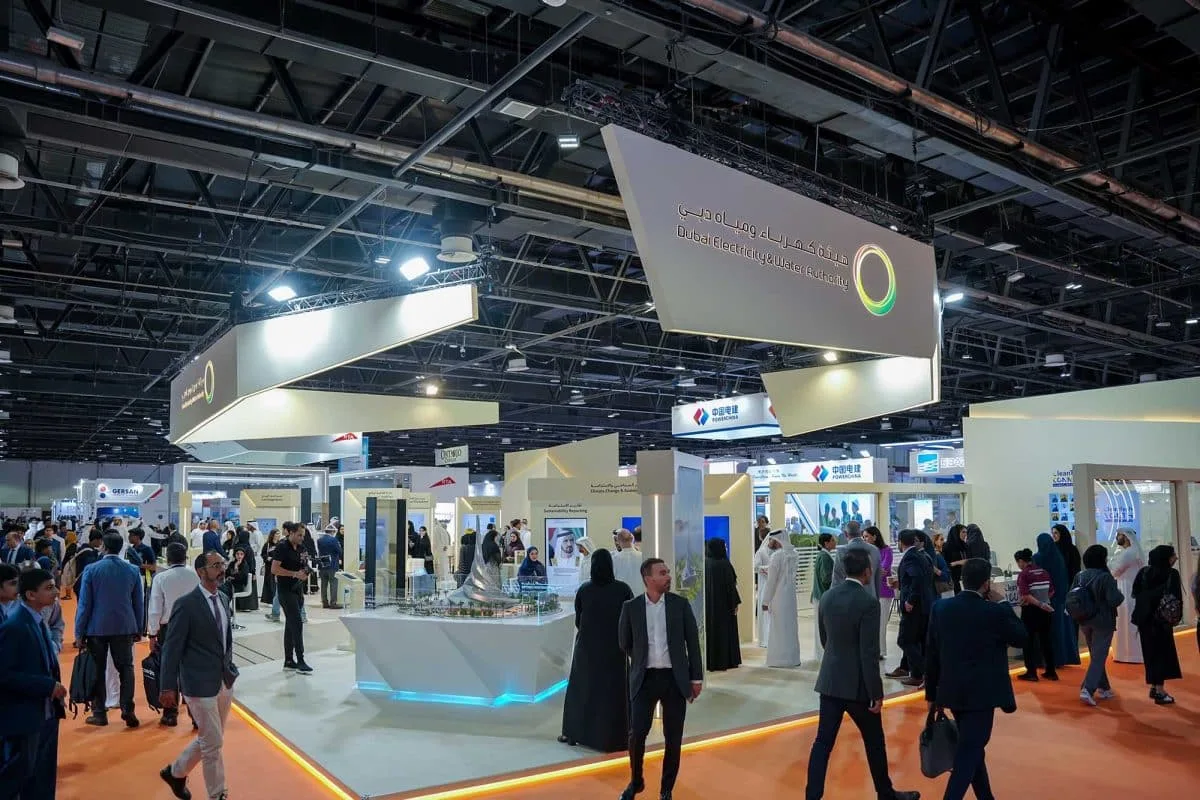
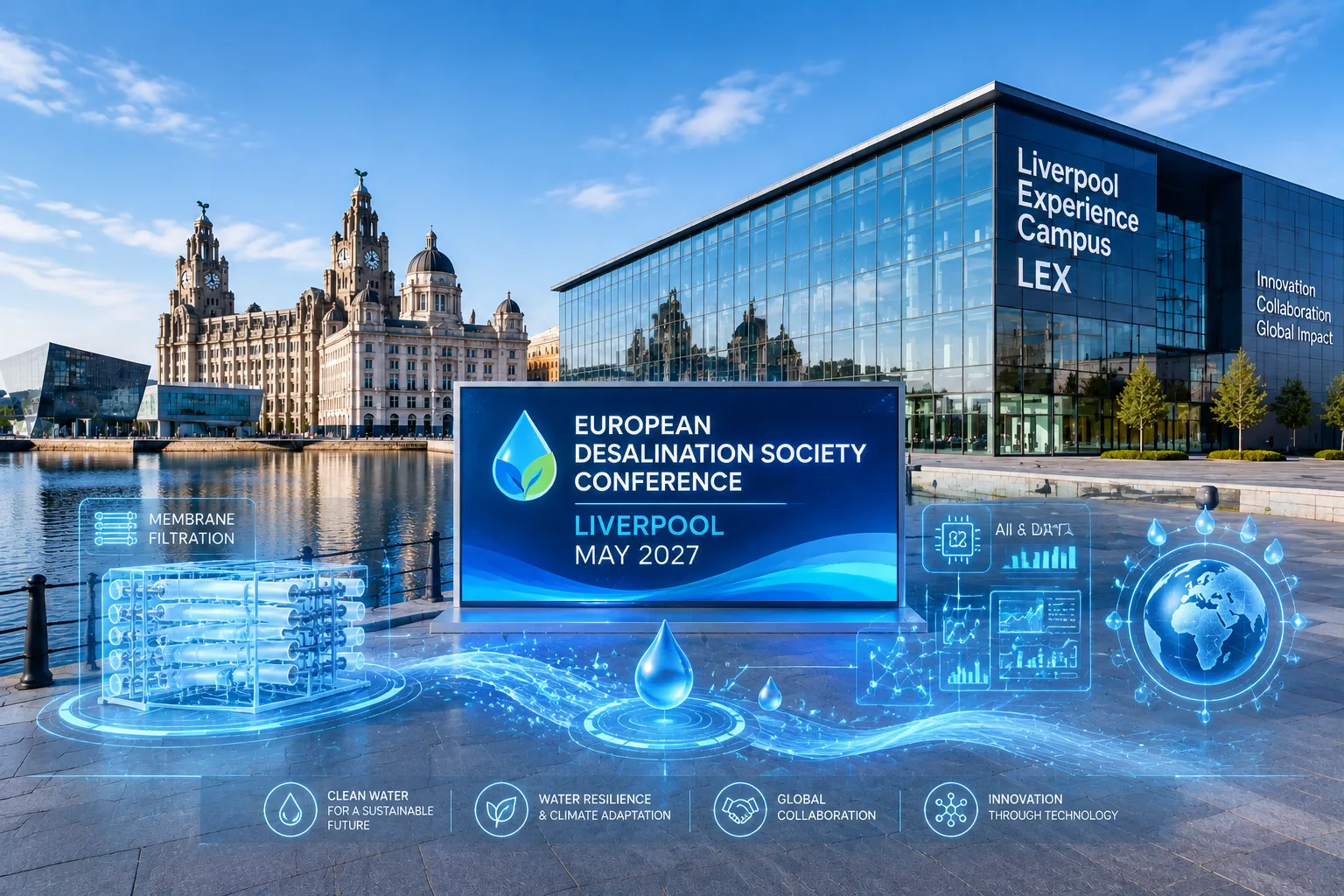
EDS 2027 will take place at Liverpool Experience Campus (LEX) from 4 to 7 May 2027, focusing on resilience, reuse and desalination.
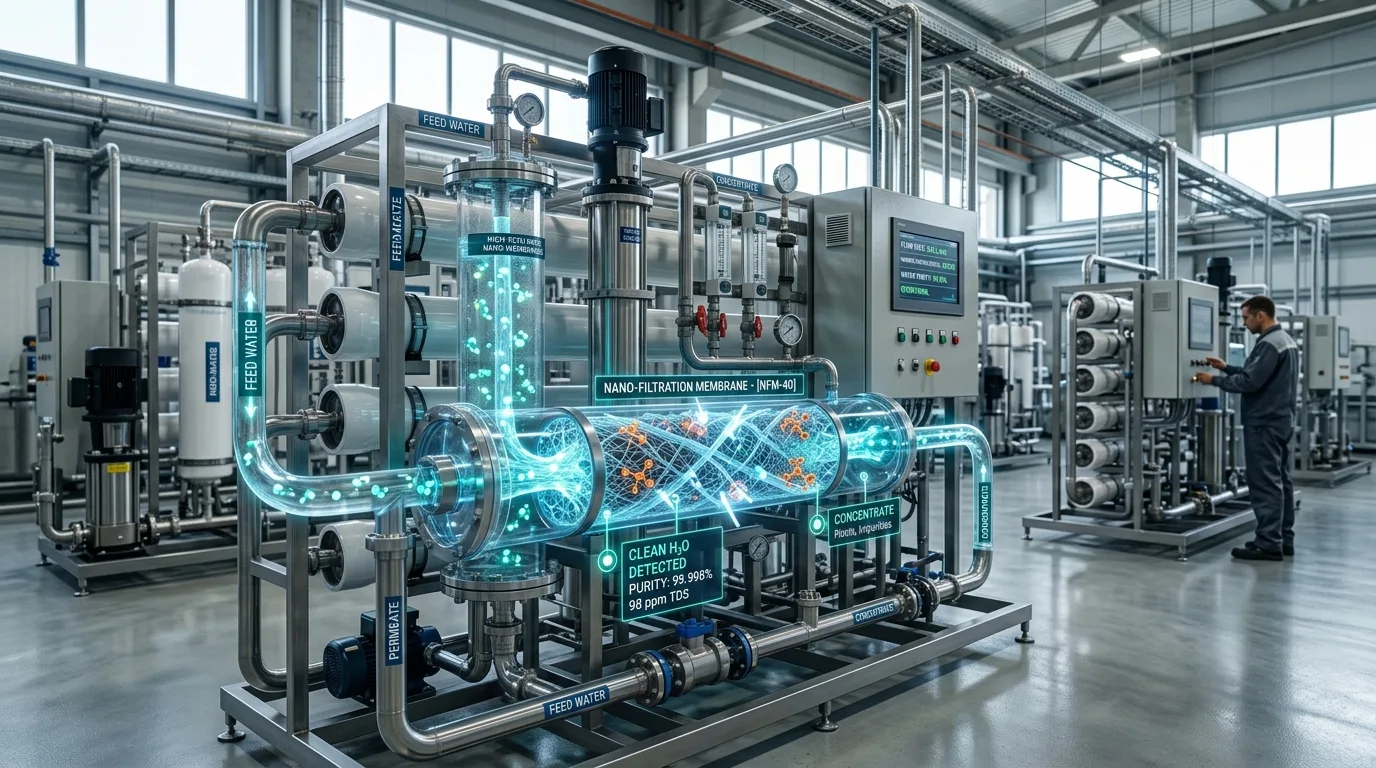
Emphasis on developing next-generation membranes, nanofiltration, energy recovery, advanced monitoring systems and artificial intelligence to optimize treatment and desalination operations.
Addressing growing water demand from energy-intensive and emerging industries, including data centers, green hydrogen and mining.
The European Desalination Society has announced that its upcoming conference and exhibition, themed “Water Resilience: desalination, recycling and clean water solutions,” will be held at Liverpool Experience Campus (LEX) in the United Kingdom from 4 to 7 May 2027. The event will bring together leading industry experts and members of the academic community to discuss and exchange views on sustainable approaches to tackling water scarcity at this multipurpose venue on Liverpool’s historic waterfront.
Climate change, population growth and urbanization have placed unprecedented pressure on freshwater resources, leaving many countries across Europe and the world facing fundamental challenges in ensuring water security. As conventional water resources come under increasing strain, desalination and wastewater recycling systems have emerged as important pillars of a diverse and resilient water-resource portfolio. With water stress intensifying and access to water resources declining in parts of Europe, as noted in reports on the state of water in Europe, the redesign of supply infrastructure is receiving increasing attention.
Desalination technology can provide a sustainable source independent of rainfall, particularly in coastal areas, and reduce reliance on precipitation-dependent reserves. Water recycling can complete this cycle by treating effluent and producing alternative water supplies for industrial, agricultural and other non-potable uses—and, where appropriate, for potable use. Combining desalination and water reuse diversifies supply structures and strengthens system resilience to drought and climate variability.
Advances in reverse osmosis (RO), nanofiltration (NF) and other membrane processes and advanced treatment technologies have improved process efficiency, reliability and output water quality, while expanding the range of feedwaters that can be treated. This issue is also considered by analysts in assessments of the global water recycling and reuse market. Innovations in next-generation membranes, energy recovery systems, advanced monitoring, artificial intelligence and digital twins are also transforming how desalination and reuse facilities are designed, operated and optimized.
The growth of new industries has created new requirements as well as opportunities in water management. EDS 2027 will examine desalination, water reuse and advanced treatment solutions for sectors such as Amazon data centers and other data centers, green hydrogen production, mining and other water-intensive sectors. This includes opportunities associated with high-recovery treatment systems and the recovery of valuable resources and salts from brine streams.
The event’s central program includes several key components:
Global knowledge exchange: Bringing together researchers, water and wastewater utilities, technology suppliers, regulators, policymakers, consultants and industrial water users to share experience and explore the practical implementation of solutions.
Keynote speakers: Insights into leading research and best practices from experts in desalination and water-resource management.
Specialist panels: Discussions focused on the latest advances in desalination technology, water-recycling methods and integrated water-resource management.
Workshops and networking: Interactive workshops and opportunities for interdisciplinary collaboration among professionals from different parts of industry and academia.
The European Desalination Society has invited researchers, municipal service companies, technology developers, regulatory bodies and major industrial water users to join the international event in the historic city of Liverpool. By bringing together academic research, field experience and policy perspectives, the conference provides a platform for established frameworks to be challenged and for the role of clean-water solutions in shaping a sustainable future to be assessed.
Exclusive Analysis by the Water Insight Hub Team
The focus of EDS 2027 on resilience may signal a stronger multi-source approach in water policymaking across the MENA Region and the world—one in which the strategic use of unconventional water resources replaces exclusive reliance on surface water and groundwater. As the report notes, intensifying climate variability has prompted countries to reconsider their water-supply structures. From this perspective, contemporary technical and policy discourse suggests that the long-term sustainability of water resources depends on diversifying infrastructure and integrating desalination and advanced treatment technologies. This is reflected in international institutions’ warnings about the risks of one-dimensional resource management, as discussed in analyses of water bankruptcy in the UN report.
In terms of its links with emerging branches of water technology, the conference announcement’s references to artificial intelligence applications, digital-twin technologies and high-recovery processes point to the growing importance of improving operational efficiency. The challenge for desalination systems is no longer limited to separating salts; managing energy consumption and controlling operating expenditure (OPEX) have become priorities. Integrating nanofiltration methods with reverse osmosis, alongside machine-learning-based monitoring to predict and control membrane fouling, could improve system performance and strengthen the economic and environmental case for projects compared with conventional methods.
The event’s particular attention to high-demand industrial uses, such as data centers and green hydrogen production facilities, points to the growing convergence of the energy and water economies. The news indicates that the expansion of computing infrastructure and clean energy is creating new water demand, a trend that could place further pressure on existing water-supply infrastructure. This suggests that industries pursuing the energy transition will rely more than ever on establishing closed-loop water-recycling systems and on-site desalination to maintain production continuity while containing the pressure that demand places on neighboring communities’ drinking-water resources.
Across the Middle East and North Africa (MENA), the issues raised at this conference take on particular strategic significance. The MENA Region is one of the world’s largest centers of desalination capacity; nevertheless, challenges related to energy intensity and the environmental consequences of brine discharge into semi-enclosed bodies of water remain. The conference’s emphasis on recovering resources from brine (brine mining) and achieving Zero Liquid Discharge (ZLD) could provide useful technical frameworks for moving the region toward more sustainable desalination and reducing ecological impacts.
The technical and policy messages of this gathering are also relevant to Iran. Discussions of resource diversification and the development of water reuse suggest that achieving water resilience does not necessarily have to depend on costly transfers of seawater to the central plateau. Alongside water-transfer schemes, this approach could be considered as one option for reducing pressure on water resources and limiting reliance on long-distance transfers. A focus on advanced reuse of industrial and municipal wastewater near domestic consumption centers, combined with smart monitoring equipment and energy-efficient membrane technologies along the coast, could offer a way to improve the sustainability of water-resource management in the country.
 Official Email of the Water Insight Hub: