
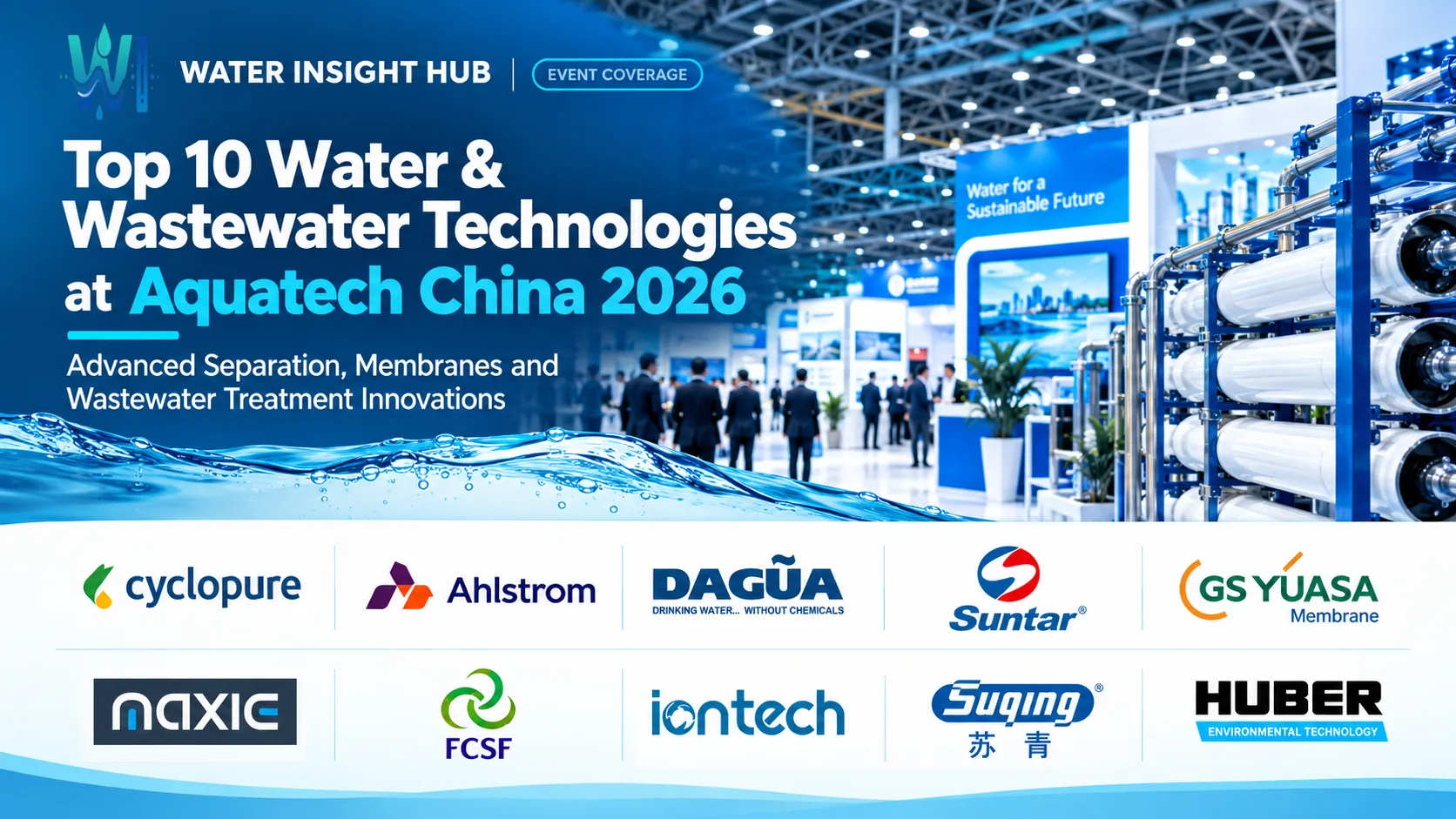
Top 10 Technologies at Aquatech China 2026 in Advanced Water and Wastewater Treatment and Management
Prominent Separation Innovations, Membranes, and Effluent Treatment at Aquatech China 2026
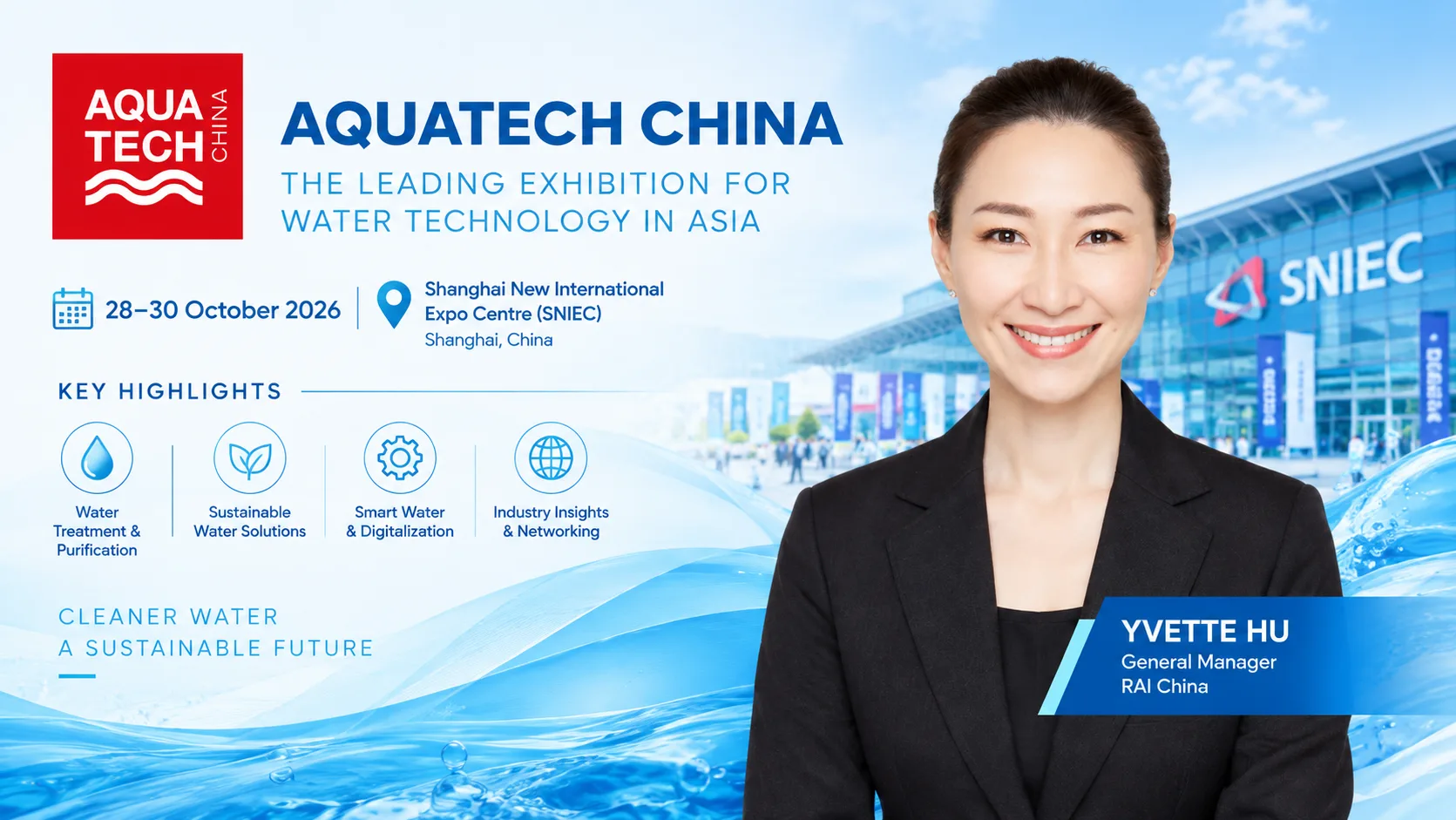
The Aquatech China 2026 exhibition showcased a suite of cutting-edge engineering solutions designed to tackle the growing challenges of pollution, wastewater reuse, and industrial water supply. This comprehensive report evaluates 10 prominent technologies, including selective adsorbents for persistent pollutants, advanced membranes, and electro-adsorptive filtration systems. These developments demonstrate how precise engineering solutions are rapidly superseding conventional and costly legacy methods.
The development of cyclodextrin-based selective adsorbents has enabled the targeted removal of highly persistent PFAS contaminants without relying exclusively on traditional activated carbon.
Integrating electrostatic mechanisms with mechanical separation in filtration effectively facilitates the entrapment of pathogens and nanoparticles.
Simultaneous utilization of ozone microbubbles and ultrafiltration membranes controls membrane fouling rates and reduces chemical cleaning costs to a minimum.
The transition of ultrapure water production systems toward CEDI technology eliminates the necessity for hazardous acid and caustic chemical regeneration at industrial facilities.
In recent years, the water and wastewater industry has confronted a series of intricate challenges: from the elimination of emerging contaminants and the treatment of recalcitrant industrial effluents to reducing energy footprints, enhancing equipment reliability, and supplying ultrapure water for high-tech manufacturing. Under these demands, emerging technologies do not merely signify building more complex systems; rather, they must resolve specific operational hurdles with higher efficiency, reduced expenditure, or fewer physical constraints—an approach fully aligned with the fundamentals of value engineering in vital water infrastructure.
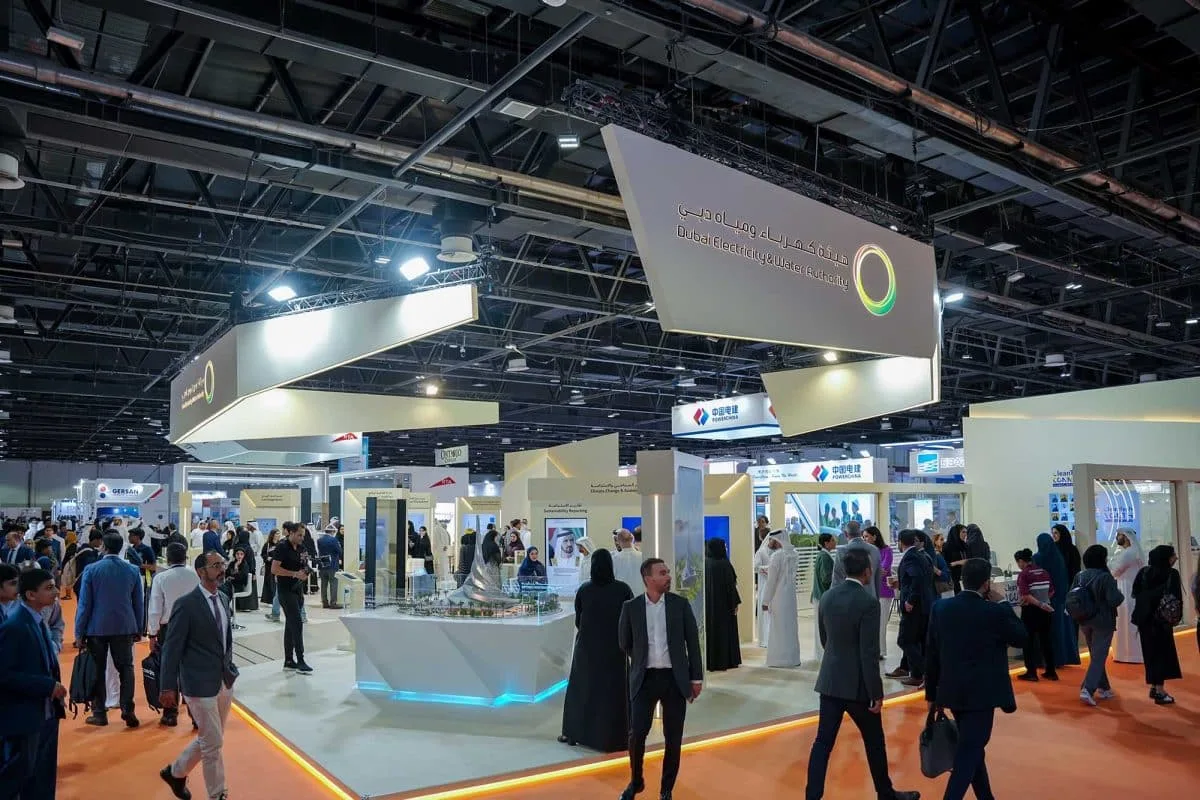
The Aquatech China 2026 international exhibition serves as a key platform for discovering products and solutions from front-running organizations across the sector. Among the exhibitors, a curated group of technologies stands out due to distinct methodologies in treatment, separation, or hydraulic stream management, revealing dynamic dynamics within the Chinese water and wastewater technology landscape.
This report highlights 10 notable technologies—ranging from advanced media for persistent chemical removal to selective membranes, ultrapure water generation, and integrated wastewater treatment units. This selection does not constitute a rigid ranking of the expo’s exhibits, but rather underscores solution distinctiveness and practical importance across the water treatment industry.
1. Advanced Adsorbent for PFAS Removal: DEXSORB Technology by Cyclopure
Exhibitor: Cyclopure | Booth E5A41
Per- and polyfluoroalkyl substances, universally abbreviated as PFAS, are a class of persistent chemical compounds that represent one of today’s most daunting water quality challenges. Managing and capturing these compounds has assumed a central position among emerging pollutants in water resource management, mandating high-kinetics adsorption solutions.
Deploying its DEXSORB technology, Cyclopure utilizes an engineered adsorbent derived from cyclodextrin polymer frameworks. This medium was formulated specifically to target recalcitrant contaminants. Unlike conventional granular activated carbon setups, this matrix is structured to maximize selectivity toward target fluorinated compounds, keeping pace with regulatory pressures surrounding persistent “forever chemicals” where spent media lifecycle assessment is vital.
The significance of this methodology lies in the realization that PFAS remediation cannot be treated as simple passthrough filtration; the capacity for adsorbent regeneration and desorption under controlled operational regimes significantly curtails total lifecycle expenditures. Nonetheless, overall removal efficiencies and bottom-line costs remain tied to specific congener profiles, background water matrices, and hydraulic loading parameters.
2. Electro-Adsorptive Filtration: Disruptor Technology by Ahlstrom
Exhibitor: Ahlstrom | Booth E6B10
In standard depth or surface filtration, separation performance largely depends on pore size ratings and the physical dimensions of suspended matter. However, sub-micron colloidal particles and complex contaminants often evade capture when relying solely on physical sieve barriers.
Finnish manufacturer Ahlstrom leverages an electro-adsorptive media structure with its Disruptor technology. In this configuration, mechanical straining is augmented by strong electrokinetic interactions (zeta potential) to capture fine sub-micron particulates, viruses, and select microbial agents. Consequently, retention efficacy is decoupled from narrow pore geometry alone, permitting higher flux rates within compact footprints.
This paradigm is advantageous for high-flow installations requiring pathogen control without excessive operational head loss. While baseline performance varies depending on water chemistry and target challenges, the value of Disruptor within this report is demonstrating a complementary design framework to classic filtration media.
3. Combined Ozone and Ultrafiltration: DaguaFlo Process by Dagua Water
Exhibitor: Dagua Water | Booth E6A33
In municipal and industrial water treatment, ozone operates as a powerful oxidant for color removal and disinfection, whereas ultrafiltration (UF) membranes act as reliable physical barriers against suspended solids, turbidity, and colloids.
Dagua Water consolidates both operations into a unified system via its DaguaFlo process. A standout characteristic of this architecture is deploying ozone microbubbles during membrane backwash and hydraulic cycles, which counteracts standard membrane fouling mechanisms and impedes cake-layer maturation.
Membrane fouling typically accelerates transmembrane pressure (TMP) spikes, suppresses permeate flux, and dictates aggressive chemical cleaning in place (CIP). Coupling oxidative cleaning directly with ultrafiltration enhances membrane structural stability and diminishes dependence on corrosive cleaning agents. Nevertheless, chemical and water recovery metrics should be validated against each plant’s specific influent profile.
4. Ceramic Membranes and Nanofiltration: Solutions by Suntar Environmental Technology
Exhibitor: Suntar Environmental Technology | Booth E6E31
Membranes represent fundamental structural components of modern process engineering. Ceramic membranes, renowned for high mechanical durability, broad pH tolerance, and thermal stability, are exceptionally well-suited for harsh industrial effluent streams—attributes consistently recognized in ceramic membrane developments for industrial purification and treatment.
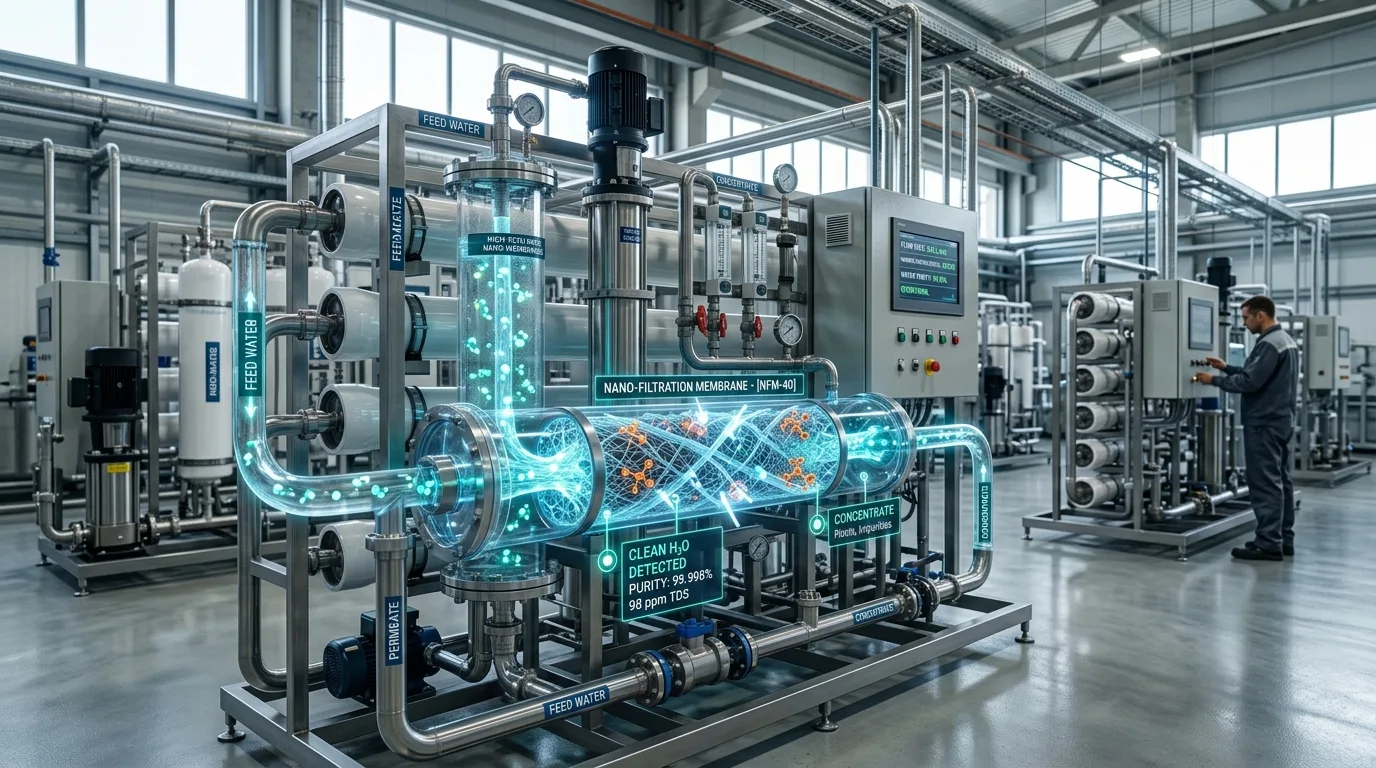
Suntar Environmental Technology delivers systems that combine ceramic membranes and nanofiltration (NF) elements, permitting customized process designs tailored to specific raw water qualities. Nanofiltration enhances recovery efficiency via targeted multivalent ion separation and low-molecular-weight organic compound rejection.
These configurations bolster effluent recycling flexibility across manufacturing plants. It should be noted that ceramic and polymeric membranes are rarely direct functional rivals; choice of material hinges upon capital expenditure constraints and chemical aggression within the waste stream.
5. Flat-Sheet Membranes and Submerged Modules: GS Yuasa Membrane Systems
Exhibitor: GS Yuasa Membrane | Booth E6B36
Membrane module engineering is critical for governing fluid dynamics, shear rates, and stagnant sludge deposition. Even high-grade membrane materials suffer rapid operational decline if module hydrodynamics are improperly balanced.
Submerged flat-sheet membrane panels engineered by Japan’s GS Yuasa are deployed directly within aeration basins and membrane bioreactor (MBR) tanks. Fluid passage through evenly spaced parallel leaves combined with uniform coarse bubble scouring maintains stable permeate extraction while extending service intervals.
Accurate technical appraisal of flat-sheet systems necessitates a balanced examination of specific aeration energy consumption, net flux, and module longevity under elevated mixed liquor suspended solids (MLSS) regimes.
6. Hollow Fiber Nanofiltration: Changzhou Maxie Membrane Technology
Exhibitor: Changzhou Maxie Membrane Technology | Booth E7F23
Hollow fiber geometries provide high packing density and elevated active surface areas within compact footprints. Coupling this geometry with nanofiltration layer properties delivers precise separation among multivalent and monovalent ionic species.
Chinese manufacturer Changzhou Maxie Membrane Technology holds proprietary patents for hollow fiber NF modules designed to selectively permeate monovalent ions such as sodium and chloride while rejecting divalent species like calcium, magnesium, and sulfate. This selective fractionation opens novel pathways for resource recovery, brine fractionation, and effluent demineralization in chemical and mining facilities.
This targeted ionic separation mitigates the loss of valuable process components and curbs sludge generation downstream, though commercial installations require strict upstream biofouling prevention and osmotic pressure control.
7. ePTFE Membranes and Membrane Distillation: Dongyang Hanchen Membrane Technology
Exhibitor: Dongyang Hanchen Membrane Technology | Booth E6E13
Expanded polytetrafluoroethylene (ePTFE) substrates are known for high chemical inertness, high thermal stability, and uniform hydrophobicity. Dongyang Hanchen Membrane Technology, based in Dongyang, China, has commercialized dedicated hollow fiber and tubular configurations aimed at Membrane Distillation (MD) installations.
Membrane distillation relies on a thermal gradient maintained across a hydrophobic microporous barrier, driving vapor transfer while completely barring liquid passage. Operating without hyperbaric hydraulic pressures, the process recovers high-grade distillate from concentrated brine discharges, zero-liquid discharge (ZLD) slipstreams, and mining effluents.
The integration of membrane distillation networks with industrial low-grade waste heat marks a major advancement in thermal economy for hyper-saline effluent systems. However, pore wetting risks triggered by trace organic surfactants require stringent pretreatment controls.
8. Continuous Electrodeionization: CEDI Systems by Iontech Beijing Technologies
Exhibitor: Iontech Beijing Technologies | Booth E6E03
Demanding industries—including semiconductor fabrication, pharmaceuticals, and subcritical power generation—mandate ultrapure water (UPW) characterized by electrical conductivity below 0.1 µS/cm. Legacy mixed-bed ion exchangers rely on hazardous bulk regenerants (acid and caustic solutions), which introduce environmental hazards and periodic system shutdowns.
Continuous Electrodeionization (CEDI) systems from Iontech Beijing merge selective ion-exchange membranes, packed resin beds, and applied DC electrical fields. In this continuous process, water molecules are disassociated into hydrogen and hydroxyl ions, continuously regenerating the ion-exchange resin matrix without requiring chemical reagents.
This automated flow scheme substantially depresses recurring OPEX downstream of primary reverse osmosis (RO) passes. Maintaining rigorous feed quality standards to prevent scaling and organic foulant accumulation across resin beds remains an imperative operational requirement.
9. Industrial Ion Exchange Resins: Jiangsu Suqing Water Treatment Engineering Group
Exhibitor: Jiangsu Suqing Water Treatment Engineering Group | Booth E6B26
Polymeric crosslinked resin bead networks remain an indispensable cornerstone for targeted deionization, softening, and toxic heavy metal scavenging from process streams. Jiangsu Suqing Water Treatment Engineering Group presented new-generation macroporous resins engineered with optimized matrix crosslinking to resist osmotic shocks and dynamic mechanical stresses.
Operating via chemical stoichiometric exchange, these active sites replace multivalent hardness cations and toxic anions (such as arsenic or heavy metals) with benign counter-ions. These resilient resin beds serve as foundational building blocks for water loop stabilization across heavy manufacturing.
Dynamic breakthrough capacity, operational bed volume lifespans, and regenerate wash-water recycle efficiency are crucial parameters dictating resin implementation in high-capacity treatment plants.
10. Integrated Mechanical Pretreatment: Advanced Systems by HUBER
Exhibitor: HUBER Environmental Technology | Booth E6B12
Mechanical headworks and primary screening represent the frontline defense for preserving sensitive secondary biological aerators, pumping assemblies, and membrane infrastructure. Unchecked ingress of coarse debris, grit, and fibrous hair precipitates severe mechanical degradation within active sludge tanks.
German environmental equipment manufacturer HUBER demonstrated packaged configurations including its ROTAMAT and STEP SCREEN families. These systems integrate micro-screening, grit separation, washing, and screenings compaction inside hermetically sealed units.
Deploying advanced mechanical headworks equipped with odor control and reliable removal of screenings above 2 mm can diminish downstream pump and rotating equipment wear by up to 40 percent. Such physical barriers are paramount for guaranteeing baseline plant reliability.
These 10 technology profiles demonstrate that water innovations are evolving to address site-specific regulatory limits, discharge criteria, and resource recovery objectives. Plant engineers and industrial decision-makers must evaluate robust empirical operating metrics rather than superficial marketing claims when making capital procurement decisions.
Dedicated Analysis by the Water Insight Hub Team
A systematic appraisal of technological vectors presented at Aquatech China 2026 demonstrates that the core paradigm of the international water sector has shifted decisively from “treatment for disposal” toward “selective fractionation for resource valorization and circular economic preservation.” The proliferation of specialized nanostructured media—such as Cyclopure’s targeted cyclodextrin polymers for PFAS species, paired alongside Maxie’s hollow-fiber nanofiltration elements—verifies that resilient chemical compounds can no longer be effectively tackled through legacy activated carbon adsorption or conventional coagulation-sedimentation. Furthermore, continuous efficiency refinements in Iontech’s CEDI modules and Suqing’s ion-exchange matrices underline that high-tech manufacturing growth, notably in wafer fabrication and semiconductor infrastructure, rests entirely on reliable ultrapure water access. Consequently, module scalability and operational flexibility will increasingly dictate the resilience of global industrial supply chains.
From an advanced systems perspective, water technology has entered a phase of non-linear process integration. Unit operations are no longer confined to isolated stages; instead, they converge into hybridized platforms such as DaguaFlo (in-situ ozonation coupled with ultrafiltration). By bridging advanced oxidation directly with physical barriers, these developments curb chemical reagent consumption and impede irreversible biofouling. Concurrently, electro-adsorptive filtration by Ahlstrom and hydrophobic ePTFE membranes engineered for membrane distillation bridge the gap between traditional membrane desalination and Zero Liquid Discharge (ZLD) configurations, preventing exergy losses across thermal-mechanical chains.
Across the Middle East and North Africa (MENA) region, acute imperatives to treat hyper-saline brines, mitigate desalination energy intensity, and regulate thermal pollution mandate the swift assimilation of these advanced tools. Given the intense hydrocarbon and scaling loads characteristic of MENA’s oil and gas produced waters, resilient ceramic membranes from Suntar and waste-heat-driven membrane distillation systems from Dongyang Hanchen present tremendous potential for heavy brine reclamation. Gulf Cooperation Council (GCC) entities, currently deploying massive capital into petrochemical downstream complexes, can harness hollow-fiber nanofiltration for selective divalent ion removal, substantially extending the lifespan of sea- and brackish-water desalination membranes while trimming operating expenses across thermal and membrane installations.
For the broader MENA region, confronting historic deficits in groundwater reserves, critical aquifer depletion, and the mounting toxicity of expanding industrial corridors, these showcased innovations deliver strategic utility. The discharge of persistent chemical compounds into fragile basins necessitates modernizing regional primary infrastructure using compact mechanical headworks like HUBER’s assemblies and catalytic oxidation barriers. Heavy metallurgical and mining operations distributed throughout the arid zones of the MENA territory can preserve more than 85% of their water inventories by pairing fouling-tolerant membranes with selective nanofiltration schemes. Enforcing structured, science-based effluent regeneration loops rather than pursuing high-cost, long-distance inter-basin water transfers provides industrial water security without burdening delicate fossil aquifers—a strategic doctrine thoroughly articulated across analytical assessments published by the Water Insight Hub as fundamental to lasting resource security.
Looking toward the end of the current decade, the water engineering sector will center on self-cleaning architectures, minimized structural carbon footprints, and reduced dependence on non-renewable chemical commodities. A declining reliance on bulk chemical regenerants in CEDI units, integrated backwash recovery inside membrane bioreactors, and real-time hydraulic optimization via smart algorithms point to fourth-generation water infrastructure. Sector executives and water policy leaders must realize that technological procurement alone cannot solve operational bottlenecks: intelligent site-specific hydrodynamic adaptation, workforce technical upskilling, and thorough lifecycle expenditure modeling are the indispensable pillars for ecological and economic project viability in the years ahead.
 Official Email of the Water Insight Hub: