
Convergence of Global Giants and the Chinese Supply Chain at WETEX: The Roadmap for Transitioning to Low-Carbon Desalination and Smart Water Management
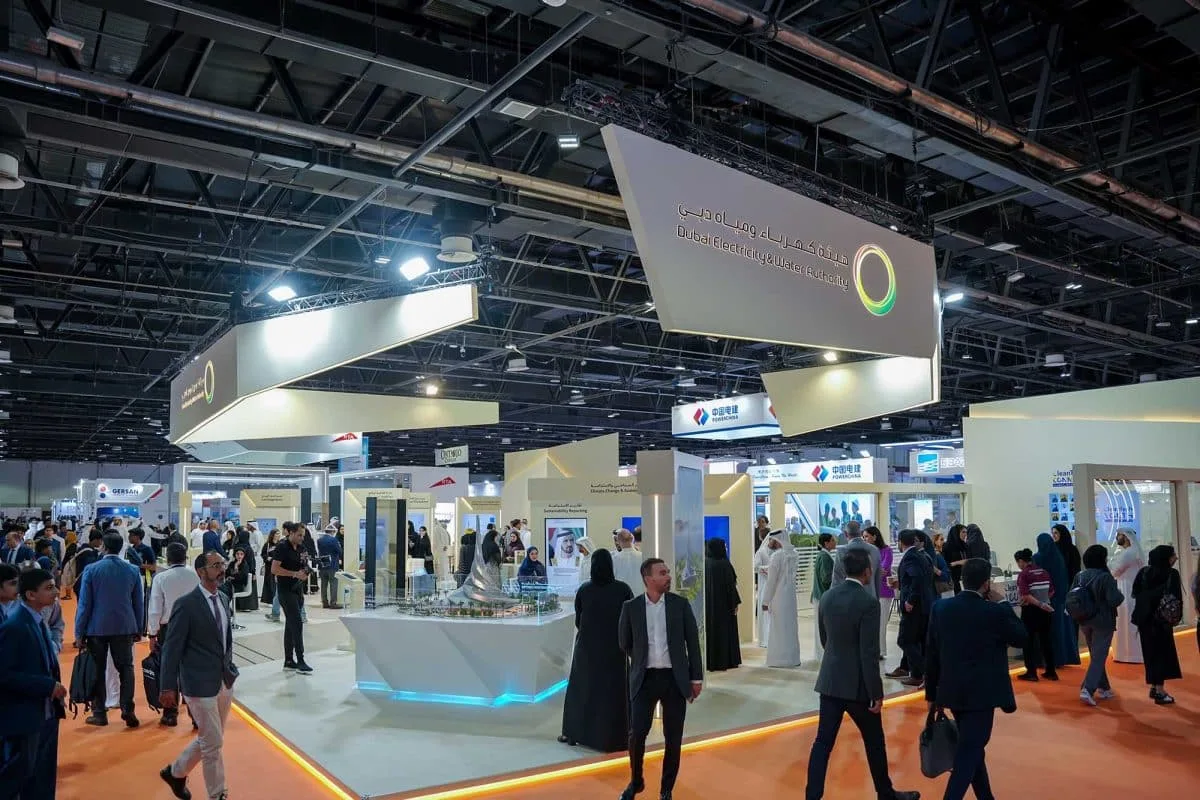
As the region’s largest infrastructure gathering, WETEX 2026 is hosting 7 international pavilions from around the globe to share governance and industrial solutions at the core of the Middle East’s drought crisis. The exhibition is scheduled to take place from October 20 to 22. According to reports released during the event, the paradigm shift in the water industry from traditional management toward the integration of artificial intelligence systems and zero-carbon processes stands as the core theme of this gathering. The event provides a direct platform for technology diplomacy and facilitates public-private collaboration. The substantial presence of specialized membrane manufacturers, solar desalination developers, and engineering giants has transformed Dubai into a proving ground for advanced wastewater management and non-revenue water reduction models. Investors and water sector decision-makers view WETEX 2026 as a definitive roadmap for elevating utility efficiency through the end of the current decade.
- Participation of 7 international pavilions led by Germany, Italy, and China to transfer advanced wastewater treatment technologies and optimize distribution networks.
- Introduction of next-generation solar desalination megaprojects aimed at eliminating the carbon footprint in Middle Eastern desalination industries by leading international companies.
- A shift from conventional sensors toward artificial intelligence algorithms and IoT to predict and prevent urban network leaks before failures occur.
- Showcasing the engineering capabilities and cost-competitiveness of Chinese manufacturers in filtration supply chains, industrial reverse osmosis membranes, and antifouling polymers.
WETEX 2026 is hosting 7 international pavilions representing diverse nations worldwide. These pavilions serve as dedicated platforms for presenting national and public-sector solutions in sustainable water, energy, and environmental management. Below is an overview of the participating countries and specialized profiles of leading international enterprises alongside Chinese industrial giants in the water sector.
Dedicated International Pavilions
National Pavilion 
National Pavilion 
National Pavilion 
International 
Comprehensive Profiles of Renowned International Companies
Electrochemical Systems 
Emerald Ecotechnologies
Storage Tanks 
CST Industries Ltd
Water Disinfection 
Electrolytic Tech Systems (ETS)
Energy Optimization
Energy Recovery
Water Engineering
AquaRhyme
Dosing Equipment
ProMinent GmbH
Top Chinese Enterprises in the WETEX Water Technology Zone
Industrial Pumps
Nanfang Pump Industry (CNP)
Membrane Manufacturer
Vontron Technology
Infrastructure Projects
China Great Wall Industry Corporation
Filtration Systems
Hangzhou Cobetter Filtration
B2B Platform
Focus Technology
Water Treatment Chemicals
Shandong Taihe Technologies
Side Events and Specialized Zones:
- World Green Economy Summit (WGES): A high-level summit bringing together political leaders and energy ministers to address environmental sustainability balance.
- Seminars and Workshops: Over 100 free technical sessions centered on green hydrogen, network-level AI, and low-carbon desalination.
- Innovation and Startup Zone: A focused hub for universities and early-stage ventures to pitch disruptors directly to venture capital investors (VCs).
Commercial Opportunities and Trend Highlights:
- Deployment of structured B2B and B2G matchmaking platforms connecting commercial buyers with public procurement agencies.
- Convergence of AI and IoT for proactive pipeline integrity management and autonomous leak burst prevention.
- Accelerated emphasis on 100% solar-driven reverse osmosis and expanding hydrogen infrastructure synergy.
Exclusive Analysis by Water Insight Hub
The extensive presence of leading technology developers at WETEX 2026, alongside more than 130 Chinese enterprises participating parallel to legacy Western brands, signals that the water sector has entered a structural transition from conventional equipment deployment toward the deep integration of low-carbon systems and data-centric utility governance. The concurrent focus within national pavilions like Germany on operational energy intensity, reinforced by the presence of innovators like Energy Recovery, reveals that resolving the water scarcity dilemma is no longer merely an exercise in raw desalted output; rather, project bankability is intrinsically tied to energy conservation. This tactical realignment demonstrates that global policymakers have reframed the link between decarbonization and water security as a unified imperative designed to suppress long-term operational expenditures across infrastructure assets.
The consolidated positioning of China’s membrane and polymer manufacturing base, such as Vontron Technology, functioning in tandem with advanced IoT ecosystems, is actively redefining trade metrics across water technology. Market trajectories exhibited at WETEX indicate that cost-effective Asian production of microfiltration systems and industrial-grade reverse osmosis membranes is challenging long-standing European dominance, substantially lowering capital thresholds for high-capacity RO infrastructure. Within the broader framework of Asian supply chain expansion, the convergence of cost-efficient manufacturing and advanced operational automation has dramatically improved the economic viability of wastewater reuse facilities, shifting global procurement dynamics decisively toward accelerated deployment.
Within the broader climactic context of the Middle East and North Africa (MENA), the dedicated alignment of desalination complexes with utility-scale photovoltaic generation directly mitigates the financial and emissions exposure of legacy fossil fuels. Regional governance frameworks across the Gulf Cooperation Council increasingly treat network leak reduction as an essential pillar complementary to capacity expansion—a mandate executed by deploying artificial intelligence models to predict pipe bursts and structural anomalies before failure occurs. Market intelligence indicates that regional investment shifts reflect a unified strategy: regional utilities are actively transforming desalination facilities into zero-carbon, solar-integrated assets to ensure long-term urban resilience.
The infrastructure advancements demonstrated in Dubai carry urgent operational takeaways for water resource management throughout the wider MENA region, where municipal networks routinely navigate transmission losses exceeding 30% alongside extreme energy loads in distribution systems. While WETEX 2026 showcases fouling-resistant membranes, intelligent chemical dosing pumps from ProMinent GmbH, and full-scale digital twins, regional utilities often remain overly reliant on capital-intensive inter-basin transfer corridors lacking real-time telemetry. Industry specialists consistently emphasize that without integrating predictive acoustic leak detection and high-efficiency energy recovery devices, expanding physical conveyance lines simply compounds energy overheads and escalates financial risks.
The core analytical consensus of WETEX 2026, aligned with market assessments by Water Insight Hub, verifies that future infrastructure management hinges fundamentally on the Water-Energy-Data Nexus. Breaking away from siloed distribution networks to embrace automated, IoT-driven operational control represents an absolute prerequisite for utility sustainability through 2030. Reconciling these insights with international non-revenue water strategies proves that smart leak prevention across existing transmission mains is far more economical and rapidly deployable than continuously adding maritime desalination capacity, necessitating that regional asset owners redirect investments into predictive monitoring and industrial circularity.
 Official Email of the Water Insight Hub: