
ABB Launches AquaMaster+ Digital Platform to Optimize Distribution Network Operations and Curb Water Waste
ABB has unveiled its new cloud-based service platform named AquaMaster+; a digital ecosystem designed to transform the management and monitoring of urban water distribution networks by integrating precision instrumentation data with hydraulic analytics. This article is a translation and analysis based on a report by Natania Lyngdoh published in the specialized database Induportals, highlighting the technical architecture and capabilities of this technology in curtailing resource losses.
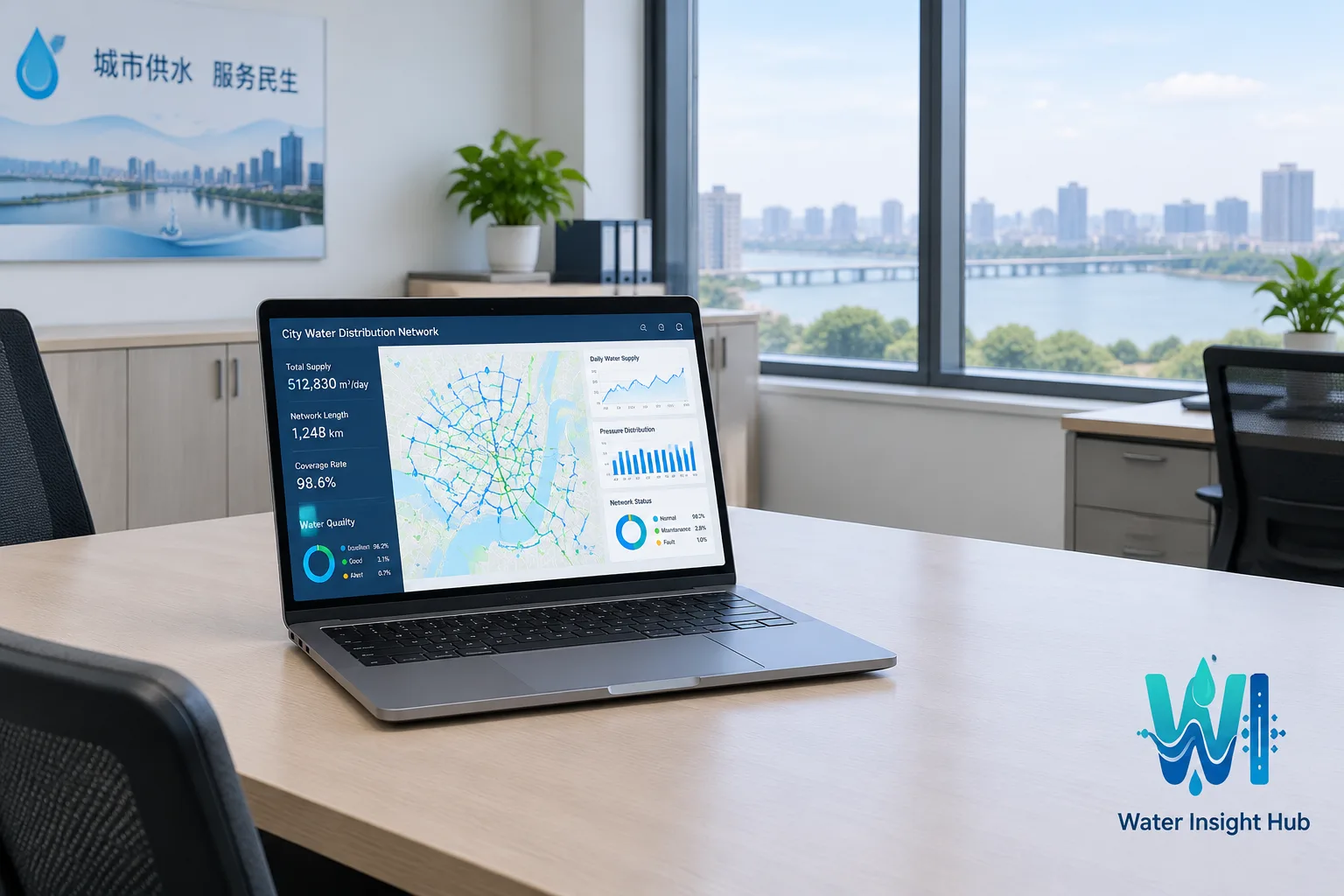
The combination of real-time data aggregation, Geographic Information System (GIS) mapping, and advanced cloud-based diagnostics empowers water and wastewater utilities to accurately identify anomalies and invisible leaks across distribution networks without the frequent dispatch of field crews.
By integrating flow and pressure data into a cloud computing environment, the AquaMaster+ digital platform provides holistic monitoring and fleet optimization for water distribution networks. Remote configuration capabilities alongside the “Virtual Flowmeter” feature enable engineers to simulate and evaluate diverse hydraulic scenarios without physical network interventions. AquaMaster4 electromagnetic flowmeters identify hidden leaks during low-consumption nighttime periods by capturing flow velocities below 0.1 meters per second.
ABB introduced the AquaMaster+ digital service platform to provide advanced analysis and management of fluid transmission and distribution networks for water and wastewater utilities. According to the company, this software system minimizes pipeline leakage losses and optimizes resource stewardship by combining advanced flowmeter data with cloud-based analytics. This represents a significant operational paradigm shift, particularly within broader frameworks addressed in water news and crisis response strategies regarding the role of technology in non-revenue water reduction.
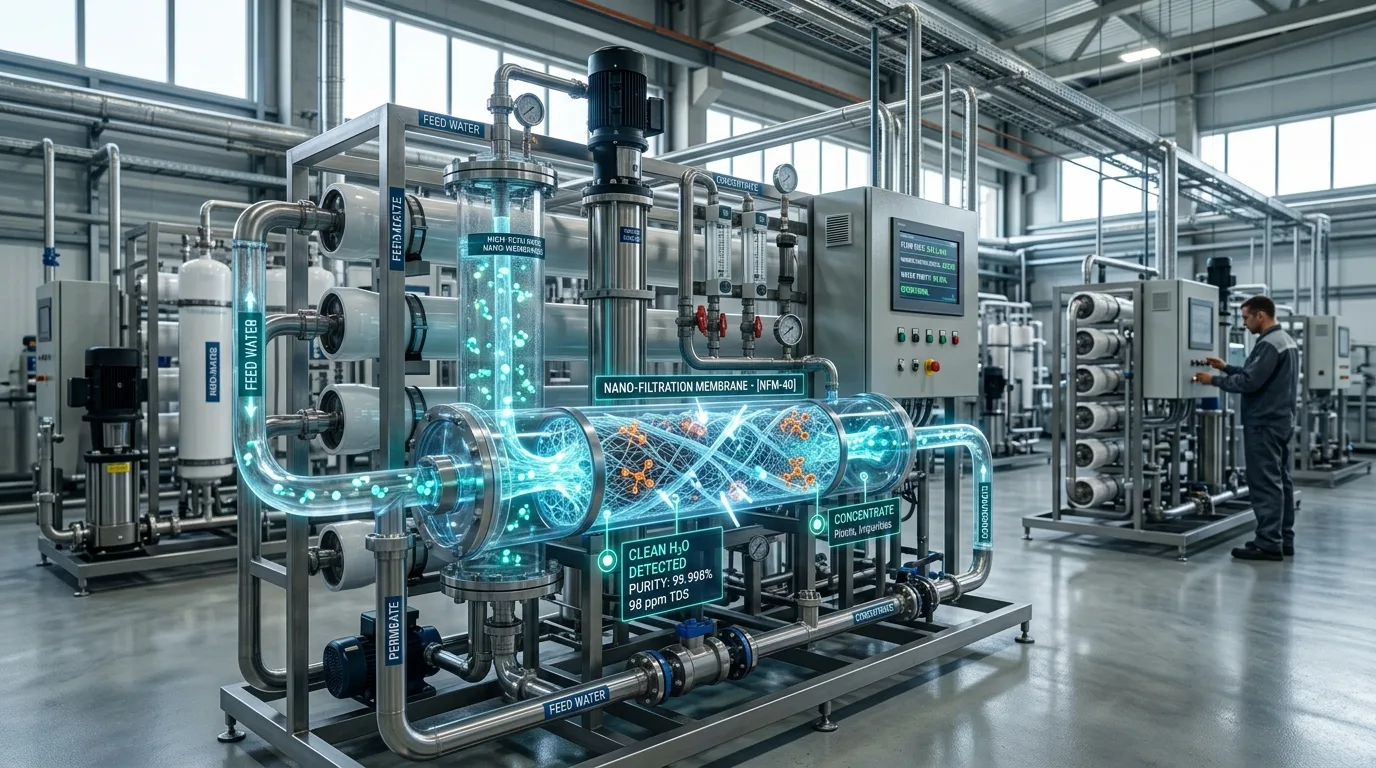
The AquaMaster+ digital service can operate either as standalone software connected to existing utility architectures or through direct integration with ABB’s AquaMaster4 flowmeters. This architecture provides fleet-wide visibility by interfacing with GIS mapping and processing device-specific data, including flow dynamics, pressure fluctuations, and physical hardware diagnostics. By maintaining event logs and continuously comparing vital parameters such as flow rate and pressure differentials, the system allows operators to pinpoint network anomalies during ongoing operations—a feature that further elevates the role of tools like artificial intelligence in water resource management.
Through remote configuration capabilities, this framework allows network operators to adjust instrumentation parameters without physically dispatching technicians to installation sites, reducing field transport costs and accelerating incident response. In addition, the system architecture incorporates a “Virtual Flowmeter” feature, enabling engineers to model theoretical operational scenarios and evaluate hydraulic outcomes prior to capital-intensive infrastructure interventions. Raghu Kumar NV, Global Product Line Manager for Flow Measurement and Analytics at ABB, noted that mounting global pressures on water resources compel utilities to leverage high-accuracy flow data to stop distribution losses, translating modern water technology concepts into industrial-scale reality.
The new software directly synchronizes with ABB flowmeters to monitor the precise volume of water transiting the network in real time. These field instruments deliver high measurement accuracy at flow velocities below 0.1 meters per second, providing the sensitivity required to detect minor leaks that conventional metering assets routinely miss. The hardware foundation of this platform relies on the AquaMaster4 Mobile Comms transmitter, introduced in 2022 as the first electromagnetic flowmeter offering bidirectional connectivity for near-real-time remote operations.
In the context of complementary technical analysis and market benchmarking, ABB’s AquaMaster+ enters the smart water network management space alongside platforms such as Netilion by Endress+Hauser and Vue by Xylem. While Endress+Hauser platforms emphasize broad, hardware-agnostic integration across industrial automation setups, AquaMaster+ is purpose-engineered to fully capitalize on the bidirectional communication layer embedded in the AquaMaster4 electromagnetic flowmeter series. Unlike competing systems that frequently rely on standalone external remote dataloggers, ABB’s architecture acquires and processes high-resolution diagnostic metrics directly from the integrated meter hardware. AquaMaster+ leverages this direct interface to automate “Night-Flow Analysis,” capturing flow variations under 0.1 m/s to isolate non-revenue water losses highlighted in analytical reports.
Special Analysis by the Water Insight Hub Team
The rise of dedicated cloud-based monitoring platforms such as ABB’s AquaMaster+ signals a fundamental paradigm shift in non-revenue water (NRW) management. Today, physical losses absorb a significant share of treated municipal water worldwide. By zeroing in on sub-0.1 m/s flow rates and automated night-flow assessments, ABB’s solution directly bridges a persistent technical vulnerability in traditional distribution grids. Integrating hydraulic data into smart cloud ecosystems transitions physical leak mitigation from reactive pipe-burst remediation to an active, continuous strategy, redefining foundational standards reflected in specialized analytical reports on infrastructure integrity.
From the vantage point of instrumentation convergence and advanced water technology, eliminating discrete telemetry loggers in favor of native bidirectional transceivers mirrors the wider trajectory of the Industrial Internet of Things (IIoT). Developing virtual flowmeters and theoretical simulation environments within the platform marks a practical milestone toward building operational digital twins across conveyance networks. Simulating network hydraulic dynamics purely in software, without incurring heavy capital expenditure for redundant physical instrumentation pits, substantially optimizes both CapEx and OpEx for utilities. Analysts at the Water Insight Hub emphasize that moving from passive data logging to predictive cloud analytics is critical to building infrastructure resilience across urban utilities.
Across the Middle East and North Africa (MENA) region, where a substantial portion of potable supply is generated through capital- and energy-intensive thermal or membrane-based desalination, the economic value of every cubic meter of water far exceeds global averages. In hyper-arid settings, transmission and distribution losses represent an immediate destruction of embedded thermal and electrical energy. Deploying digital flow monitoring systems capable of isolating sub-surface seepages during low-demand night hours preserves finished bulk water across MENA urban grids, directly safeguarding the operational margins of upstream desalination infrastructure. Such platforms allow regional municipal entities to overlay real-time pressure drops against GIS layers, targeting pipe remediation before initiating costly pavement excavations.
For water infrastructure across the MENA region, integrating automated flow telemetry with real-time pressure and flow analytics is indispensable to managing extreme water stress. Significant urban drinking water loss stems from aging legacy pipelines, unmetered extraction, and unregulated hydraulic pressure surges. Deploying night-flow algorithms alongside hyper-sensitive electromagnetic flowmeters detects hidden leakages across stressed urban networks without intrusive civil works or arbitrary exploratory excavations. These digital tools equip municipal decision-makers with the high-fidelity data required for sound water governance, enabling dynamic pressure zone management and optimized demand response programs.
In summary, ABB’s AquaMaster+ proves that addressing municipal water stress does not hinge solely on building new physical assets, but on the intelligent digital optimization of existing networks. Unifying predictive algorithmic computing, GIS spatial data, and ultra-low-velocity electromagnetic sensing transforms passive piping systems into self-aware, dynamic, and predictive networks. Given accelerating urbanization and acute freshwater scarcity, real-time cloud analytics and digital monitoring platforms will stand as the cornerstone of utility efficiency and economic sustainability for decades to come.
 Official Email of the Water Insight Hub: