
Saudi Water Authority Secures Prestigious International Awards for Advanced Water Technologies
This article is a translation and analysis based on a report by Arab News, highlighting the recent achievements of the Saudi Water Authority in pioneering sustainable technologies and water resource management.
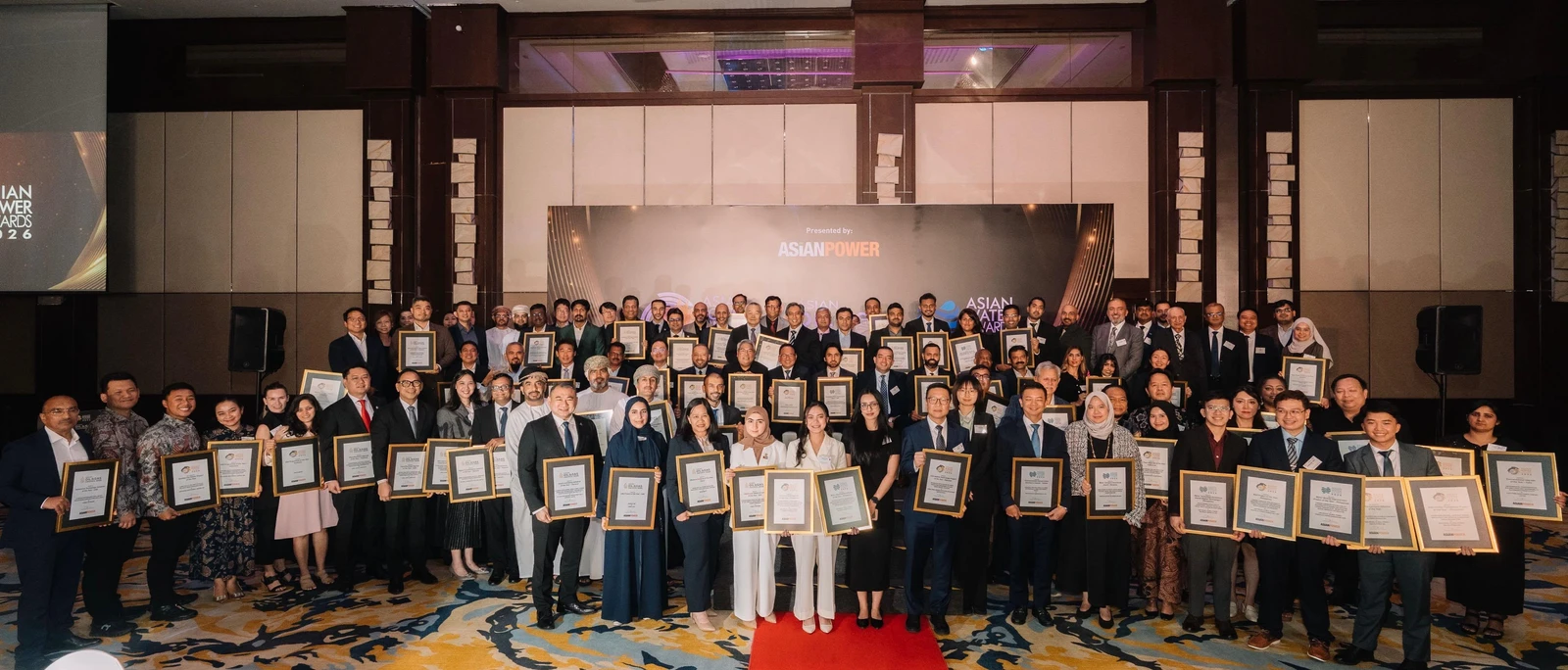
Relying on applied research, the Saudi Water Authority secured international awards at the fourth Asian Water Awards and Asian Power Awards 2026 in Kuala Lumpur, demonstrating the Kingdom’s firm commitment to transforming water governance structures.
The Saudi Water Authority, through its research arm, the Water Technologies Innovation and Advanced Research Institute (Watira), won prestigious international awards in water technology, energy efficiency, and the circular economy.
A drinking water enrichment system utilizing nanotechnology to extract magnesium from seawater won the Innovation of the Year Award at the world’s largest production facility in Shuaibah.
Covering more than thirty-three thousand square meters and housing over twenty-three advanced laboratories, the Water Oasis in Rabigh was named Water Innovation Hub of the Year and entered the Guinness World Records.
The Saudi Water Authority has won international awards for projects focused on water technology, energy efficiency, and valuable resource recovery from desalination brine. The authority received these accolades through its research arm, the Water Technologies Innovation and Advanced Research Institute (Watira), at the fourth Asian Water Awards and Asian Power Awards in Kuala Lumpur.
According to the report, one of the highlighted projects is a drinking water enrichment system that extracts magnesium from seawater using nanotechnology. This project won the Innovation of the Year Award and was deployed on a large commercial scale for the first time globally at the Shuaibah Production System – Phase Four. Based on the authority’s statement, this facility possesses a production capacity of 400,000 cubic meters per day, serving more than 1.3 million people.
Another project recognized under the “Excellence in Water Technology – Research and Development” category was an integrated system that produces sodium hypochlorite (used for water disinfection) and high-purity hydrogen directly from desalination brine. This technology reduces energy consumption by 25 percent compared to conventional systems.
The authority also earned the “Leadership in Circular Economy” award for a pilot project that extracts rubidium chloride from desalination brine using advanced separation and filtration technologies. The report noted that this project achieves an 89.02 percent recovery rate and purity levels of up to 99.984 percent. Its annual production is estimated at roughly 17.95 kilograms, with a projected 10-year net present value of approximately $831,000.
The Water Oasis in Rabigh was named Water Innovation Hub of the Year. Spanning over 33,000 square meters, the facility features more than 23 advanced laboratories and large-scale pilot plants designed to test emerging technologies and develop industrial applications. The complex has been officially recognized by Guinness World Records as the largest water innovation facility in the world.
The Waterthon initiative garnered the “Collaborative Water Initiative of the Year” award after engaging more than 1,300 participants and generating over 766 ideas, involving more than 30 mentors, 10 judges, and representatives from five universities. Furthermore, the Saudi Water Innovation Center has assisted in founding 43 startups across the sector and evaluated over 400 innovative concepts submitted from more than 15 countries.
The authority also launched three specialized incubators in partnership with the National Water Co., the National Center for Water Efficiency and Conservation, and the General Organization for Irrigation. These international honors recognize the authority’s sustained efforts to bridge scientific research and commercial deployment, optimize resource efficiency, and establish sustainable economic and environmental applications for desalination by-products.
Exclusive Analysis by the Water Insight Hub Team
The recent sweep of international awards by the Saudi Water Authority marks a definitive paradigm shift in how Gulf nations approach vital infrastructure and investment in advanced water technologies. It demonstrates that desalination plants are no longer operated simply as municipal supply units, but are being transformed into sophisticated industrial ecosystems that mine valuable minerals and optimize net energy footprints.
The systematic convergence of infrastructure development, nanotechnology, and circular economy frameworks—exemplified by commercial-scale magnesium and rubidium chloride extraction at Shuaibah—is setting unprecedented operational standards across the global desalination industry. These achievements align seamlessly with macro trends identified in specialized analytical reports, illustrating an industry-wide pivot toward decarbonization and energy moderation.
Across the broader MENA region, Saudi Arabia’s establishment of world-class facilities like the Water Oasis in Rabigh and its extensive startup incubation network are positioning the country as a primary regional innovation hub. In a region burdened by severe water stress, investments in applied R&D and technical accelerators provide a strategic blueprint for reducing dependence on imported technologies and establishing endogenous technological sovereignty.
For the MENA region as a whole, where member states confront systemic water scarcity coupled with high municipal and industrial energy consumption, studying and adapting these operational benchmarks is critical. While financial and structural environments vary across different MENA economies, the foundational strategy—recovering high-value minerals from brine, minimizing energy usage in separation processes, and centralizing innovation clusters—provides an actionable framework for regional policy-making.
Ultimately, the water sector is evolving toward a convergence where boundaries between clean water production, clean power, and mineral extraction dissolve. The Saudi Water Authority’s track record illustrates that disciplined R&D investment paired with commercialization roadmaps can turn historic water scarcity vulnerabilities into high-value economic and technological assets.
 Official Email of the Water Insight Hub: