
Water Governance: The Cornerstone of Sustainable Resource Management
Water governance stands as one of the most critical pillars of water resource management in today’s rapidly changing world. Rather than focusing solely on engineering, this domain encompasses the complex web of institutions, legal frameworks, strategic policies, and decision-making mechanisms that dictate how water is allocated, utilized, and protected. In an era defined by acute water scarcity, climate volatility, and skyrocketing demand, reinforcing robust water governance is no longer just an administrative choice—it is a strategic imperative for ecological survival and long-term sustainable development. The ultimate quality of water governance directly determines economic efficiency, social equity, and the resilience of natural ecosystems.
At the Water Insight Hub, our dedicated Governance Section is committed to investigating, analyzing, and delivering actionable solutions designed to reform core policymaking and structural decision-making. Our analytical framework centers on pivotal axes, including active stakeholder engagement, data transparency, institutional integration, and equity in resource distribution, alongside institutional mechanisms aimed at boosting water productivity.
By leveraging cutting-edge research, empirical data, and strategic management insights, our mission is to map out a clear transition from fragmented, short-sighted sectoral management to a future of smart, participatory, and highly sustainable water governance.
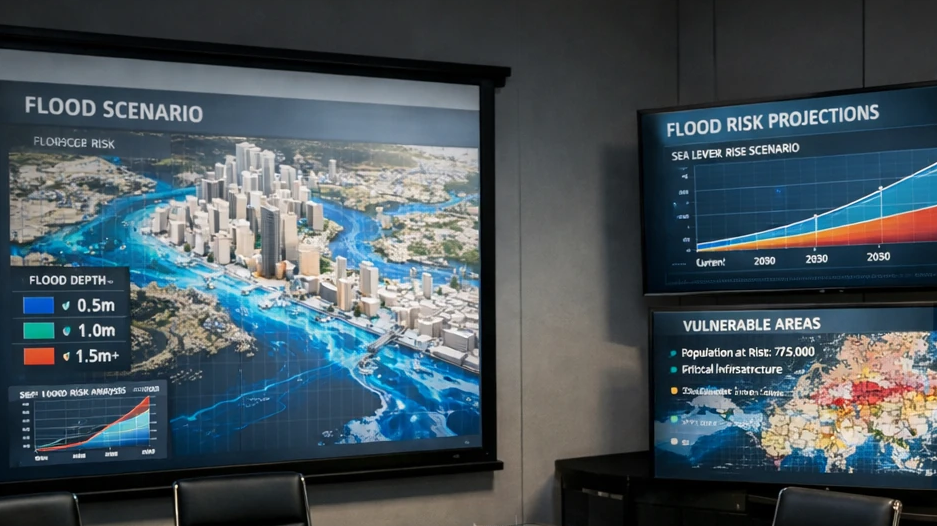
Technological Revolution in Iran’s Water Sector: Simultaneous Review of Two Achievements in Flood Prediction and Solar Desalination
This report presents an inspiring picture of a technological revolution in Iran’s water sector, where artificial intelligence and ...

AI and the Future of Water Resource Management; From Smart Assistants to Autonomous Agents
The latest IWA report emphasizes that #digitalization is no longer optional—it is the only way for network survival. We are ...

The Future of Water Engineering: How Do Large Language Models (LLMs) Manage the Water Crisis?
The next transformation in water engineering has quietly begun Not through larger dams, but by integrating ...

Water Imports from Russia and the Virtual Water Strategy | Water Insight Hub
When an official speaks explicitly for the first time about "water imports," it must be understood that the #WaterCrisis has ...

Water Technology 2030: The ‘Internet of Water’ Revolution and the Transition to Smart, Decentralized Systems for the Salvation of the Middle East – An Analytical Note
Water Technology 2030: The ‘Internet of Water’ Revolution and the Transition to Smart, Decentralized Systems for ...
The New Paradigm of Water Governance: A Comprehensive Roadmap for Crisis Mitigation and Sustainable Water Security
We stand at a critical historical juncture in water resources management. What we are facing today is no longer a temporary, cyclical drought, but a structural, chronic phenomenon: a systemic water crisis. The roots of this crisis run far deeper than rainfall deficits; they are embedded in a complex web of inefficient governance, fragmented sectoral policymaking, and a historic failure to leverage the transformative power of Water Technology (Water-Tech). At this turning point, the Water Insight Hub asserts that the solution does not lie in repeating the failed supply-side approaches of the past. Instead, it demands a fundamental shift in our management paradigm: a decisive transition from traditional engineering-centric methods toward smart, integrated water governance. Grounded in months of empirical research and institutional analysis, this comprehensive brief outlines our vision, conceptual framework, and operational roadmap to map out a data-driven, participatory, and secure water future.
Chapter 1: Deconstructing Water Governance — Beyond Technical Engineering
For decades, the water discourse has been dominated by a rigid engineering and infrastructural mentality. Success in water resources management was historically measured by the number of dams constructed, the length of diversion canals, and the sheer volume of water allocated to consuming sectors. This “supply-side management” paradigm might have seemed justifiable when water resources appeared abundant. However, having breached planetary and local ecological boundaries—manifested in severe groundwater depletion—it is clear that the core challenge is not a lack of physical infrastructure, but a lack of robust, evidence-based decision-making frameworks. This is where the concept of water governance emerges as the critical alternative paradigm.
Unlike technical management, which deals with the physical properties and supply logistics of water, water governance establishes the “rules of the game.” It encompasses the full spectrum of political, social, economic, and administrative systems set up to develop and manage water resources and deliver water services across different levels of society. Put simply, water governance addresses foundational institutional questions: Who decides? How are decisions made? Who benefits from these decisions and who bears the costs? And how can we institutionalize radical transparency and accountability within the process?
1.1. The Three Pillars of Water Governance (OECD Framework)
The Organisation for Economic Co-operation and Development (OECD) provides a comprehensive framework to assess the structural quality of water governance based on three core dimensions, which the Water Insight Hub adopts as its analytical foundation:
- Effectiveness: This dimension relates to the clear definition of water policy goals and targets across all levels of government, ensuring they drive meaningful outcomes. Does policy actively result in aquifer stabilization, enhanced water quality, and secure access to safe drinking water? An effective governance framework defines institutional roles transparently and ensures that high-level policy translates into measurable results on the ground.
- Efficiency: This dimension addresses maximizing the socio-economic benefits derived from water resources while fully accounting for the financial and ecological costs of implementation. Efficient governance ensures that water is allocated to highest-value use cases, minimizes operational water losses, and optimizes returns on public investment. Concepts such as economic water pricing and water productivity are rooted here.
- Trust and Engagement: This pillar emphasizes public transparency, downstream accountability, and the active participation of all stakeholders in decision-making. A trust-based governance system mandates open data sharing, facilitates structured dialogues between state authorities, private entities, agriculturalists, and civil society, and guarantees that decisions reflect collective societal resilience rather than narrow interest groups.
Evaluating the current state of water infrastructure through these three parameters reveals profound systemic gaps, which are analyzed in the following chapter.
Chapter 2: Diagnosing Institutional Water Governance — The Root Causes
The current ecological crisis is less an act of nature and more a crisis of institutional governance. The contemporary challenges are the direct accumulation of decades of distorted incentives, structural fragmentation, and a neglect of long-term sustainability principles.
2.1. Centralized Structures and Siloed Sectoral Management
A primary institutional bottleneck hindering **Integrated Water Resources Management (IWRM)** is the deeply centralized and siloed administrative layout. Energy ministries oversee distribution and supply, agricultural departments act as the largest consumers and sector-specific policymakers, while environmental protection entities are tasked with ecological conservation. These institutions routinely operate in administrative silos with conflicting objectives. For instance, top-down agricultural policies aiming for total self-sufficiency in water-intensive strategic crops exert unsustainable pressure on groundwater reserves—the baseline stability of which must be regulated by energy authorities, while environmental bodies are left to manage downstream ecosystem collapses, such as desiccated wetlands. This institutional conflict of interest prevents a holistic, basin-scale national strategy from materializing.
2.2. The Political Economy of Water: Hidden Subsidies and Distorted Pricing
The economics of water are heavily distorted by massive, non-transparent subsidies. Artificially low water tariffs for the agricultural sector, combined with heavily subsidized energy pricing for pumping groundwater from deep aquifers, eliminate any economic incentive for conservation or upgrading water productivity. These policies, frequently justified by short-term socio-political motivations, result in long-term natural capital depletion and economic instability. In the absence of an empirical pricing framework reflecting the true economic and environmental value of water, optimized resource allocation remains structurally impossible. This represents one of the most complex knots in contemporary resource governance.
2.3. The Data Crisis and Lack of Transparency: Managing in the Dark
Effective decision-making requires precise, real-time, and reliable data. Currently, the water management system faces a severe “data crisis.” Accurate metrics on actual groundwater extraction are missing due to millions of unmonitored wells. Water quality data across critical watersheds remains inaccessible to the general public, and predictive hydrological models are built on fragmented datasets. This lack of data transparency invalidates evidence-based policymaking and prevents civil society from holding regulatory bodies accountable. Any structural attempt to analyze or publish critical water sector news faces this massive data barrier.
2.4. Disenfranchised Local Communities and the Neglect of Indigenous Knowledge
Decision-making processes in the water sector remain intensely top-down, centralized within administrative capitals. Local communities, farmers, and traditional water-user associations—who bear the immediate consequences of these choices—are marginalized from the policy design process. This approach breeds social mistrust and resistance during policy implementation, while completely ignoring invaluable indigenous water management knowledge developed over centuries of adapting to arid climates, such as the sustainable *Qanat* systems. Revitalizing localized, community-led management structures remains a forgotten pillar of modern governance.
Chapter 3: The Water-Tech Revolution — Enabler of Smart Governance
While governance challenges are deep-seated, the emergence of advanced digital technologies presents unprecedented opportunities to leapfrog legacy management systems. Water Technology, or Water-Tech, refers to innovations that leverage big data, artificial intelligence (AI), and the Internet of Things (IoT) to optimize resource systems. The Water Insight Hub views technology not as an end in itself, but as a critical strategic lever to realize **smart water governance**.
3.1. Smart Monitoring and Analytics: From Remote Sensing to IoT
The prerequisite for managing any resource is precise measurement. Modern technologies enable a real-time, high-fidelity view of hydrological assets:
- Satellite Remote Sensing: Advanced satellite constellations (such as GRACE and Sentinel) monitor groundwater variations, evapotranspiration rates, and soil moisture levels with extreme precision. This allows independent calculation of aquifer balances at a watershed scale, mapping agricultural consumption impacts objectively.
- Internet of Things (IoT) and Smart Metering: Deploying smart telemetry sensors on agricultural wells and distribution lines transmits live data on extraction volumes and network pressure directly to regulatory hubs. This Advanced Metering Infrastructure (AMI) is the key to combating unauthorized consumption and reducing non-revenue water (NRW) in municipal grids.
- Unmanned Aerial Vehicles (Drones): Drones equipped with multispectral and thermal sensors enable rapid infrastructure inspections, pinpoint high-consumption crops, and monitor riparian ecosystem health.
3.2. Advanced Analytics: The Power of AI and Big Data
Raw data collection is only the first step; the true value lies in converting telemetry data into actionable insights:
- Predictive Analytics: AI machine-learning algorithms analyze historical meteorological, hydrological, and consumer patterns to forecast river runoff, sector demands, and localized flood or drought probabilities, shifting management from reactive crisis response to proactive planning.
- Digital Twins: Building a dynamic, virtual replica of a physical water system (such as a multi-provincial river basin or city grid) allows administrators to simulate regulatory scenarios—like shifting pricing models or reallocating flows—and observe systemic consequences prior to field deployment.
- Precision Agriculture: Integrating field IoT data with satellite intelligence delivers exact irrigation and fertilization scripts per crop block, drastically increasing agricultural water productivity.
3.3. Transparency and Collaboration: Open-Data Platforms and Blockchain
Technology can democratize access to resources, directly reinforcing the “Trust and Engagement” pillar of governance:
- Open-Data Platforms: Launching interactive public dashboards displaying aquifer levels, river quality metrics, and allocation quotas acts as a powerful transparency tool, enabling startups and researchers to build localized mitigation apps.
- Blockchain for Water Rights: Distributed ledger technology can secure immutable, decentralized registers for water titles and transactions, enabling transparent water markets while preventing political interference or localized disputes.
Chapter 4: Global Frameworks — Comparative Analysis of Successful Water Governance
Many arid and semi-arid nations have successfully navigated similar institutional bottlenecks. Analyzing these frameworks yields invaluable strategic lessons.
4.1. Australia: Cap-and-Trade Water Markets in the Murray-Darling Basin
Facing severe ecological degradation in its agricultural heartland, Australia instituted one of the most ambitious governance reforms globally by unbundling water rights from land ownership, converting them into a tradable asset class. By enforcing a strict statutory cap on sustainable extractions, the Murray-Darling Basin Authority (MDBA) allowed market dynamics to reallocate water to highest-value economic uses, providing a clear financial incentive for farmers to invest in Water-Tech to boost water productivity.
Strategic Lesson: Feasibility testing of localized water markets within high-stress basins, backed by independent, cross-boundary river basin authorities.
4.2. Spain: Hydrographic Confederations and Participatory Decentralization
Spain has pioneered basin-scale participatory governance since the 1920s via *Hydrographic Confederations*. These regional authorities manage major watersheds through boards that legally mandate the representation of all stakeholders—including central planners, local municipalities, agriculturalists, and environmental organizations. This institutionalizes high social acceptance for regulatory decisions.
Strategic Lesson: Restructuring regional water utilities away from political provincial boundaries into integrated River Basin Organizations with real statutory enforcement power.
4.3. Israel: Centralized Regulation, Reclamation, and Public Literacy
Israel represents a highly centralized yet technologically supreme governance model. All national water resources are legally defined as public goods managed by a singular, powerful regulatory entity (the Israel Water Authority). The nation leads globally in seawater desalination, wastewater reclamation (reusing over 85% of effluent for agriculture), and drip irrigation. Crucially, this technological suite is backed by consistent public literacy campaigns that cultivate a deep cultural valuation of water.
Strategic Lesson: Synchronizing capital investments in advanced circular Water Technology with nationwide media initiatives to shift consumer behavior.
Chapter 5: Roadmap for Transformation — The Water Insight Hub Strategic Vision
Based on empirical analysis and global models, the Water Insight Hub proposes a four-pillar roadmap to transition toward smart water governance.
Pillar 1: Institutional and Legal Modernization
- Establish an Independent Supreme Water Council: A supra-ministerial body uniting academic experts, judicial figures, and primary stakeholder representatives to formulate long-term policy, overriding short-term political cycles.
- Overhaul Foundational Water Laws: Amending decades-old statutory frameworks to legally define and protect environmental rights, provide concrete legal architecture for localized water markets, and institute severe criminal penalties for large-scale unauthorized extractions.
- Operationalize Basin-Scale Organizations: Transitioning regional water authorities from purely executive administrative arms into decentralized regulatory entities patterned after the Spanish framework.
Pillar 2: Constructing the National Water Data Architecture
- Launch the National Open-Data Water Platform: A mandatory, machine-readable repository publishing real-time aquifer volumes, water quality gradients, and allocation quotas. This radical transparency forms the infrastructure for smart governance.
- Universal Smart Telemetry Mandate: Enforcing automated smart-meter connectivity across all agricultural and industrial extraction points to feed the national data network directly.
Pillar 3: Socio-Economic Alignment and Behavioral Incentives
- Implement Progressive, Block-Tariff Pricing: Gradual transition to regionalized tiered pricing structures that protect smallholder livelihoods while disincentivizing waste. Tariff revenues must transparently fund grid modernization and support sustainable farming pioneers.
- Empower Local Water-User Associations: Transferring statutory authority to local cooperatives to manage distribution networks, maintain local systems, and resolve localized allocation conflicts.
- Institutionalize the National Water Dialogue: Leveraging multimedia networks to foster an honest public consensus on scarcity realities, publishing analytical data to build nationwide climate literacy.
Pillar 4: Deployment of Advanced Techno-Governance Pilot Projects
The Water Insight Hub advocates for immediate, ring-fenced pilot deployments within high-stress basins (such as the Zayandeh-rud and Lake Urmia watersheds) to test market-clearing mechanisms, precision agriculture sensors, and digital public tokenization of water rights under real field pressures.
Conclusion: A Call to Action for the Water Future
The path toward reforming water governance is challenging yet non-negotiable. Sustaining the current status quo guarantees systemic aquifer collapse, ecosystem loss, and severe threats to socioeconomic stability. The transition to smart governance demands political courage, cross-sectoral collaboration, and informed civic participation.
We at the Water Insight Hub remain profoundly committed to serving as an independent, data-driven analyst and a reliable source of scientific clarity. We stand ready to collaborate with state institutions, academic bodies, private enterprises, and civil groups. The future of our water security is determined by the strategic choices we execute today. Let us collectively design a sustainable, resilient water future.
Shape the Future of Water with Us
The Water Insight Hub has established a leading scientific and technological platform to feature your valuable contributions. We welcome specialized research, scientific insights, innovative technological outlooks, international policy critiques, and water sector product reviews—all published under your name and professional credentials.
Sharing your expertise and scientific perspectives can serve as a vital source of inspiration and knowledge for researchers, professionals, and readers dedicated to water technology, water resources management, and industrial innovation.
If you would like to share your research outcomes, analytical reports, or emerging water technology reviews with the global water community, please connect with us through our Scientific Communications Department at the Water Insight Hub.
 Official Email: