
Innovative Solar Desalination Technology: Producing Freshwater and Extracting Lithium Without Chemicals
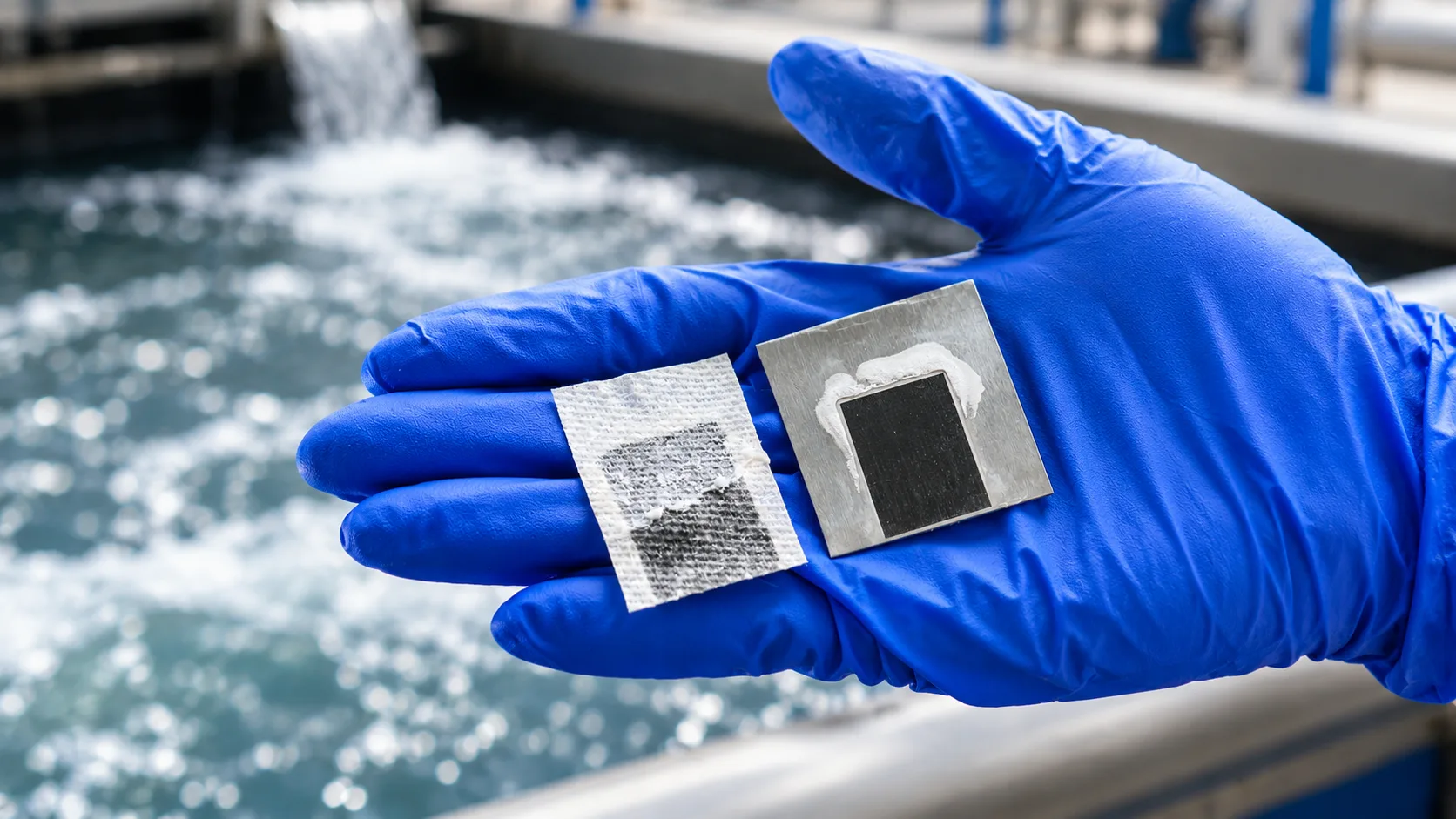
This article provides a translation and analysis based on a report from the University of Rochester, highlighting a breakthrough in water technology. Researchers claim to have engineered an efficient method for seawater desalination that eliminates toxic brine discharge and avoids the use of chemicals. According to United Nations data, approximately 2.2 billion people globally lack access to safely managed drinking water, and diverse populations from California to the Middle East rely heavily on desalination plants to meet their municipal water demands. However, conventional methods such as reverse osmosis are notoriously energy-intensive and produce a concentrated effluent known as brine, which poses severe risks to marine ecosystems.Researchers at URochester’s Institute of Optics have formulated a novel process reported to efficiently produce freshwater without chemical additives. The research team, led by Chunlei Guo, Professor of Physics and Optics, documented their findings in the journal Light: Science & Applications. The setup utilizes solar panels constructed from black metal etched using femtosecond lasers, rendering the metal surface exceptionally light-absorbing and superwicking. These specialized panels draw a thin film of water across their surface, absorb solar energy to evaporate and distill the liquid, and shunt the precipitated salts to lateral or “inactive” zones, ensuring that salt buildup does not disrupt the ongoing distillation cycle. Chunlei Guo noted that while previous lab experiments tested comparable systems using synthetic brine made purely of sodium chloride, real ocean water possesses a vastly more intricate chemical profile. Compounds containing magnesium and calcium rapidly form a crust across evaporative surfaces, eventually clogging the material’s pores. Nevertheless, by precisely tailoring the micro-grooves of the black metal, the research team enabled minerals and salts to slide away passively.A novel solar desalination method claims to transform seawater into drinking water without requiring chemical pretreatment.
The system features laser-etched black metal surfaces that harness the coffee-ring effect to prevent mineral scaling and surface clogging.
Beyond producing freshwater, the technology is capable of extracting high-value materials, such as lithium, from the residual salts.
To achieve this, the researchers capitalized on a physical phenomenon known as the “coffee-ring effect”—the mechanism responsible for leaving a ring of concentrated particulates at the perimeter of a drying coffee drop. Leveraging this behavior, the team directed salt accumulation exclusively toward the panel’s non-evaporative margins. Rigorous testing utilizing raw water samples from the Pacific, Atlantic, and Indian Oceans confirmed that the interface sustains continuous self-cleaning performance. A distinct operational advantage of this approach is its reported capability to recover virtually 100 percent of dissolved salts in solid form rather than discharging hazardous liquid brine. In a complementary study published in the Journal of Materials Chemistry A, the team demonstrated that incorporating hydrogen titanate nanoparticles within the grooves of the black metal enabled the selective separation of lithium from other crystallized salts. This innovative technique presents a viable pathway toward the sustainable recovery of critical minerals.“Mining lithium from the earth has proven to be very taxing from an energy and environmental standpoint, so pulling lithium directly from saltwater could be a very important future route.”
Exclusive Analysis by the Water Insight Hub Team
The reliance of coastal communities on energy-demanding solutions like reverse osmosis creates severe ecological impacts, rendering this scientific advance particularly noteworthy. The study’s core emphasis on eliminating chemical pretreatment represents a potential breakthrough in lowering operational expenses and ecological footprints, though it still demands validation at an industrial scale. Bridging this technological advance with developments in artificial intelligence and advanced materials engineering creates new frontiers for the water treatment industry. As highlighted by the structural attributes of the black metal, deploying nanoscale textures and precise laser micromachining exemplifies how advanced material science can resolve critical water issues by maximizing the thermodynamic efficiency of solar-driven systems. Evaluating the water landscape across the Middle East and North Africa (MENA), an area grappling with acute baseline water stress, underscores the strategic significance of this research. Considering the acute ecological bottlenecks surrounding brine disposal into semi-enclosed regional seas, the development of self-cleaning, passive solar evaporators could—if successfully commercialized—substantially mitigate ecological degradation across coastal zones. For the wider MENA region, which is contending with mounting structural water deficits and the rapid depletion of non-renewable groundwater aquifers, monitoring the commercialization of such breakthroughs is vital. Regional coastal hubs that rely almost exclusively on marine desalination stand to benefit from closely tracking these innovations; however, thorough regional feasibility analyses and lifecycle cost comparisons against established facilities remain essential before field deployment can be realized. Ultimately, advances of this nature demonstrate that future water governance and resource management must harmonize clean energy adoption with environmental stewardship. The shift toward eliminating hazardous liquid waste, as demonstrated in these laboratory findings, establishes a compelling research benchmark for the future, provided the engineering hurdles of scaling up from bench-scale prototypes to utility installations are resolved. Click here to read the original source article.
The solar desalination system developed by University of Rochester researchers employs black metal sheets processed with femtosecond laser pulses. These pulses etch nanoscale and microscale textures that render the surface highly solar-absorbent and superwicking. The engineered metal draws an ultra-thin liquid film across its surface and evaporates water via direct thermal solar energy, eliminating the necessity for chemical pre-treatments or high-pressure pumping.
Natural seawater minerals like magnesium and calcium typically form stubborn crusts on heating interfaces. Taking advantage of the physics behind the 'coffee-ring effect,' researchers configured microscopic grooves to direct capillary water flow toward lateral edges. As pure water evaporates, crystallizing salts are continuously swept into designated non-active zones, granting the surface durable self-cleaning capability.
Rather than producing liquid brine, the process precipitates minerals into solid forms. To extract critical resources, hydrogen titanate nanoparticles are embedded within the laser-etched microchannels of the black metal. These nanoparticles act as ion-selective sieves, capturing lithium ions directly from the concentrated salt matrix with high affinity for clean separation.
Traditional reverse osmosis (RO) discharge contains hyper-saline brine laced with anti-scalant chemicals, posing acute environmental hazards to marine ecology, especially in closed marine basins across the MENA region and global coastlines. As highlighted by Water Insight Hub, transforming nearly 100% of minerals into extractable solids achieves a Zero Liquid Discharge (ZLD) pathway, safeguarding marine ecosystems.
Yes, moving beyond synthetic sodium chloride solutions commonly used in laboratory tests, the system was validated with natural seawater drawn from the Pacific, Atlantic, and Indian Oceans. Despite disparate geochemical characteristics and polyvalent ion compositions, the black metal panels successfully maintained water flux without pore clogging or scale deposition.
Laser micro-structuring creates pitch-black surfaces with broad-spectrum solar absorption and near-zero reflectivity. The superwicking property pulls water into micro-scale thin layers, significantly reducing the conductive thermal mass and localized heat loss. This drastically enhances photothermal vapor generation compared to bulk water solar distillers.
Conventional terrestrial lithium mining requires massive fossil energy input, extensive evaporation acreage, and millions of liters of freshwater. According to research monitored by Water Insight Hub, co-locating solar seawater distillation with selective lithium recovery creates a carbon-neutral circular supply chain for energy storage minerals, supporting global decarbonization goals.
 Official Email of the Water Insight Hub: