
Aquatech Shanghai 2026 Exhibition: The Hub of Advanced Water Technology and Treatment
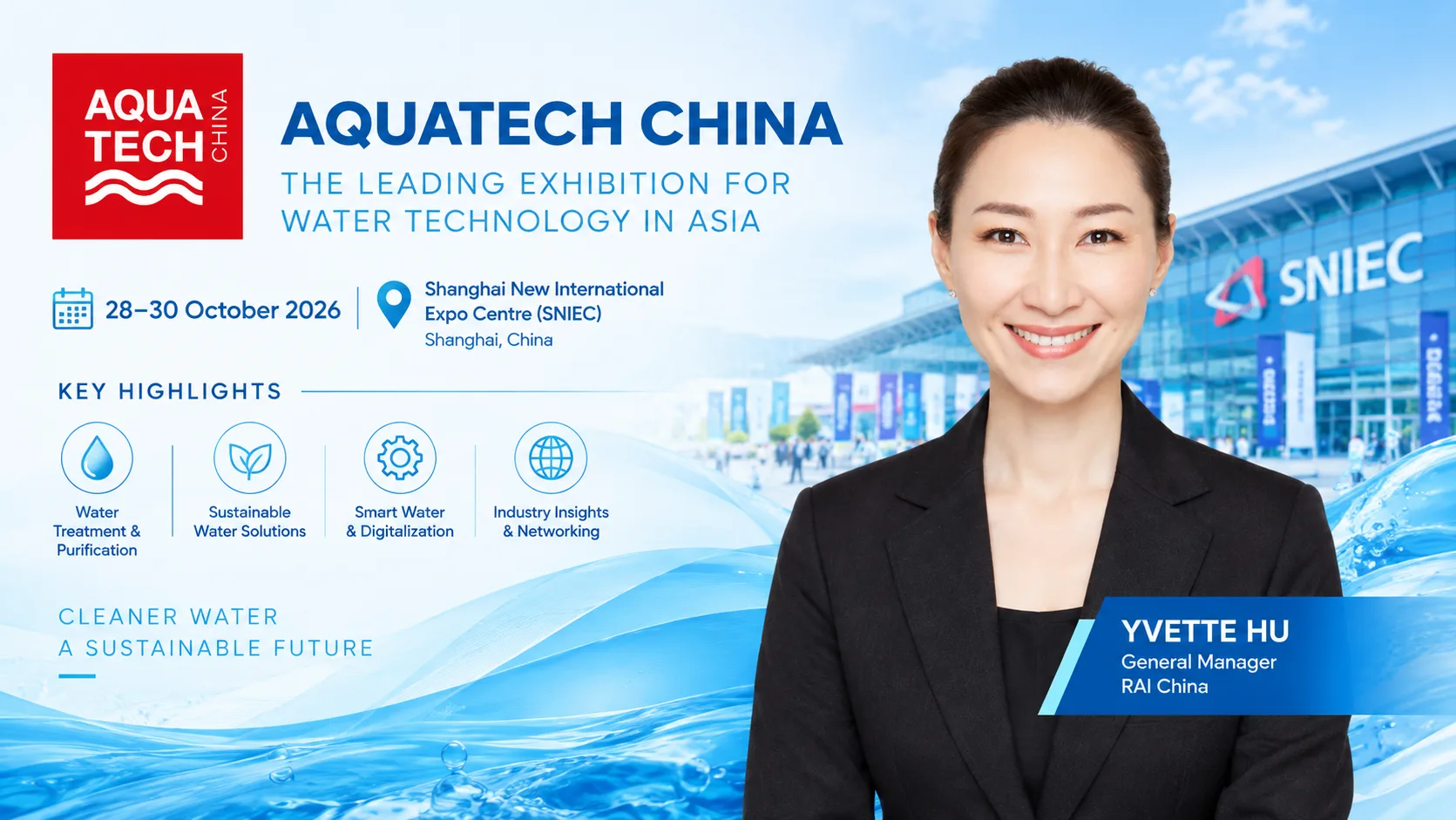
China’s water resource management and infrastructure market has transformed into a focal point of international technological advancements at an unprecedented pace. Aquatech Shanghai 2026 will take place from October 28 to 30, 2026, at the Shanghai New International Expo Centre, offering a strategic opportunity to connect global stakeholders to this vast ecosystem. As East Asia’s most comprehensive commercial platform for water and wastewater engineering, this event encompasses the entire upstream and downstream innovation chain.
This article presents a comprehensive translation and analysis based on an interview with Yvette Hu, Managing Director of RAI China, alongside official documents, exhibition layouts, and conference structures of this major international gathering.
- The remarkable surge in professional visitors and the participation of 500 prominent companies from over 15 countries have positioned Aquatech Shanghai as a premier hub for technological exchange and B2B commerce.
- China’s membrane treatment market has surpassed 298 billion RMB, while the rehabilitation of 700,000 kilometers of urban pipeline networks requires an investment of 5 trillion RMB.
- The launch of the innovative AquaAcademy model alongside AquaStage events bridges academic research with commercial applications and next-generation innovations.
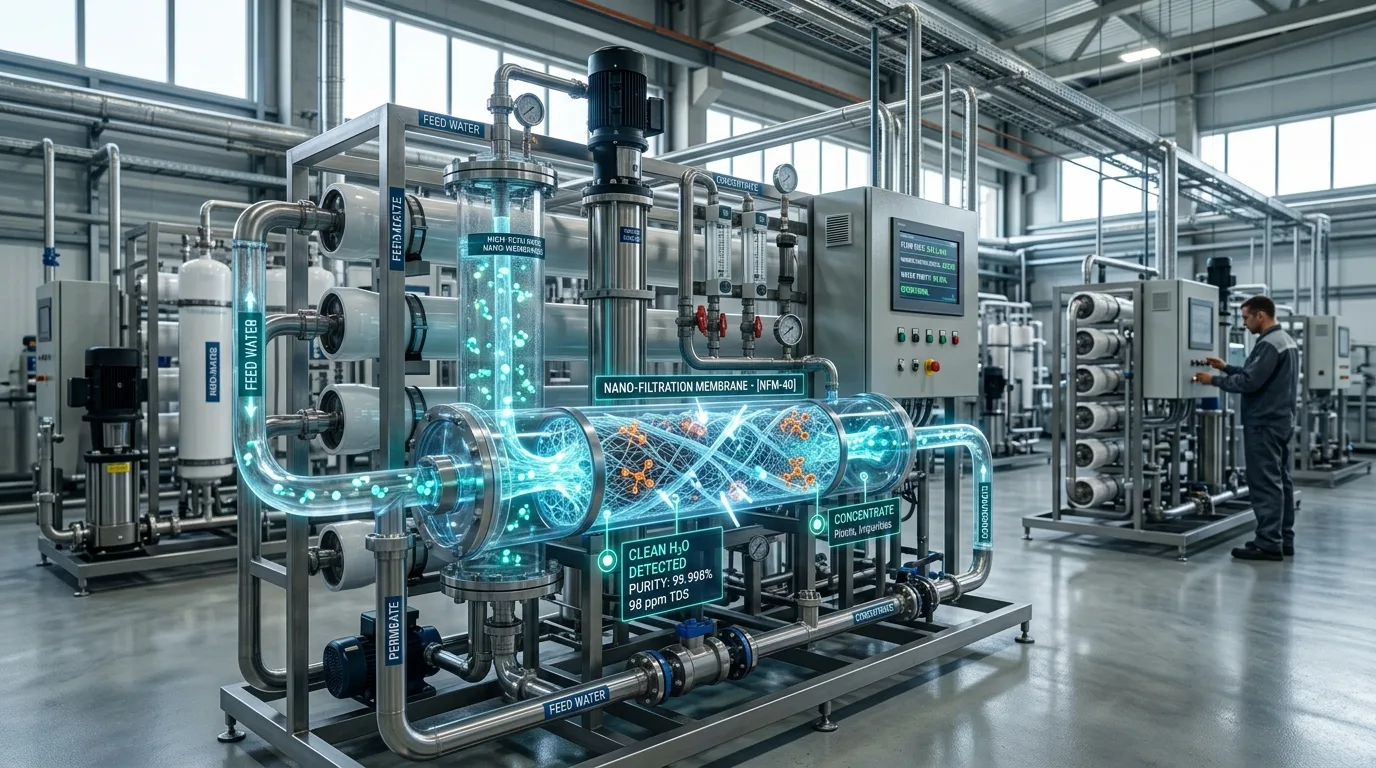
- A specialized focus on ultra-pure water treatment in semiconductor industries, artificial intelligence in sludge monitoring, desalination, and the elimination of emerging contaminants such as PFAS defines the trajectory of sustainable industrialization.
Since its inaugural launch in 2024, the international Aquatech China event has solidified its role as a key milestone on the regional water industry calendar. In its previous edition, the gathering hosted 500 exhibitors representing more than 15 countries. Professional attendance experienced an impressive leap compared to the preceding year, with mainland Chinese visitors increasing by 35% and international specialists growing by 7%. Exhibitor satisfaction rates were recorded at exceptionally high levels, with the vast majority expressing their commitment to return for the 2026 edition. Yvette Hu, Managing Director of RAI China, discusses the distinctive attributes of the event, the conference outlook, and the strategic advantages for multinational corporations.
Ms. Hu summarizes the unique value proposition of the exhibition through its end-to-end supply chain integration:
The exhibition segments unify residential water purification, desalination systems, and industrial water reuse simultaneously under one roof. The previous edition featured exhibitors from South Korea, India, Malaysia, Thailand, Indonesia, Japan, Russia, the United States, and European nations, alongside dedicated national pavilions from Denmark and Korea that engaged wide industry audiences.
Prominent Key Players and Companies Present in the Previous Edition
Notable brands and exhibitors that showcased solutions during the previous edition of the event include:
The synergy between scientific inquiry and practical deployment forms the cornerstone of this year’s exhibition. Aquatech Shanghai introduces the novel AquaAcademy concept. According to Yvette Hu:
Beyond the academy, more than 70 specialized technical sessions will be presented by senior executives and prominent researchers across over 10 seminar halls, focusing on advanced sector transformations. Practical application scenarios spanning the municipal sector, chemical processing, textiles, commercial printing, and pharmaceutical manufacturing will be dissected in these sessions to facilitate cross-disciplinary adoption of novel goods and techniques.
Another transformative feature is the Aquatech China Innovation Award, modeled after its flagship Amsterdam counterpart. The award assesses achievements registered across 5 core categories: water supply, water and wastewater treatment, flow control, pipe and pump automation, green chemical solutions, and pre-commercial innovations. In 2025, pioneering enterprises such as Shanghai Dagua Water Service Co., Ltd. and Chengdu Bishui Water Construction Engineering Co., Ltd. secured this honor. Hu highlights:
Statistical indicators underscore the vast market scale and capacity. China has evolved into an active testing ground for resolving complex water challenges. The domestic penetration rate of residential point-of-use water purifiers in China stands at approximately 20%, presenting an untapped blue ocean for global firms when contrasted with the 80% penetration in Western nations. While urban penetration reaches 42.7%, over 90% of these systems are merely under-sink units tailored exclusively for drinking water, leaving the remaining 90% of domestic consumption untreated. This creates substantial opportunities for point-of-entry whole-house filtration installations. According to analytical reports on China’s water and wastewater technology market, the market valuation for membrane-based separation processes reached 298.02 billion RMB (approximately 37 billion EUR) in 2025, reflecting a 7.4% annual growth. Municipal wastewater recycling capacity is projected to double by 2030, generating sustained annual growth exceeding 15% for membrane manufacturing assets.
In the domain of artificial intelligence and data governance, the smart water solutions market is projected to reach 136.84 billion RMB (roughly 17 billion EUR) by 2029. This rapid growth, driven by a compound annual growth rate (CAGR) of 18.74%, stems from government mandates seeking to raise smart monitoring penetration from 12% to 35% across acoustic leak detection, predictive water quality analytics, and dynamic tariff modeling. Furthermore, under the national “Beautiful China 2035” policy framework, over 700,000 kilometers of underground pipeline networks require construction and modernization during the 15th Five-Year Plan, demanding capital commitments exceeding 5 trillion RMB (624.5 billion EUR), with a major portion allocated toward sewer infrastructure along the Yangtze River basin.
Yvette Hu articulates the commercial caliber of the gathering:
The structural layout of the 2026 exhibition encompasses three halls across 30,000 square meters, allowing attendees to transition seamlessly between pure water technologies and wastewater treatment solutions.
Prominent Industrial Companies and Core Innovations at the 2026 Exhibition
Active Presence 2026Core Innovation: Composite FRP pressure vessels
Core Innovation: Ozone generator disinfection systems
Core Innovation: Membrane coating automation lines and links to hydrogen industries
The scientific sessions at Aquatech 2026 will focus on pressing engineering challenges, ranging from ultra-pure water production to the removal of recalcitrant pollutants:
- 1. Semiconductor Ultra-Pure Water & Resource Recovery Innovation Forum: Examining Zero Liquid Discharge (ZLD) configurations and advanced recycling for wafer fabrication.
- 2. Membrane Separation & Seawater desalination Summit 2026: Evaluating thermodynamic energy efficiency, durable automation, and next-generation RO membranes.
- 3. Digital Drainage Networks & Urban Resilience Forum: Hydrodynamic flood control modeling, optimized wet-weather wastewater collection, and rehabilitation of aging distribution lines.
- 4. Energy & Chemical Industrial Wastewater Forum: Mitigating complex hydrocarbons and petrochemical effluents utilizing Advanced Oxidation Processes (AOPs), electrodialysis reversal, and modern Anammox (Anaerobic Ammonium Oxidation) bioreactors.
- 5. Yangtze River Delta Green Water Supply Systems Summit: Optimizing pumping energy consumption, maintaining drinking water compliance, and improving regional distribution resilience.
- 6. AI-Driven Sludge & Effluent Treatment Innovation Forum: Transforming conventional wastewater treatment plants into valorization hubs for nutrients and bioenergy utilizing data-driven computing.
- 7. Water Treatment Forum 2026 (Emerging Technologies and New Horizons): Evaluating destructive and extractive mechanisms for per- and polyfluoroalkyl substances (PFAS), microplastics, and endocrine-disrupting chemicals.
- 8. Dual-Carbon Targets & Smart Water Systems 2.0 Conference: Mitigating scope 1 and 2 emissions from utilities and utilizing predictive SCADA architectures to balance grid loads.
Hu concludes:
Special Analysis by the Water Insight Hub Team – Water Insight Hub
The vast scale of infrastructure investments across East Asia demonstrates that market volume is the primary driver of reverse engineering, design iteration, and industrial innovation. When market assessments report annual allocations of 500 billion RMB for wastewater modernization and the rehabilitation of 700,000 kilometers of buried pipe networks, it becomes evident how economies of scale reduce the capital expenditure of advanced membranes and skid-mounted filtration modules. In assessments published by the Water Insight Hub, it has been consistently emphasized that achieving sustainable water security requires moving past conventional paradigms toward cost-effective engineering. Evaluating developments in Shanghai reinforces the principle that water utility modernization is not merely a secondary public health metric, but a fundamental prerequisite for sustained industrial expansion and the resilience of critical manufacturing supply chains, such as semiconductor fabrication.
The convergence of physical filtration assemblies with digital tools has shifted the trajectory of water technology toward frameworks where carbon reductions cannot be attained without intelligent sensor telemetry, advanced biosolids digestion, and algorithmic optimization models. As demonstrated across the technical tracks at Aquatech China regarding machine learning and greenhouse gas mitigation, the sector is evolving into a net producer of recovered minerals, renewable power, and clean effluent. Consequently, the global water treatment industry is transitioning away from conventional disposal approaches toward circular resource systems, where closed-loop recycling and Zero Liquid Discharge (ZLD) configurations ensure industrial continuity in water-stressed territories.
Across the Middle East and North Africa (MENA), severe freshwater scarcity underscores the strategic value of the operational models showcased at Aquatech Shanghai. China’s extensive investments in domestically engineered reverse osmosis and nanofiltration elements—which, according to Ms. Hu’s assessment, now capture roughly 70% of its domestic market—present a viable path to diversifying the supply chain for major seawater desalination projects along the Arabian Gulf and the Sea of Oman. Regional stakeholders executing expansive capital projects to lower non-revenue water (NRW) and construct sustainable urban developments can utilize these cost-effective manufacturing and digital architectures to optimize industrial consumption across petrochemical complexes and convert treated sewage effluent (TSE) into a reliable source of process water.
Throughout the broader MENA region, recurring vulnerabilities stemming from aging distribution networks, severe aquifer depletion, and the intensive water footprint of heavy industrial operations—such as basic metals, mining, and hydrocarbon processing—necessitate a fundamental governance shift. The structural benchmarks established in China, characterized by the recycling of hundreds of millions of cubic meters of industrial effluent annually and mandatory real-time discharge monitoring, offer an actionable operational blueprint. Utilities and industrial operators across the MENA region can mitigate extraction pressures on stressed groundwater basins by implementing structured pipeline asset management programs, sludge-to-energy technologies, and tertiary biological treatment. Aligning localized water tariffs with actual resource costs, while cultivating homegrown engineering capabilities alongside established global solution providers, offers a realistic pathway to alleviating structural water deficits across the region.
The outcomes highlighted at Aquatech Shanghai 2026 underscore that decoupling urban drinking water supplies from the intensive requirements of electronics, pharmaceuticals, and manufacturing requires rigorous regulatory standards and the integration of digital analytics into baseline hydraulic operations. As illustrated by the event’s core conference themes, addressing these resource constraints cannot rely on reactive measures. The future of global water security depends on modernizing conveyance infrastructure with remote telemetry, minimizing the energy consumption of high-recovery desalination modules, and accelerating the destruction of persistent contaminants such as PFAS. In this context, technological innovation is no longer an optional investment, but an indispensable foundation for long-term industrial resilience.
Click here to access the original interview text. Click here to review the Aquatech Shanghai exhibitor directory and conference schedule.
 Official Email of the Water Insight Hub: