
Water Technology Trends in 2026: Artificial Intelligence, Cybersecurity, and the Future of Smart Water
The water sector stands on the precipice of one of its most profound digital and operational transformations. Escalating challenges, such as accelerating climate change, aging physical infrastructure, severe capital constraints, and shifting workforce demographics, are compelling water and wastewater utilities to fundamentally rethink traditional water resource management paradigms. In this emerging landscape, digital tools are no longer isolated systems designed merely to automate routine tasks; they have matured into a strategic capability essential for bolstering resilience, operational efficiency, service continuity, and the protection of public health.
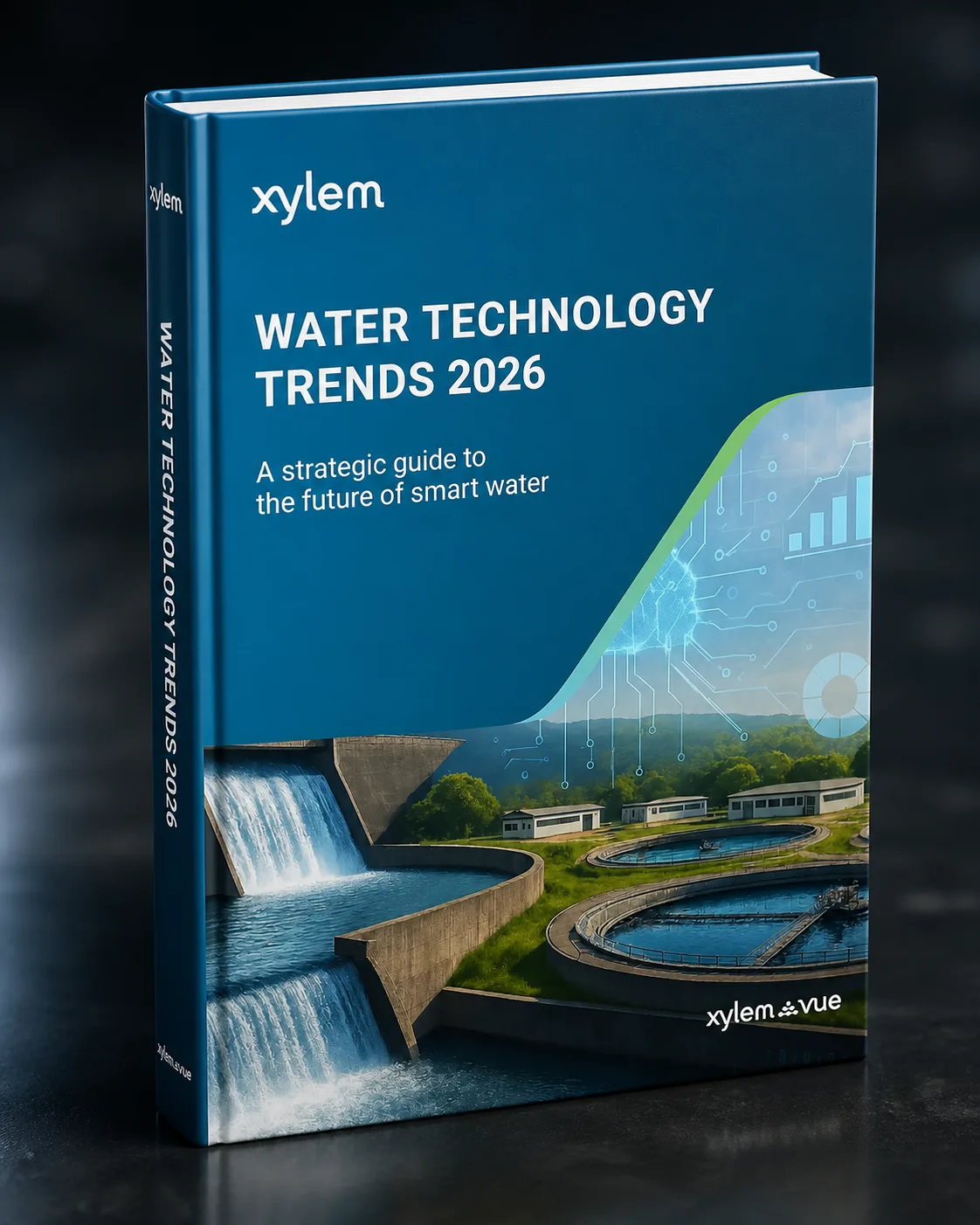
The strategic report titled “Water Technology Trends 2026: A strategic guide to the future of smart water”, overseen by Jaime Barba, Head of Xylem Vue at Xylem and CEO of Idrica, presents an in-depth examination of five transformative pillars set to redefine the operational boundaries of the utility sector in 2026 and beyond. These trends encompass the strategic deployment of Generative AI (GenAI), the expansion of agentic architectures powered by the Model Context Protocol (MCP), the evolution of proactive early warning platforms, the implementation of Zero Trust architectures in operational technology (OT) cybersecurity, and the proliferation of innovative public-private partnership (PPP) models. This report analyzes the operational implications of these five strategic imperatives.
1. Generative AI (GenAI): Beyond Analytics, a Strategic Asset and Behavioral Catalyst
Conceptual Overview and Operational Context
By 2026, Generative AI has transcended basic text generation and localized predictive analytics to establish itself as a core strategic asset within the operational fabric of water and wastewater utilities. Unlike traditional AI, which primarily focused on structured data analytics, GenAI is capable of processing, synthesizing, and extracting actionable intelligence from vast volumes of complex, unstructured data. This includes maintenance logs, scanned legacy engineering schematics, decades-old standard operating procedures (SOPs), SCADA alarm logs, and recorded operator dispatches. This unique capability positions GenAI as an indispensable instrument for addressing the critical knowledge transfer gap in water utilities, particularly in the face of widespread workforce retirements.
Distinctions from Traditional AI and Systemic Impact
Traditional predictive AI models primarily focus on forecasting discrete variables, such as short-term influent flow or consumption demand curves, relying heavily on curated, structured databases. GenAI dismantles these constraints by deriving contextual intelligence and formulating novel operational scenarios from fragmented, multi-modal data streams. This capability not only optimizes legacy workflows but also unlocks unprecedented opportunities in customer engagement, operational modeling, and demand-side management.
Real-World Case Studies and Detailed Implementations:
- Resilient Water Infrastructure Planning – San Antonio Water Systems (USA) & Yorkshire Water (UK):
- Challenge: Utilities face acute infrastructure deterioration, intensifying climatic shifts, and urban population growth, requiring highly complex capital planning and asset renewal strategies.
- GenAI Solution: Generative AI models ingest and harmonize multi-source data, including historical work orders, geotechnical surveys, sub-surface acoustic sensor feeds, downscaled meteorological models, and academic engineering literature, to simulate robust asset renewal trajectories. GenAI pinpoints latent failure modes across transmission mains and identifies cost-optimal capital allocation pathways, factoring in long-term risk vectors. This transition empowers utility executives to pivot from reactive asset repair to proactive lifecycle management, mitigating stranded asset risks.
- Enhanced Customer Service and Citizen Experience – DC Water (USA) with Microsoft Copilot:
- Challenge: Delivering tailored, multilingual, 24/7 customer support while processing complex inquiries regarding billing, outages, and localized water quality anomalies.
- GenAI Solution: DC Water integrated natural language processing (NLP) and GenAI interfaces, deploying advanced frameworks via Microsoft Copilot. These conversational interfaces resolve complex inquiries regarding consumption anomalies, tariff structures, and localized advisories in real time across dozens of languages. Furthermore, by evaluating historical account interactions and CRM telemetry, GenAI anticipates citizen requirements, providing bespoke conservation recommendations and reducing contact center workloads.
- Operational Optimization & Sustainability – Hampton Roads Sanitation District (USA):
- Challenge: Volatile energy consumption and rising chemical treatment expenditure across complex wastewater treatment and water reclamation facilities.
- GenAI Solution: Through a targeted GenAI pilot, the utility revolutionized its real-time aeration control, pumping scheduling, and chemical dosing regimens (e.g., coagulants and sodium hypochlorite). Integrating live supervisory control data, operator shift reports, influent water quality matrices, and weather forecasts, GenAI synthesizes optimal real-time setpoints. This dynamic optimization delivers measurable energy reductions, slashes chemical overhead, and significantly reduces the facility’s net operational carbon footprint.
- Behavioral Change & Demand Forecasting – Las Vegas Valley Water District (USA):
- Challenge: Instilling persistent behavioral conservation habits in arid regions while refining short- and medium-term demand prediction algorithms.
- GenAI Solution: The district expanded GenAI applications into an intelligent conservation platform integrating advanced smart metering telemetry with behavioral Gamification. GenAI evaluates household consumption patterns relative to temperature spikes, parcel-level evapo-transpiration metrics, and localized demographic data to generate tailored conservation nudges. Gamification mechanics introduce neighborhood benchmark comparisons (ensuring strict data privacy) and milestone incentives. The system significantly curtails discretionary outdoor water usage and improves the granularity of hydraulic demand forecasts across hyper-arid urban zones.
- Safety Risk Management & Regulatory Compliance – Anglian Water (UK):
- Challenge: Mitigating occupational hazards across remote field assets and ensuring compliance with stringent regulatory frameworks.
- GenAI Solution: Anglian Water deploys AI engines to ingest historical safety incident logs, field inspection images, CCTV feeds, and near-miss documentation. GenAI detects latent risk patterns, projecting which maintenance activities or physical environments present heightened incident probabilities. Concurrently, the platform automates the synthesis of compliance documentation for regulatory agencies, reducing administrative overhead while increasing reporting fidelity.
Governance, Regulatory Compliance, and Implementation Safeguards
Scaling GenAI in critical utilities requires adherence to strict data privacy protocols, explainability benchmarks, and cybersecurity standards. In 2026, compliance with the European Union AI Act (EU AI Act) is mandatory, as AI deployments in critical infrastructure fall under the “High-Risk” designation. This framework mandates comprehensive auditability, transparent algorithmic decision-making, and continuous human-in-the-loop oversight to prevent hallucinations, operational drift, and algorithmic bias.
2. Agentic Architectures & Model Context Protocol (MCP)
Conceptual Overview and Operational Context
In 2026, the integration of AI within utility operations has advanced beyond static data visualization. The implementation of the Model Context Protocol (MCP) provides an open, standardized framework for establishing secure, authenticated, and bidirectional communication between large language models and enterprise utility software. This includes supervisory control and data acquisition (SCADA) networks, geographic information systems (GIS), computerized maintenance management systems (CMMS), and enterprise billing databases. Within this architecture, autonomous AI Agents execute multi-tiered, chained workflows on behalf of utility operators, significantly accelerating mission-critical decision loops.
Distinctions from General Generative AI
Standard generative AI tools are sandboxed, lacking real-time environmental context and programmatic execution capabilities across physical networks. In contrast, an MCP-enabled agent acts as an autonomous operational co-pilot: it parses complex instructions in natural language, orchestrates execution steps, queries distributed databases, conducts multi-variate analytics, and renders actionable outputs across GIS interfaces or SCADA environments. These agents bridge the gap between SCADA, GIS, asset registries, and hydraulic engines, creating a unified operational intelligence mesh.
Real-World Case Studies and Detailed Implementations:
- Automated Water Quality Incident Assessment in Paris Distribution Network:
- Scenario: A water quality engineer inputs a natural-language directive: “Given the elevated turbidity readings logged at monitoring station Z5 over the past two hours, model potential contaminant migration paths across the distribution grid and generate priority field sampling locations on the GIS overlay.”
- Agentic MCP Workflow:
- Data Retrieval & Contextualization: The agent connects to the SCADA system, extracting real-time turbidity, free residual chlorine, pressure, and flow rates from station Z5 and adjacent nodes, while pulling recent pipe maintenance records from the CMMS.
- Hydraulic Modeling & Scenario Generation: The agent executes a high-fidelity hydraulic simulation (utilizing engines such as EPANET or WaterCAD) directly inside the network’s digital twin, computing contaminant dispersion dynamics and flow vector velocities.
- Risk Assessment & Recommendation: Evaluating simulation outputs against demographic density metrics, the agent pinpoints downstream critical infrastructure and maps optimized field sampling sites on the GIS console, calculating estimated arrival times and populations at risk.
- Human Oversight & Action: The operator evaluates the synthesized operational plan. Upon approval, the agent automatically dispatches work orders to field teams and broadcasts encrypted advisories across operational channels (such as Xylem Vue or Idrica). This process enables operators to articulate analytical intent in natural language, while agents translate it into fully auditable data retrieval, modeling, and visualization workflows.
- Autonomous Digital Twin Interaction and Scenario Simulation:
- Scenario: Autonomous agents interact directly with hydraulic digital twins, evaluating “what-if” operating conditions and sensitivity analyses to ensure hydraulic stability.
- Example: An operator queries: “If booster station P3 is taken offline for 48 hours, what is the impact on head pressure across high-elevation pressure zones, and which secondary pump stations must be activated to maintain minimum pressure thresholds?” The agent executes the hydraulic solver, accounting for diurnal variations and tank storage curves, delivering precise pump scheduling regimens, pressure contours, and contingency plans. This capability enhances network resilience against unplanned equipment outages.
3. From Early Warning to Operational Risk Management
Conceptual Overview and Operational Context
Historically, early warning systems operated on rigid, threshold-triggered alerts: once a sensor breached a predetermined physical limit, an alarm was raised. By 2026, early warning platforms have transformed into real-time operational risk management ecosystems. These environments dynamically fuse high-resolution meteorological models, hydrologic predictive engines, structural health monitoring arrays, and network hydraulic models within unified digital twins. They translate raw sensor feeds into quantifiable socio-economic impacts, automated contingency actions, and synchronized multi-agency responses.
Distinctions Between Reactive and Proactive Architectures
Legacy systems were fundamentally reactive, issuing alerts only after flood thresholds were breached or water contamination reached distribution mains. Modern platforms are predictive and proactive, continuously executing stochastic Monte Carlo simulations to model crisis scenarios hours ahead of physical impact. These simulations evaluate overland flood routing, pipe failure risks, and contaminant plumes, expanding the critical lead time available to system managers. This predictive posture relies on continuous updates of hydraulic and hydrologic state estimates via radar arrays, satellite constellations, and distributed field sensors.
Real-World Case Studies and Detailed Implementations:
- Catchment-Scale Flood Risk Management and Evacuation Routing – River Tyne Basin, UK:
- Challenge: Intensifying flash flood frequencies due to climate extremes, requiring extended lead times to safeguard lives and municipal infrastructure.
- Solution: The catchment management authority deployed high-resolution numerical weather prediction (NWP) models coupled with an integrated basin digital twin. During a 2026 storm event, the platform identified a critical precipitation cell upstream six hours prior to landfall. The platform initiated 100 parallel Monte Carlo simulations on the 3D river model, assessing localized inundation zones, channel depths, and flow velocities, predicting an 85% probability of floodwall overtopping in downstream residential districts.
- Proactive Action: Four hours prior to overtopping, automated gates routed floodwaters into designated rural floodplains. Concurrently, the platform calculated optimal evacuation corridors based on live road network capacities, transmitting evacuation protocols to regional emergency management agencies. This deployment eliminated casualties and curtailed property damage by an estimated 70%. Probabilistic forecasting allows operators to distinguish high-consequence scenarios from false positives, enabling data-driven capital and operational decisions.
- Water & Food Security in Arid Regions:
- Challenge: Severe water scarcity and the imperative for optimized resource allocation across hyper-arid and semi-arid agricultural basins.
- Solution: Integrated operational platforms ingest multi-spectral satellite telemetry (NDVI vegetation indices, soil moisture anomalies, drought severity indices), long-range numerical weather predictions, and aquifer storage monitoring. The platform serves as a real-time decision engine, recommending optimized water allocation quotas, crop switching protocols, and automated irrigation delivery schedules matched to precise evapotranspiration rates. Continuous recalibration ensures sustained forecasting precision throughout multi-year drought cycles.
4. Cybersecurity as the Foundation of Physical Resilience
Conceptual Overview and Operational Context
The extensive interconnection of operational technology (OT) systems with cloud environments and enterprise IT networks—driven by advanced analytics and process optimization—has broadened the critical infrastructure attack surface. In 2026, cybersecurity is no longer a peripheral IT function; it represents the foundation of physical resilience and public health assurance. Modern cyber threat actors target chemical disinfection dosing systems, variable frequency drives, high-pressure pump controllers, and industrial programmable logic controllers (PLCs). An OT security breach can trigger pump shutdowns, chemical overdosing, pressure surges leading to pipe bursts, untreated sewage discharges, or distribution of contaminated water.
IT Security vs. OT Security in the Water Sector
In standard enterprise IT environments, cybersecurity prioritizes confidentiality, with availability often taking a secondary role. In utility OT systems, physical safety and uninterrupted system availability are the non-negotiable imperatives. Halting a critical booster pumping station via ransomware or tampering with chemical dosing rates presents an immediate physical threat to public safety. Consequently, OT cybersecurity frameworks require rigorous, specialized defensive architectures.
Real-World Case Studies and Detailed Implementations:
- Mitigating an Advanced Cyber Intrusion at a Municipal Water Treatment Plant, Florida, USA:
- Scenario: Cyber threat actors attempted to leverage an outdated remote maintenance connection lacking multi-factor authentication (MFA) to access the SCADA network controlling chemical feed pumps, aiming to adjust sodium hydroxide (caustic soda) dosing to hazardous levels.
- Zero Trust Implementation and Defense-in-Depth: The utility’s modern Zero Trust architecture and defense-in-depth posture mitigated the intrusion:
- Behavioral Anomaly Detection: The moment the compromised account attempted to modify chemical dosing parameters beyond predefined operational boundaries, the OT network monitoring system—configured to NIS2 compliance thresholds—flagged the command sequence as malicious.
- Network Micro-Segmentation: The security platform instantly isolated the chemical dosing subnet from the plant-wide operational backbone, terminating external telemetry links and containing the threat.
- Hardcoded Safety Interlocks: At the physical execution layer, local PLCs featured hardcoded hardware-based safety interlocks. These physical control bounds rejected the elevated setpoint, ensuring that even if software commands were spoofed, the chemical pumps could not exceed safe physical dosing limits.
- Operational Continuity: The facility maintained uninterrupted operations in a secure, locally controlled mode while the incident response team sanitized the network perimeter, highlighting the necessity of deep defense-in-depth methodologies.
- Historical Precedent – The Maroochy Water Breach (Australia):
- Challenge: Vulnerabilities within legacy industrial control networks against deliberate sabotage.
- Incident: The 2000 cyber attack on the Maroochy Shire sewage management network in Queensland remains a foundational case study. A disgruntled contractor manipulated wireless industrial controllers, discharging 800,000 liters of raw sewage into public waterways. This incident drove global utility awareness toward system hardening, encrypted radio protocols, and strict access governance across distributed pump stations.
Core Defensive Measures and 2026 Security Paradigms:
Critical defensive guidelines for water utilities include:
- Secure Remote Access: Enforcing hardware-token MFA and zero-trust network access (ZTNA) across all remote utility touchpoints.
- Network Micro-Segmentation: Establishing physical and logical isolation boundaries between corporate IT, plant-level OT, and distributed edge IoT networks.
- Comprehensive Asset Inventory: Maintaining continuous, real-time discovery of all field controllers, RTUs, and connected operational devices.
- Immutable Backups: Securing offline, cryptographically validated configuration backups for rapid disaster recovery.
- Credential Governance: Enforcing the Principle of Least Privilege (PoLP) and terminating inactive utility accounts.
- System Hardening: Disabling unneeded communication ports, legacy protocols, and unsecured network services on all field hardware.
- Incident Drills: Conducting regular, scenario-based OT incident simulations across operations and engineering personnel.
Key strategic cybersecurity imperatives for 2026 encompass:
- Security by Design: Integrating cybersecurity requirements into all engineering specifications from project inception.
- Zero Trust Architecture: Eliminating implicit trust across every digital layer, asset, and internal network zone.
- Layered Defense-in-Depth: Combining perimeter filtering, host-based defenses, network behavioral analytics, and physical safety interlocks.
- Regulatory Alignment: Adhering to standards including the European NIS2 and Cyber Resilience Act (CRA), alongside CISA and EPA water sector security mandates in the United States.
- Workforce Cyber Literacy: Investing in continuous operational cybersecurity training for plant engineers and operators.
- Cyber-Physical Incident Response Plans: Incorporating cyber outage contingencies into emergency utility business continuity frameworks.
Primary systemic hurdles include the persistence of vulnerable legacy systems, an expanding threat perimeter, resource constraints in smaller municipal utilities, and the need for continuous monitoring. National institutions such as ANSSI (France) and INCIBE (Spain) remain instrumental in establishing baseline industrial security architectures.
5. Public-Private Partnerships (PPP): Catalyzing Digital Transformation and Global Water Resilience
Conceptual Overview and Operational Context
Digital transformation across the water utility sector entails far more than procuring specialized software; it demands comprehensive process re-engineering, continuous workforce upskilling, and sustained capital outlays for cloud infrastructure, sensor networks, and edge analytics. Many public utilities and municipal water boards face severe capital constraints and shortages of in-house technical talent. Consequently, public-private partnerships (PPPs) have evolved into an indispensable mechanism for digital acceleration. Modern PPP models, especially those structured around Data-as-a-Service (DaaS) or Software-as-a-Service (SaaS), provide mechanisms for risk sharing, technological transfer, and operational innovation. These structures unite capital, engineering depth, and operational agility through service contracts, research consortiums, data-sharing protocols, and regulatory sandboxes.
Distinctions Between Traditional Infrastructure PPPs and Digital PPP Frameworks
Traditional civil PPPs focused on heavy capital assets (such as constructing dams or centralized treatment plants) under decades-long concession terms. In contrast, modern digital PPPs center on verifiable operational outcomes, such as reducing non-revenue water (NRW), curtailing energy consumption per cubic meter, or optimizing pressure zones. Under these performance-based contracts, private consortiums fund and deploy intelligent hardware and analytics platforms, deriving returns directly from the financial savings generated by operational efficiencies. This shifts capital expenditure risks away from municipal balance sheets while incentivizing technological innovation.
Real-World Case Studies and Detailed Implementations:
- Non-Revenue Water (NRW) Abatement in Bengaluru, India:
- Challenge: The Bangalore Water Supply and Sewerage Board struggled with excessive non-revenue water loss exceeding 45%, resulting in significant revenue deficits and supply shortages.
- PPP Solution: The public utility executed an outcome-based digital PPP contract with an engineering and technology consortium. The private partner financed, deployed, and managed over 50,000 smart ultrasonic flow meters, pressure sensors, and cloud-based leakage localization platforms. Remuneration was tied directly to verifiable performance metrics, with contract milestones requiring a reduction in system losses below 25%.
- Measurable Impact: Over a two-year deployment, localized leak localization and dynamic pressure modulation recovered millions of liters of potable water per day. The resulting tariff revenues from recovered volumes covered the capital investment while yielding sustained operational surpluses for the municipal utility, showcasing how performance-based technology partnerships drive financial and resource sustainability.
- Global Smart Water Initiatives and International Partnerships:
- PUB Singapore: Singapore’s national water agency serves as a global benchmark in cross-sector technological collaboration, co-developing automated quality monitoring systems, smart transmission grids, and advanced water treatment industry reclamation technologies in partnership with private innovators.
- Water4All Partnership and Spain’s PERTE: European and Spanish national initiatives co-funded by public-private entities modernize regional water management infrastructure through smart digitization, driving resilience, industrial competitiveness, and regulatory compliance.
- SWIFT and NAWI Programs (USA):
- SWIFT: The Sustainable Water Initiative for Tomorrow blends public funding and commercial engineering to recharge the Potomac Aquifer using advanced purification technology, supported by the dedicated SWIFT Research Center.
- NAWI: The National Alliance for Water Innovation, supported by the U.S. Department of Energy (DOE), establishes public-private research partnerships to lower the energy intensity and lifecycle costs of membrane desalination and water reuse systems in water-stressed basins.
- West Bengal Potable Water Project (India): Co-financed with the Asian Development Bank, this initiative pairs municipal authorities with technology providers, deploying SCADA, IoT sensors, and GIS mapping to supply safe drinking water to 1.65 million rural residents facing severe arsenic, fluoride, and salinity intrusion.
- Multilateral Development Frameworks: The World Bank, the Inter-American Development Bank (IDB), and strategic multi-stakeholder programs like the Global Water Security & Sanitation Partnership (GWSP) and the 2030 Water Resources Group (2030 WRG) deploy regulatory sandboxes and hybrid PPP delivery vehicles to de-risk technological modernization in developing economies.
The overarching benefits of digital PPP frameworks include accelerated project lifecycles, access to external private capital, operational optimization, and mitigation of municipal technology-obsolescence risks. Emerging paradigms prioritize shared resilience centers, federated open-data ecosystems, and standardized cybersecurity baselines, in alignment with operational policy frameworks established by the OECD.
Comparative Matrix: The Five Pillars of Digital Water Transformation in 2026
To contextualize the operational intersections and synergies among these five strategic pillars, the following matrix delineates their core operational focus, key systemic challenges, and tangible technological outcomes:
| Technology Trend | Primary Focus | Key Challenge | Core Operational Output in the Water Sector |
|---|---|---|---|
| Water management in 2026: generative Artificial Intelligence as a strategic asset for utilities | Processing tacit knowledge, unstructured data, and driving behavioral change | Risks related to hallucinations, data bias, and ethical regulations | Reducing maintenance downtime, accelerated access to complex technical documents, modifying consumer behaviors, and improving demand forecasting |
| Artificial Intelligence: agent-based architectures for water utility operations | Automating data analysis processes, executing cross-system workflows, and managing complexity | The necessity of a human-in-the-loop for final and sensitive physical decisions, and legacy system integration | Translating operator natural language prompts into precise hydraulic and spatial analyses, real-time operational optimization, and increased response speed |
| From alert to impact: why Early Warning Systems must become operational systems in 2026 | Real-time forecasting of floods, droughts, contamination, and water quality crises based on multi-scenario simulations | Speed and accuracy of multidimensional hydraulic and hydrological modeling aligned with real-time data and continuous calibration | Extending the golden emergency response window to save lives and property, mitigating financial losses, and improving disaster resilience |
| Cybersecurity: the cornerstone of water in 2026 | Protecting physical treatment and distribution assets from digital attacks and safeguarding public health | Balancing ease of operator access with stringent security requirements, and countering evolving cyber threats | Sustainable continuity of water supply services, preventing contamination or physical sabotage, and preserving public trust in infrastructure |
| Public-private partnerships in water: accelerating digitalization | Capital allocation, risk sharing, transferring advanced technological expertise, and accelerating innovation | Aligning private-sector financial interests with the social responsibilities of water governance, and long-term project viability | Accelerating the rollout of smart digitalization projects such as Non-Revenue Water (NRW) reduction, infrastructure modernization, and access to advanced technologies |
Strategic Summary and Future Outlook for Water in 2026
The digital transformation of the water industry in 2026 is no longer confined to isolated, fragmented pilot projects. Instead, it has matured into an integrated, intelligent, and interconnected ecosystem encompassing every dimension of water management. The foundational lexicon of this era extends far beyond basic “digitalization” to embrace critical paradigms such as climate-driven resilience, multi-layered defense in depth against evolving cyber threats, data-driven distributed decision-making, and agent-based architectures engineered to maximize operational efficiency. This transformation manifests not merely across technology, but deeply within organizational, managerial, and cultural frameworks, necessitating a comprehensive and holistic approach.
We are witnessing a fundamental paradigm shift in how operators and utility executives interface with water infrastructure systems:
- In the past, operators were compelled to dedicate exhaustive hours extracting raw data from SCADA systems and manually reconciling it against GIS layers simply to pinpoint potential distribution leaks. This labor-intensive, error-prone process demanded deep specialized knowledge across disparate domains, frequently resulting in decision-making bottlenecks, delayed interventions, and escalated physical losses.
- Today, anchored by the Model Context Protocol (MCP), autonomous intelligent agents with direct API access to comprehensive tools and data lakes automate complex analysis pipelines, placing fully synthesized, highly actionable recommendations directly before decision-makers. These agents aggregate fragmented data across heterogeneous legacy platforms, execute multi-variable computational models autonomously, and deliver intuitive visual outputs that empower swift, well-informed operational actions. Crucially, this approach focuses on augmenting operators with advanced cognitive multipliers that elevate them toward high-level strategic governance, rather than replacing the human element.
However, this unprecedented operational capacity remains exceptionally fragile without robust cybersecurity frameworks. Deploying Zero Trust architectures—ensuring that no internal or external device or user can execute commands without multi-factor authentication, least-privilege verification, and cryptographic policy checks—is no longer an optional safeguard; it is the golden rule for critical infrastructure survival. Cyberattacks targeting water treatment and distribution networks present catastrophic ramifications for public health, environmental integrity, and regional economies. Consequently, every digital deployment must be designed from inception under the “Security by Design” principle, embedding layered defense postures and strict compliance with international industrial cybersecurity standards. This includes continuous workforce training, proactive patch management, and routinely audited, full-scale incident response protocols.
Furthermore, at the macro-strategic level, converging Early Warning Systems with real-time Digital Twins not only facilitates high-fidelity simulations of emerging crises—such as extreme floods, prolonged droughts, and contaminant plumes—but also channels actionable intelligence into modern Public-Private Partnership (PPP) financing mechanisms. Institutional investors, reassured by the validated precision and transparency of digital water models, willingly absorb the risk of financing aging network rehabilitation and smart utility expansion. They recognize that verified water intelligence systematically derisks capital deployments and guarantees measurable returns. These partnerships bridge the critical divide between public capital constraints and technological innovation, leveraging the agile execution and efficiency of the private sector.
Ultimately, navigating this transformative trajectory successfully hinges not merely on procurement and tech adoption, but on cultivating a cohesive strategic mindset across institutions. This demands fostering organizational cultures receptive to digital change, upskilling engineering talent in cyber-physical domains, and modernizing governance regulations to steer water management toward an equitable and climate-resilient future. The future of water belongs to those who govern the flow of digital data with the same precision, security, and quality assurance applied to the physical movement of water across distribution networks. It remains the collective mandate of governments, utility leaders, academia, and civil society to collaborate in securing a resilient, intelligent water ecosystem for the 21st century.
Specialized Analysis by Water Insight Hub Team
Traditional frameworks of water governance, which for decades relied predominantly on structural engineering interventions and reactive operational postures, have proven insufficient against accelerated climate volatility and critical infrastructure degradation. Today, hydrological sustainability and the socio-economic viability of urban centers across the Middle East and North Africa (MENA) region depend entirely on our capacity to synthesize cutting-edge predictive technologies with proactive diplomacy and participatory financial models. Specialized analytical reports by our center demonstrate that without re-engineering decision architectures around three fundamental pillars—real-time sensor telemetry, water-centric international cooperation, and autonomous operational intelligence—regional communities will lack the necessary resilience to withstand impending water security shocks.
Below, we analyze three core thematic pillars and referenced analytical insights shaping this trajectory:
Among the most transformative technological evolutions is the migration from legacy monitoring dashboards to fully autonomous decision-making architectures. In a deep-dive analysis addressing this transition, our analysts outlined how artificial intelligence models have evolved past static linguistic conversational assistants into autonomous operational agents. These agents interact dynamically with physical field assets across the water treatment industry and distribution grids, minimizing response latency during hydraulic transients and vastly improving predictive asset management.
Technical projections for 2026 highlight the deep convergence of Industrial Internet of Things (IIoT) sensors, advanced desalination infrastructure, and Digital Twins throughout utility networks. This systemic digitalization brings unprecedented agility to resource allocation and real-time Non-Revenue Water (NRW) reduction. Strategic forecasts detailed in our reports illustrate an operational landscape where water resource management transitions toward non-linear automation, systematically eliminating bureaucratic delays and cognitive bottlenecks in day-to-day utility operations.
While digital transformation provides an indispensable operational toolkit, its true value remains constrained without robust multi-stakeholder and transboundary cooperation frameworks. On the international stage, preparations for major global water events serve as vital catalysts for aligning regional strategies. Our center’s specialized analyses highlight how developing and advanced economies can link hydro-diplomacy with the structured transfer of advanced water technology, establishing an integrated architecture for long-term hydrological stability and peace. This intersection of high-precision technological tools and multilateral water treaties forms the cornerstone of sustainable transboundary basin management, as consistently tracked across international water news.
In conclusion, our specialized analyses underscore that long-term water resilience in the modern era is achieved only through the synchronized integration of operational artificial intelligence, effective public-private delivery models, and adaptable cross-border hydro-diplomacy. Transitioning into this intelligent future demands a decisive mindset shift across administrative leadership and targeted, sustained investments in both physical and digital water infrastructure.
 Official Email of the Water Insight Hub: