




Dive into the World of Water
Water Insight Hub is a premier platform dedicated to the water and environmental sectors, delivering timely global news, deep analytical insights, and cutting-edge research. We empower policymakers and researchers with data-driven insights to foster smart decision-making, shape a sustainable future, and build resilience against escalating water crises.
5+
Editorial Board Members
Top Water Insight

Shocking discovery of nanoplastics in bottled water ; 240,000 particles per liter
A recent study published in the prestigious journal PNAS (Proceedings of the National Academy of Sciences) reveals that the number of plastic particles in bottled water is up to 100 times higher than previous estimates, adding new dimensions to the global water crisis, particularly in the Middle East and North Africa (MENA). This research, based on advanced optical technologies, sounds an alarm for water sector specialists and policymakers; nanoplastics, due to their microscopic size, have the ability to penetrate human body tissues. In a region heavily reliant on bottled water and desalination, these novel polymeric pollutants add another layer of complexity to the concept of water security and water governance, requiring immediate attention and innovative approaches. Key Takeaways: Utilization of

Technological Revolution in Iran’s Water Sector: Simultaneous Review of Two Achievements in Flood Prediction and Solar Desalination
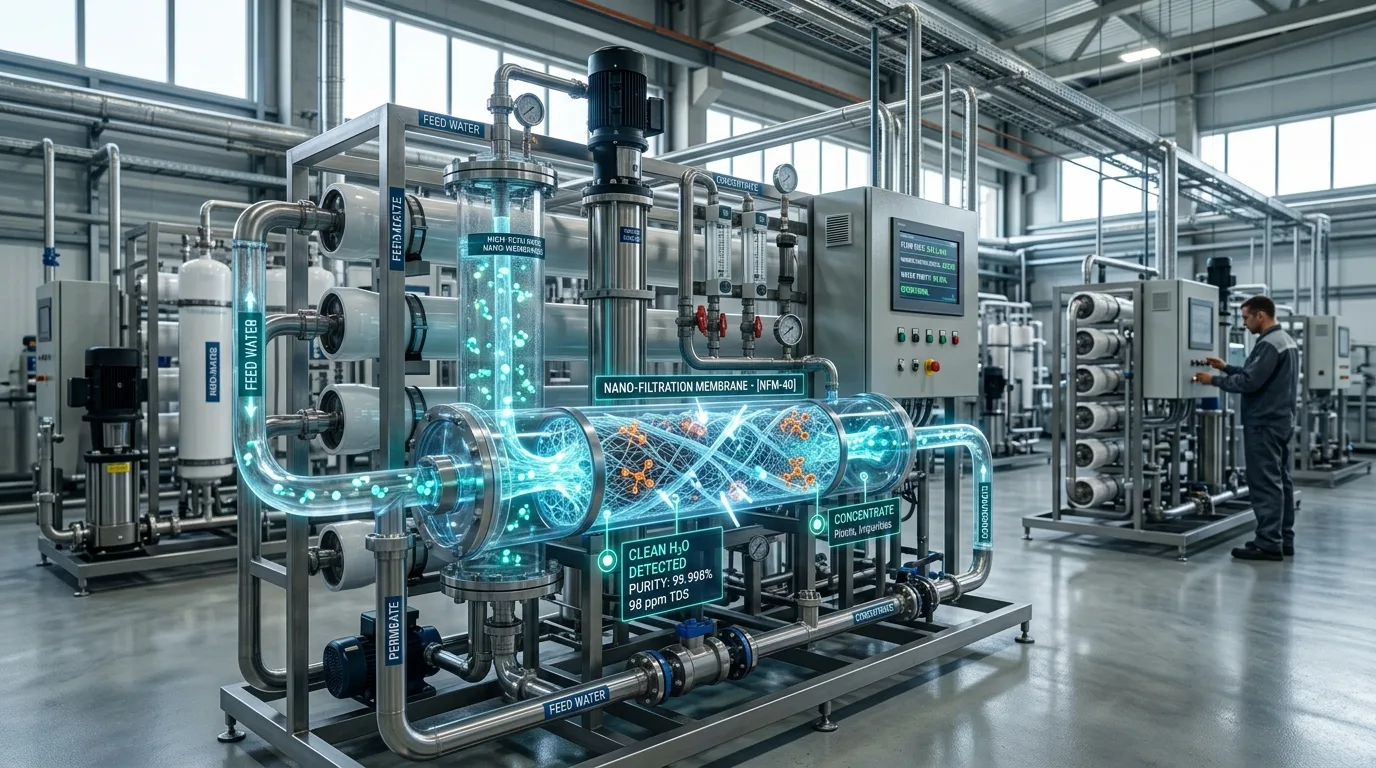
This report presents an inspiring picture of a technological revolution in Iran’s water sector, where artificial intelligence and nanotechnology converge to address critical water challenges. On one front, smart machine-learning models—adapted from Swiss standards and localized for Iranian conditions—enable accurate flood prediction even in data-scarce regions, helping bridge the long-standing gap between academic research and urban decision-making. On the other, Iranian researchers have achieved a record 93% efficiency in solar desalination systems through advanced nano-engineered membranes, making desalination more sustainable, affordable, and energy-efficient. The synergy of these two breakthroughs highlights a shift toward knowledge-based, data-driven water governance and opens a new horizon for strengthening long-term water security in Iran.

AI and the Future of Water Resource Management; From Smart Assistants to Autonomous Agents
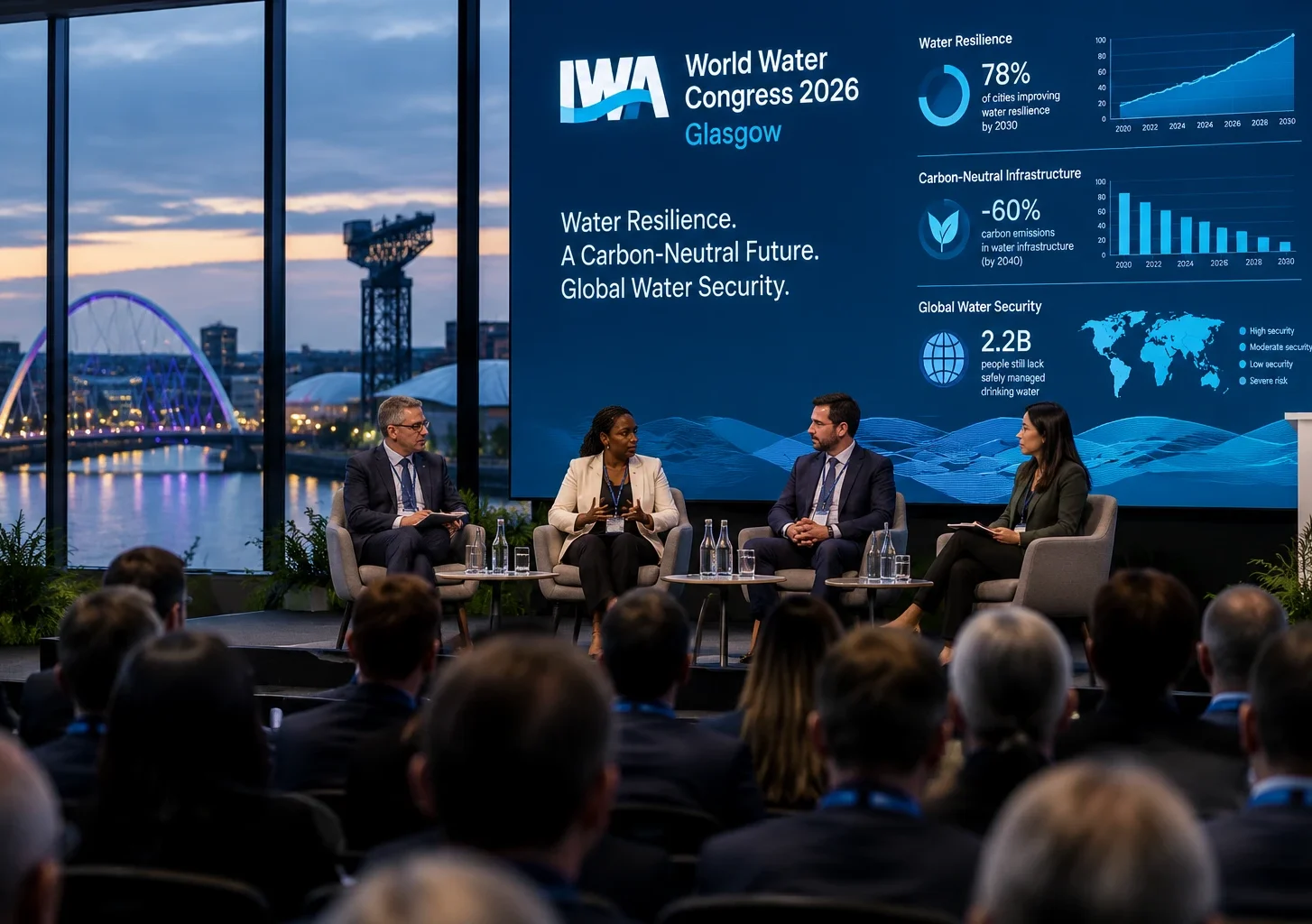
The latest IWA report emphasizes that #digitalization is no longer optional—it is the only way for network survival. We are transitioning from Generative AI to #Agentic_AI; systems that don’t just predict pipe bursts but take autonomous actions to optimize energy and reduce #NonRevenueWater.
In the new analysis by Water Insight Hub, we explore how these technologies bridge the skill gap left by retiring experts while boosting productivity by 20%. In regions facing chronic #WaterScarcity, leveraging #ArtificialIntelligence to turn scattered data into decisive management is a civilizational necessity.
We believe #innovation at this level transforms water resource management from a daunting human task into a smart, automated process. The future of #WaterGovernance relies on the convergence of digital systems and cybersecurity

Water Resource Management & Food Security: Analyzing the Nexus Approach in the Middle East
In today’s world, the sustainability of ecosystems depends on understanding the link between #Water, #Energy, #Food, and #Ecosystems. The #Nexus approach, or #WEFE_Nexus, which emphasizes this interconnection, has moved from the research level to the heart of #PolicyMaking. The experience of countries in the Arab region shows that moving beyond #SectoralManagement toward #IntegratedGovernance is the only path to confronting #ClimateChange and the #WaterCrisis.
Countries like #Egypt, the #UAE, and #Morocco, by relying on #WaterTech, #WaterRecycling, and the development of #RenewableEnergy, have managed to move Nexus projects from planning to implementation and reduce harmful interdependencies. However, challenges such as #Financing, the lack of a multi-sectoral #LegalFramework, and the gap between #ResearchCenters and #Executive bodies remain. Analyzing these experiences can help in

The Future of Water Engineering: How Do Large Language Models (LLMs) Manage the Water Crisis?
The next transformation in water engineering has quietly begun
Not through larger dams, but by integrating #ArtificialIntelligence into the heart of water decision-making.
Multi-agent systems based on Large Language Models (LLMs) can simultaneously analyze data, build scenarios, and offer policy recommendations, covering everything from floods to #Groundwater.
📌 The article’s message is clear: these systems can serve as digital collaborators for water engineers or even as neutral negotiators.
However, the lack of open data and weak #DataGovernance remain the biggest obstacles.
✅ The future of #WaterEngineering is smart; yet, it cannot be realized without data governance, transparency, and institutional trust.
For more insights on this digital shift, follow the Water Insight Hub.

Water Imports from Russia and the Virtual Water Strategy | Water Insight Hub
When an official speaks explicitly for the first time about “water imports,” it must be understood that the #WaterCrisis has moved beyond the warning phase into the phase of strategic decision-making. The Energy Minister’s remarks on importing water from neighbors are not merely a technical discussion; they signal a sensitive dilemma in #WaterGovernance: the choice between #PhysicalWater and #VirtualWater.