
The Nanoscale Revolution in Mitigating the Water Pollution Crisis; Invisible Technology Rescuing Vital Resources
The concept of deploying technologies invisible to the naked eye yet yielding monumental impacts may initially seem like science fiction; however, today nanotechnology has not only become a tangible reality, but is also rapidly emerging as a more practical and sustainable alternative for water quality monitoring and wastewater treatment. Based on the findings and research of Prof. Philiswa Nosizo Nomngongo, South African Research Chair in Nanotechnology (SARChI) from the University of Johannesburg, manipulating matter at the atomic and molecular scale has opened innovative avenues toward advancing water technology and eliminating highly complex pollutants.
By manipulating matter at dimensions between 1 and 100 nanometers (100,000 times smaller than the diameter of a human hair), nanotechnology substantially enhances the physical, chemical, and conductive properties of materials for specialized applications.
Colorimetric nanosensors and solid-phase extraction have enabled rapid and cost-effective detection of trace concentrations of heavy metals, pharmaceutical compounds, and hazardous chemicals.
Integrating nanoscale adsorption, catalysis, and membrane remediation facilitates the effective removal of recalcitrant contaminants such as antibiotics and Escherichia coli bacteria.
The concept of nanotechnology, whose theoretical foundations date back to the 1950s, was not prepared for practical and industrial deployment until 1981. Today, however, its adoption has proliferated across diverse sectors, unlocking vital applications within the water domain. Nanotechnology is fundamentally the science and engineering of manipulating matter at the atomic or molecular level within the range of 1 to 100 nanometers—dimensions roughly 100,000 times smaller than the thickness of a human hair. Prof. Philiswa Nosizo Nomngongo explains that these structural modifications enhance properties such as strength and conductivity, establishing the groundwork for engineering targeted solutions.
Prof. Nomngongo has been actively engaged in the water domain for years. Her passion originates from childhood experiences with water challenges, while her focus on nanotechnology solidified throughout her academic journey. She reflects: “When I was conducting my master’s research, I needed a method to identify contaminants, and my supervisor suggested that we should build sensors for this purpose.” Today, cutting-edge nanotechnology solutions in water purification have become a transformative framework for monitoring and removing emerging pollutants.
Water Quality Monitoring at the Nanoscale
Prof. Nomngongo notes: “Nanotechnology can significantly advance water monitoring. If you are concerned about heavy metals in water, you can develop nanosensors that not only detect their presence but also provide quantitative concentration metrics. If chemical compounds are your primary concern, specialized nanosensors exist for that purpose as well. A functional nanosensor that changes color upon contact with specific contaminants greatly accelerates problem identification.”
This approach is inherently proactive and cost-efficient, as it minimizes the extensive testing protocols traditionally required to diagnose water contamination. Prof. Nomngongo further explains that nanotechnology is utilized in solid-phase extraction, where nanomaterials trap contaminants for high-precision analytical assays. “This method is particularly valuable when contaminants occur at trace levels. These materials can be engineered to interact solely with designated pollutants, chemicals, or metals. If pharmaceuticals are the target, the nanomaterial can be configured to capture those specific compounds while bypassing other substances.” This superior sensitivity is essential for tracing emerging contaminants: the next paradigm shift in water resource management.
Water Treatment via Nanotechnology
The scope of nanotechnology extends well beyond monitoring, serving a fundamental function in purification processes. According to Prof. Nomngongo: “The same scientific principles apply when treating raw water or municipal and industrial wastewater.”
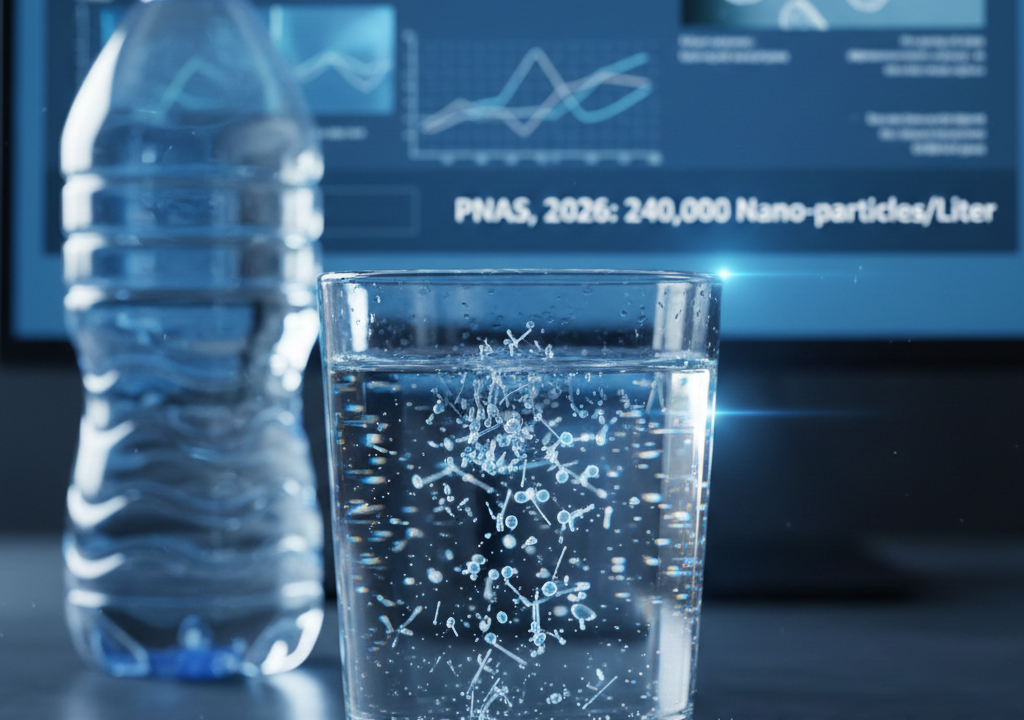
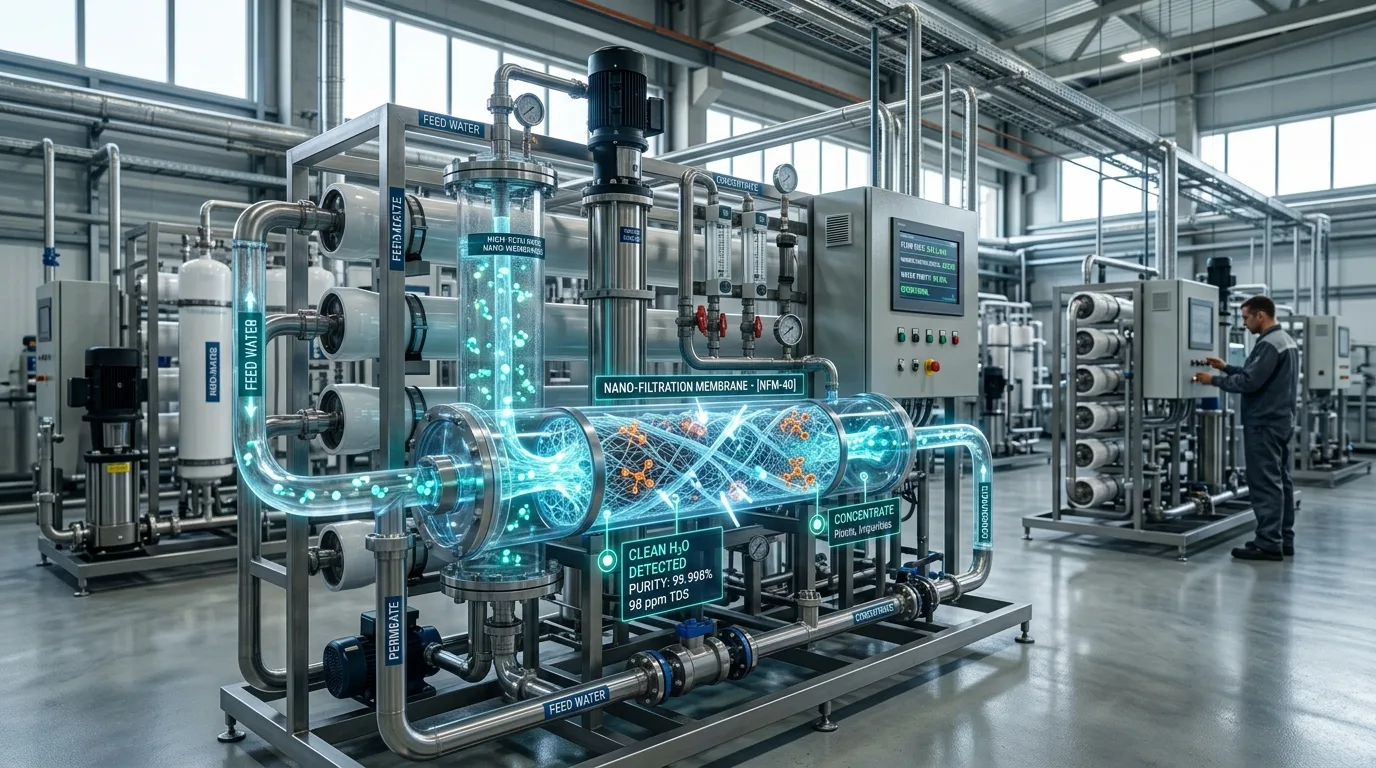
Membrane remediation represents a premier application in this sector, where filtration membranes are reinforced or functionalized to enhance reverse osmosis performance. Emulating the precise technology utilized to isolate pollutants in diagnostic stages, water streams can be directed through columns packed with nanomaterials; as the stream flows, pollutants are sequestered, discharging purified effluents. Prof. Nomngongo adds: “We can also utilize catalytic processes to degrade specific molecules into benign compounds; this hybrid paradigm couples adsorption with catalysis, wherein one class of nanomaterials adsorbs pollutants while another decomposes toxic matrices into safer molecular fractions.” Furthermore, pairing these protocols with innovations like removing over 90% of microplastics using nanobubble technology establishes new horizons for the water treatment industry.
Active Research Projects and Future Horizons
Prof. Nomngongo’s current investigations concentrate on monitoring pharmaceuticals in freshwater systems, with an emphasis on antibiotics. She asserts: “To treat water effectively, one must accurately understand the reactions occurring within it. My research centers on tracking waterborne pollutants via nanotechnology so that the purification process can be engineered deterministically and tailored to specific conditions, rather than relying on generic interventions.” Consequently, specialized nanomaterials can be synthesized to capture or degrade hazardous compounds with high selectivity.
Another major initiative led by the researcher focuses on deploying nanomaterials to capture Escherichia coli (E. coli) bacteria. The impetus for this work stems from field observations indicating the widespread prevalence of E. coli across rural South Africa, where establishing complex central treatment facilities remains unfeasible. Nanotechnology delivers an accessible filtration alternative, introducing renewed prospects for rural water safety.
From her academic vantage point, the paramount advantage of nanotechnology lies in its capacity to transcend the constraints of conventional water treatment and resolve intricate challenges such as the persistent presence of antibiotics or E. coli in water reserves. She highlights: “Currently, water systems eliminate select contaminants while others persist; through nanotechnology, we can design advanced treatment schemes that yield significantly safer water.” This capability is exceptionally critical in South Africa, where decentralized infrastructure offers a viable pathway to mitigating rural water deficits.
Nevertheless, she acknowledges operational bottlenecks: “Cost remains a primary deterrent. Synthesizing high-performance nanomaterials can be expensive, and scaling up for industrial output presents engineering hurdles.” Despite these challenges, she maintains an optimistic outlook: “Developing streamlined, accessible diagnostic kits with intuitive operational requirements—analogous to litmus test paper—will be transformative, allowing non-specialists to monitor drinking water quality.” Such progress will empower communities across South Africa, particularly where water oversight and purification face logistical barriers; a trajectory that, alongside insights such as 17 industrial water innovations spanning AI to recycling, illuminates the future of critical utility infrastructure.
Dedicated Analysis by the Water Insight Hub Team
The emergence and evolution of nanotechnology in the water sector signifies a fundamental paradigm shift in water resources management globally. As the global water crisis intensifies into one of the preeminent challenges of the twenty-first century, conventional purification infrastructure is no longer equipped to eliminate micropollutants, persistent pharmaceutical residues, and trace heavy metals. The global deployment of nanomaterials and nanosensors marks a transition away from energy-intensive, non-selective treatment toward intelligent, high-affinity systems that underpin sustainable water news and long-term water security for decades ahead.
The nexus between water technology and nanoscale engineering offers unprecedented capabilities to optimize processes such as desalination and reverse osmosis. Through nanoscale membrane surface modifications that mitigate biofouling and scale deposition, facilities achieve substantial reductions in operating expenditures and specific energy consumption. Concurrently, real-time online contaminant tracking via nanosensors establishes the analytical backbone needed for digital twins and automated closed-loop systems, substantially elevating the operational efficacy of water governance across qualitative and quantitative vectors.
Across the Middle East and North Africa (MENA) region, water quality degradation poses challenges just as severe as absolute physical scarcity. Depleting groundwater aquifers, non-point source agricultural runoff laden with agrochemicals, and progressive salinization together threaten ecological and socio-economic resilience. In this arid and semi-arid geography, embracing decentralized nano-enabled purification can ensure potable water access for rural and peri-urban communities without the capital burdens of regional pipeline networks and massive centralized treatment works, thereby alleviating displacement driven by hydro-climatic stress.
For the broader MENA region, the strategic dimensions of these innovations are profound. Basins across the region face chronic groundwater overdraft accompanied by industrial pollutant and nitrate infiltration into potable aquifers. Research initiatives like those championed by Prof. Nomngongo in low-cost nanoadsorbents and modular filtration matrices offer an operational blueprint for deploying decentralized point-of-use purification across remote rural zones and containing agricultural contaminants in MENA. Integrating these methodologies into industrial wastewater reclamation frameworks will simultaneously alleviate freshwater withdrawal pressures from heavy industrial sectors.
Ultimately, Water Insight Hub emphasizes that overcoming economic hurdles and achieving commercialization for nanomaterials mandates directed capital investment, institutional backing for innovation ecosystems, and interdisciplinary technology transfer. Until the production costs of advanced nanomaterials decline, their full potential to safeguard groundwater reserves and protect public health cannot be realized at scale. The convergence of targeted policy, technological advancement, and integrated water governance represents the only viable pathway to transition nanoscale technologies from laboratory benches directly to the frontlines of water scarcity mitigation throughout the Middle East and North Africa.
 Official Email of the Water Insight Hub: