مرکز بینش آب ایران

اخبار

رویدادها

گزارشات تحلیلی

مقالات

درباره ما

ورود

  • Water News
  • Water Technology
  • Water Events
  • گزارشات تحلیلی
  • Analytical Reports
  • درباره ما
  • English
    • فارسی
    • English
    • العربية

ورود | ثبت نام

Water Technology, an Effective Tool for Addressing Water Sector Challenges

In today’s era, the world is facing one of its most complex challenges: the global water crisis. Factors such as rapid population growth, industrial development, and especially the destructive impacts of climate change have placed unprecedented pressure on limited freshwater resources. Relying on traditional methods of water management and distribution is no longer sufficient to respond to these challenges, as these approaches are inadequate to cope with the scale and speed of the current crisis. At this critical juncture, technology, as a strategic lever and an undeniable necessity, plays a vital role in overcoming this situation and ensuring the sustainability of resources for future generations.

Modern water technologies offer a wide range of solutions, from production to smart management. On the one hand, innovation in low-energy desalination systems and advanced wastewater recycling processes helps increase available water resources. On the other hand, the digital revolution—through the integration of the Internet of Things (IoT) and Artificial Intelligence (AI)—enables real-time network monitoring, precise leak detection, optimization of consumption in the agricultural sector, and predictive maintenance of infrastructure. This data-driven approach not only increases efficiency and prevents resource loss, but also provides a foundation for transparent and effective water governance. To gain a deeper understanding of these key tools and their role in building a water-secure future, follow this page.

Water Technology
آینده مهندسی آب: چگونه مدل‌های زبانی بزرگ (LLM) بحران آب را مدیریت می‌کنند؟

The Future of Water Engineering: How Do Large Language Models (LLMs) Manage the Water Crisis?

The next transformation in water engineering has quietly begun Not through larger dams, but by integrating ...

Read More
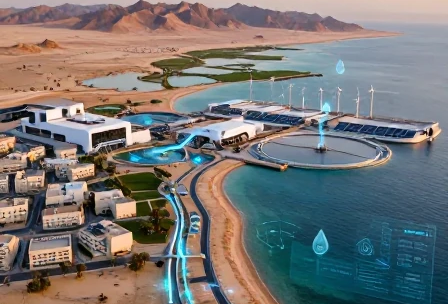
فناوری آب در آستانه سامانه‌های نیمه‌خودمختار: کاوشی جهانی در نوآوری‌های غیرخطی، از زیرساخت تا هوشمندی تصمیم

Water Technology on the Verge of Semi-Autonomous Systems: A Global Exploration of Non-Linear Innovations, from Infrastructure to Decision Intelligence

Water Technology on the Verge of Semi-Autonomous Systems: A Global Exploration of Non-Linear Innovations, from Infrastructure to ...
Read More
فناوری آب

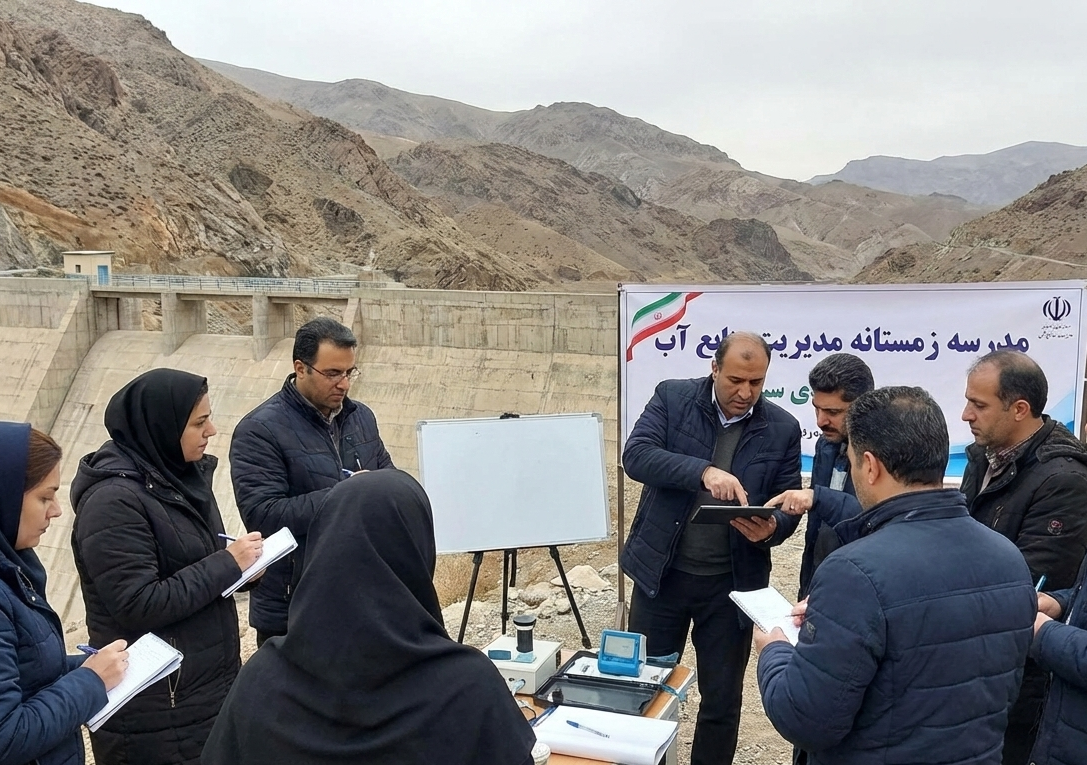
Water Technology 2030: The ‘Internet of Water’ Revolution and the Transition to Smart, Decentralized Systems for the Salvation of the Middle East – An Analytical Note

Water Technology 2030: The ‘Internet of Water’ Revolution and the Transition to Smart, Decentralized Systems for ...
Read More

Water Crisis Alert & Education Redefined: The ‘Water and Environment Seasonal Schools

Why Seasonal Schools are Vital for the Future of Water Resource Management in the MENA Region As Winter 2025 approaches, leading ...

Read More
Water Technology
What Is Water Technology and How Can It Solve the Global Water Crisis?

Water technology refers to a comprehensive set of modern engineering, digital, and management solutions designed for water supply, treatment, distribution, and efficient consumption. By utilizing advanced approaches such as water leak detection, satellite-based leak detection, wastewater recycling, low-energy desalination, and smart water network management, water technology addresses water scarcity from two critical dimensions: increasing supply and reducing demand. Through real-time data and predictive modeling, water technology enables countries to manage limited water resources more efficiently and ensure long-term water security for future generations.

What Role Does Water Technology Play in Detecting and Reducing Water Leakage?

Leak detection is one of the most vital applications of water technology. Using acoustic sensors, smart pressure meters, and thermal imaging, water leaks can be identified within underground distribution networks. More recently, satellite-based leak detection has enabled large-scale monitoring by analyzing satellite imagery and soil moisture anomalies. These technologies significantly reduce water losses, prevent infrastructure damage, and lower maintenance costs, making water technology a critical tool for improving distribution efficiency and preserving water resources.

How Does Water Technology Diplomacy Help Resolve International Water Conflicts?

Water technology diplomacy refers to the use of technological innovation as a trust-building mechanism between countries sharing transboundary water basins. Cooperation in hydrological data exchange, shared simulation models, and joint monitoring systems—such as satellite leak detection— creates transparency and supports fair, sustainable water agreements. For example, in the Nile Basin dispute between Egypt and Ethiopia, applying water technology to increase transparency around dam operations could prevent disagreements from escalating into security crises.

How Do IoT and Artificial Intelligence Transform Water Resource Management?

The Internet of Things (IoT) and Artificial Intelligence (AI) are central elements of the digital transformation of water technology. IoT sensors collect real-time data on flow rates, pressure, water quality, and consumption patterns. AI systems analyze this data to predict demand, detect leaks, optimize operations, and schedule preventive maintenance. By integrating IoT and AI, water management shifts from a reactive model to a proactive, data-driven approach, significantly improving efficiency across agricultural, industrial, and drinking water sectors.

How Does Satellite-Based Leak Detection Work and What Are Its Advantages?

Satellite-based leak detection relies on high-resolution satellite imagery and technologies such as Synthetic Aperture Radar (SAR) and thermal sensing. By detecting abnormal changes in soil moisture, this method identifies major leaks in transmission and distribution pipelines, even in remote or inaccessible areas. Its key advantages include wide geographic coverage, rapid detection of hidden leaks, lower inspection costs, continuous large-scale monitoring, and strong integration with ground-based leak detection technologies.

What Is the Future of Water Technology in a Changing Climate?

Climate change intensifies droughts, floods, and rainfall variability, placing unprecedented strain on water systems. Future water technology will focus on adaptive systems driven by real-time climate data, renewable-energy-powered desalination, predictive flood and drought modeling, and international data-sharing platforms. In this context, water technology is no longer just a technical solution but a cornerstone of climate resilience and adaptive governance.

How Can Water Technology Help Achieve Sustainable Water Security?

Sustainable water security requires an integrated strategy with water technology at its core. This includes optimizing demand through smart irrigation and low-loss distribution networks supported by leak detection technologies, expanding supply via desalination and wastewater reuse, implementing data-driven governance through smart water control centers, and strengthening international cooperation through water technology diplomacy. Together, these measures balance supply and demand and ensure long-term water security for present and future generations.

Shape the Future of Water with Us

Water Insight Hub has established a premium scientific and technological platform to publish your valuable contributions—ranging from specialized research, scientific studies, innovative and technological insights, and translations of international news and articles, to policy reviews and water sector product introductions—all under your own name and credentials. Sharing your experiences and scientific perspectives can serve as a vital source of inspiration and fresh knowledge for other researchers, professionals, and readers in the fields of water technology, water resource management, and innovation in the water industry. Therefore, if you wish to share your research findings, specialized analysis, or introductions to emerging water technologies with the global water scientific community, you can get in touch with us through the Scientific Communications Department at Water Insight Hub.

📧 Official Email of Water Insight Hub:
info@waterinsighthub.com

Water Insight Hub – The Leading Authority for Water Data and Analytics in the MENA Region

Water Insight Hub welcomes collaboration with researchers, industry experts, and academic professionals dedicated to water sustainability and environmental technology. Join us in shaping the future of water resource management through scientific research and strategic initiatives. For partnership inquiries or joint event proposals, please reach out to us at:
info@waterinsighthub.com

Subscribe to our Newsletter

+200

Followers

+1500

Followers

20

Followers

Water Insight Hub - All Rights Reserved