

Water Treatment Technology: Essential Reports, Industry Trends & Insights
In an era where escalating industrial activities and climate volatility pose existential threats to our planet’s scarcest water resources, conventional filtration methods are no longer sufficient. This crisis is exceptionally acute across the MENA (Middle East and North Africa) region, where extreme water scarcity demands immediate, hyper-efficient infrastructure upgrades. Today, deploying Advanced Water Treatment Technologies is no longer an operational alternative—it is a critical imperative for neutralizing persistent contaminants and securing regional water resilience.
The modern water sector faces an unprecedented adversary in PFAS (Per- and Polyfluoroalkyl Substances), infamously known as “forever chemicals.” These highly resilient pollutants resist natural degradation and aggressively infiltrate vital groundwater tables. However, revolutionary breakthroughs in Water Technology are opening new frontiers to counter this hazard. By leveraging Advanced Oxidation Processes (AOPs), Granular Activated Carbon (GAC) beds, Ion Exchange (IX) resins, and smart nanofiltration membrane systems, we now possess the engineered precision required to capture and destroy these stubborn molecules, turning compromised streams into pure, potable water.
At Water Insight Hub, we provide executive-level, deep-dive analyses into these emerging water quality challenges. Our curated repository of strategic reports, pioneering global research, and rigorous engineering evaluations serves as the definitive blueprint for deploying cutting-edge PFAS mitigation solutions and modernizing treatment infrastructures across the MENA region and globally. Join us as we pioneer the future of sustainable water quality and security.
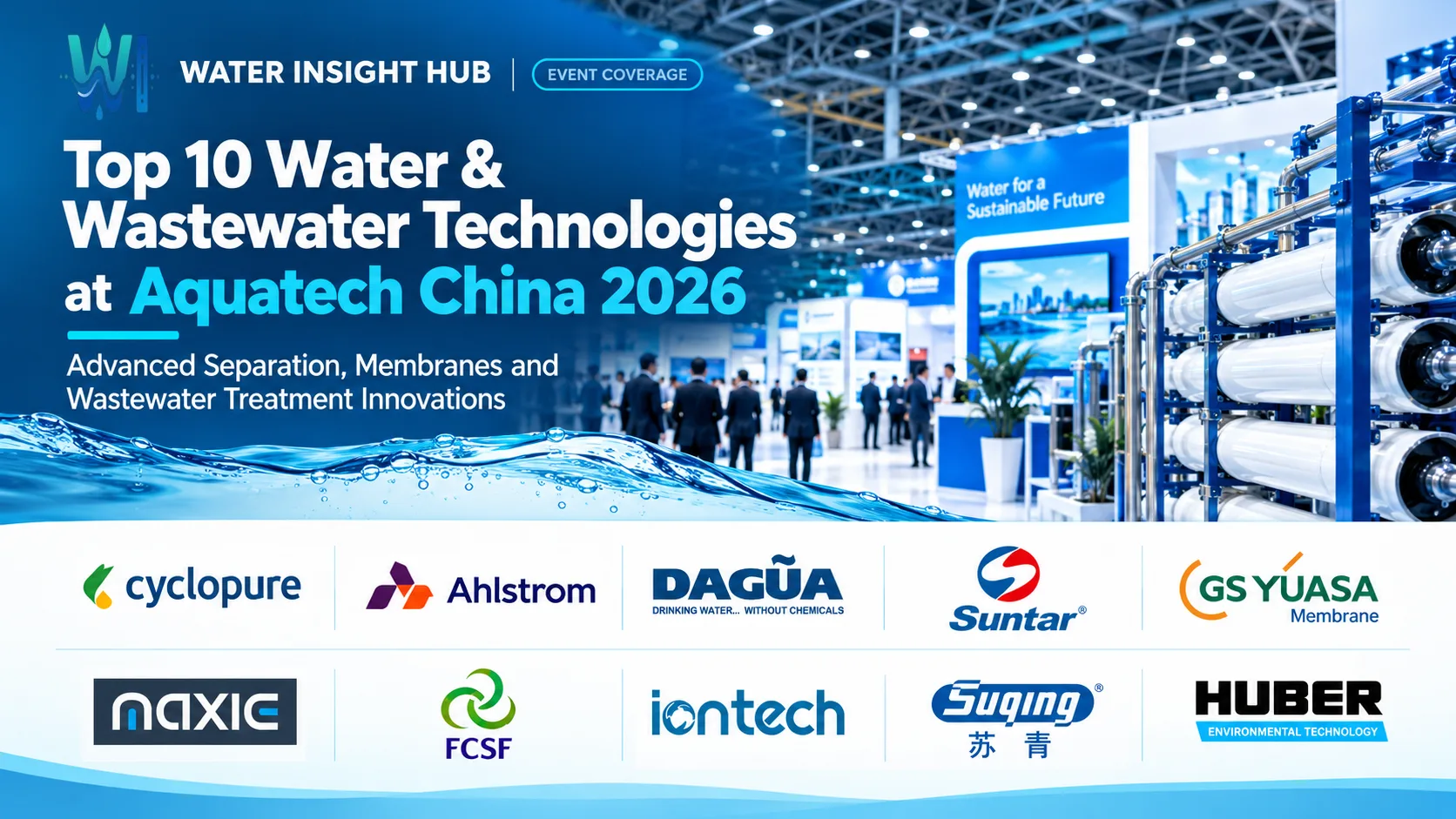
Top 10 Technologies at Aquatech China 2026: Advanced Water Treatment Review
An exhaustive evaluation of the top 10 engineering innovations from Aquatech China 2026, analyzing selective adsorbents, ...
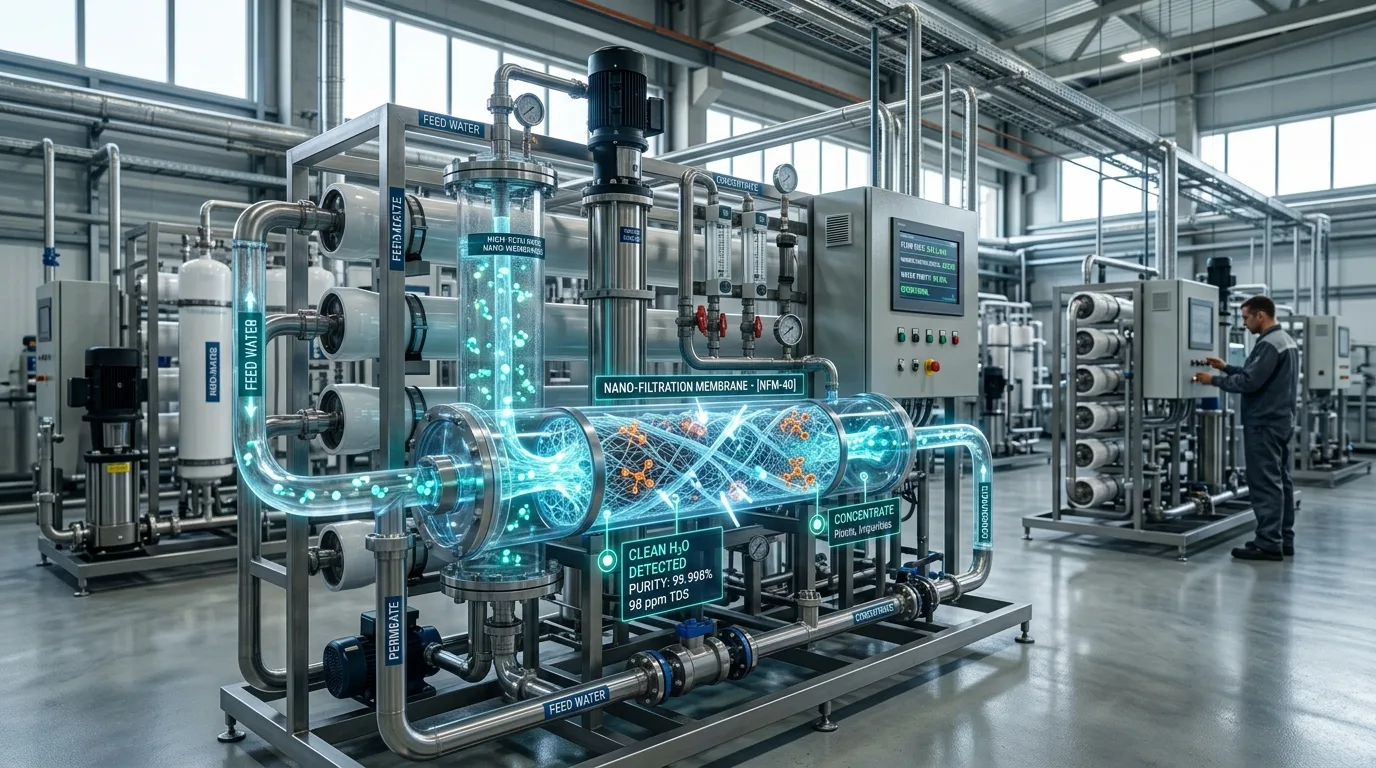
Nanotechnology in Water Treatment & Monitoring
This article explores groundbreaking advancements in nanoscale water quality monitoring and purification, highlighting ...

Iranian Experts at IWA World Water Congress: Technical & MENA Analysis
An exhaustive review of technical contributions by 11 Iranian-heritage scientists at the IWA World Water Congress, accompanied by ...
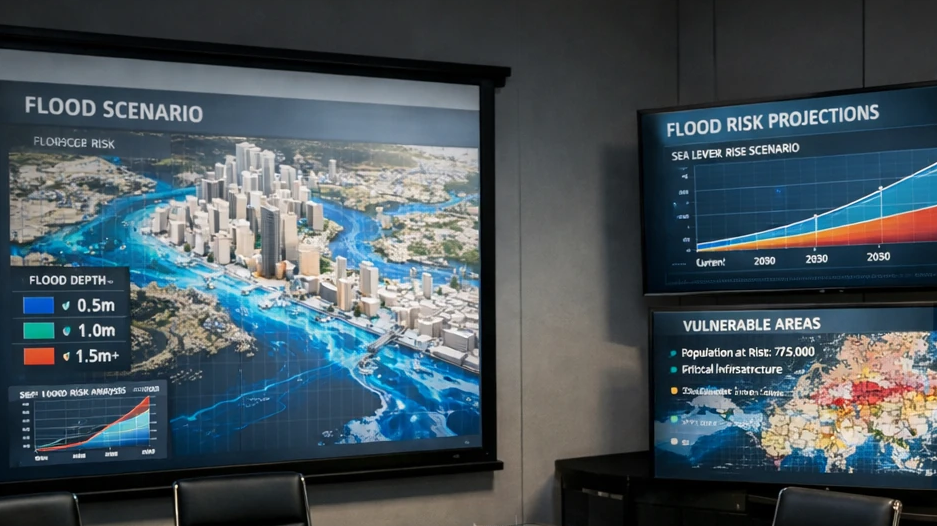
Technological Revolution in Iran’s Water Sector: Simultaneous Review of Two Achievements in Flood Prediction and Solar Desalination
This report presents an inspiring picture of a technological revolution in Iran’s water sector, where artificial intelligence and ...
The New Paradigm of Purity: Engineering Advanced Water Treatment Technologies, Process Dynamics, and Strategic Remediation of Emerging Contaminants
In an era where escalating industrial activities, compounding demographic shifts, and severe climate volatility pose existential threats to our planet’s scarcest water assets, conventional filtration protocols are no longer sufficient. This environmental crisis is exceptionally acute across the MENA (Middle East and North Africa) region, where extreme water scarcity, hyper-arid climates, and rapidly depleting aquifers demand immediate, hyper-efficient infrastructural upgrades. Today, the deployment of Advanced Water Treatment Technologies is no longer a localized operational alternative—it is a critical geopolitical and civil defense imperative necessary to neutralize persistent contaminants and secure global water resilience.
The modern water utility sector has evolved from a purely empirical, hydraulic discipline into a highly sophisticated branch of molecular engineering, biochemistry, and thermodynamic science. Its primary mandate is no longer the simple physical screening of suspended materials, but the deliberate manipulation of atomic structures and the destruction of complex chemical bonds. In this technical blueprint, Water Insight Hub conducts an exhaustive, deep-dive analysis into the dynamics of membrane macro-systems, advanced chemical oxidation kinetics, and engineered remediation frameworks designed to secure sustainable municipal and industrial water lifelines.Chapter 1: The Molecular Anatomy of Emerging Water Contaminants; The Crisis of Forever Chemicals and Heavy Metals
In advanced process engineering, the baseline for system architecture relies on a microscopic understanding of target pollutants. Modern treatment plants are no longer designed around basic organic matter; they are built to confront highly resilient molecular matrices categorized into three distinct, high-risk tiers:Chapter 2: The Physical Filtration Doctrine; Advanced Pre-Treatment and Silt Density Index (SDI) Optimization
Physical and mechanical separations constitute the foundational line of defense in modern water treatment infrastructure. A fundamental rule of process engineering dictates that the economic lifespan and operating efficiency of expensive down-stream membrane systems are entirely governed by the performance of the pre-treatment sequence. Failure to intercept suspended solids at this stage leads to catastrophic membrane fouling.Chapter 3: Physico-Chemical Engineering; Flocculation Dynamics and Advanced Oxidation Processes (AOPs)
When contaminants exist as dissolved fractions or fine colloidal dispersions, physical straining alone is ineffective. Colloidal particles carry negative surface electrical charges (Zeta Potential) that generate repulsive forces according to Coulomb’s Law. Because their physical mass is negligible, gravitational forces cannot overcome these electrostatic fields, leaving them suspended indefinitely. Overcoming this requires targeted chemical intervention:1. Electrostatic Charge Neutralization and Coagulation
During this phase, precise dosages of inorganic coagulants like Polyaluminum Chloride (PAC), Aluminum Sulfate, or Ferric Chloride are rapidly injected into the stream under high-shear mixing. The highly charged metal cations immediately neutralize the negative surface charges of the colloids, suppressing the electrical double layer. This process, known as chemical destabilization, allows the micro-particles to collide. Long-chain polymeric flocculants (polyelectrolytes) are then introduced under gentle agitation to act as bridges, gathering the micro-flocs into heavy agglomerations that settle rapidly out of suspension within lamella clarifiers.2. The Shift to Advanced Oxidation Processes (AOPs)
While legacy chemical disinfection relied primarily on elementary gas chlorination, modern ecological and safety regulations have accelerated the transition away from it. When free chlorine reacts with naturally occurring organic matter (NOM) in raw water, it synthesizes highly carcinogenic disinfection byproducts (DBPs), including Trihalomethanes (THMs) and Haloacetic Acids. To mitigate this, modern infrastructure relies on Advanced Oxidation Processes (AOPs). These systems are designed to generate highly reactive, short-lived hydroxyl radicals (•OH) in-situ. Possessing an exceptional thermodynamic oxidation potential, hydroxyl radicals non-selectively attack, cleave, and mineralize resistant industrial pesticides, pharmaceuticals, endocrine disruptors, and complex hydrocarbons into benign end-products like carbon dioxide and water. The synergistic combination of Ozone gas (O3), Hydrogen Peroxide (H2O2), and high-intensity Ultraviolet (UV) radiation represents the modern standard for destroying trace chemical matrices.Chapter 4: Advanced Engineering Frameworks for Targeted PFAS Remediation
Because PFAS molecules pass easily through traditional municipal treatment networks, the global water industry—backed by extensive technical evaluations from Water Insight Hub—has formalized three dedicated technological platforms to capture and isolate these persistent compounds:- Granular Activated Carbon (GAC) Adsorption: High-purity GAC media features an extensive internal microscopic pore architecture, providing up to 1,000 square meters of active surface area per single gram of carbon. PFAS molecules are drawn out of the aqueous phase and bound tightly to the internal carbon walls through hydrophobic interactions and strong van der Waals forces.
- High-Selectivity Ion Exchange (IX) Resins: Synthetic ion exchange applications use specialized polymeric beads engineered with fixed, positively charged functional groups. Because dissolved PFAS species assume an anionic state in water, they bind strongly to the resin matrix, providing high throughput kinetics and excellent capture efficiency for short-chain PFAS variants.
- High-Pressure Membrane Separation (Nanofiltration & Reverse Osmosis): When treating complex, multi-pollutant water profiles, dense thin-film composite membranes are required. Nanofiltration (NF) membranes feature pore structures tailored to selectively reject multivalent ions and heavy organic compounds under lower operating pressures than standard Reverse Osmosis (RO), delivering a highly efficient and sustainable treatment barrier.
Chapter 5: Biological Wastewater Reclamation; Intelligent Activated Sludge and Membrane Bioreactors (MBR)
Biological wastewater treatment scales and accelerates natural ecological self-purification mechanisms. It is the primary process used to stabilize municipal sewage and heavy industrial effluents characterized by high Biochemical Oxygen Demand (BOD) and Chemical Oxygen Demand (COD). This approach leverages complex mixed cultures of aerobic and anaerobic microorganisms to metabolize dissolved pollutants. The classic activated sludge process maintains a suspended biomass within aerated basins, where microbes consume organic carbon compounds, converting them into biological flocs and carbon dioxide. However, the modern standard for wastewater reclamation is the Membrane Bioreactor (MBR). MBR systems combine biological degradation with automated ultrafiltration membranes, eliminating the need for large, legacy secondary clarification tanks. The integrated membrane modules draw clean water directly out of the biomass mixture, yielding an ultra-pure effluent entirely free of suspended solids, turbid colloids, or intestinal pathogens. This high-grade water can be routed directly into industrial cooling towers, high-pressure boiler feeds, or sustainable agricultural irrigation networks.Chapter 6: Industry 4.0 Integration; IoT Architectures, Digital Twins, and Predictive Optimization
The water engineering community recognizes that long-term process stability requires smart digital monitoring. Deploying industrial Internet of Things (IoT) sensor arrays across water treatment infrastructure enables the continuous, real-time tracking of critical operational metrics, including Total Dissolved Solids (TDS), turbidity spikes, Total Organic Carbon (TOC), and dynamic differential pressures. This continuous stream of operational data feeds directly into localized artificial intelligence engines and Digital Twin platforms—highly precise, real-time virtual simulations of the physical facility. By using machine learning models to analyze incoming chemical and flow variations, these systems can automatically optimize chemical dosing pumps, schedule preventative membrane backwash cycles, and manage high-pressure pump energy loads. This removes human error from day-to-day operations and provides an automated safeguard against premature asset failure.Strategic Conclusion: Securing Tomorrow’s Global Water Lifelines
Resolving the complex hydrological challenges of the twenty-first century requires advanced, scalable technological tools. By combining high-pressure membrane systems, advanced oxidation chemistry, and targeted PFAS removal platforms, the modern water treatment sector provides a viable path to overcome global water scarcity. Investing in high-performance treatment assets is a direct investment in public health, municipal resilience, and industrial longevity. As an international technical think-tank and engineering advisory, Water Insight Hub is dedicated to transferring advanced technology, publishing rigorous engineering evaluations, and developing tailored process solutions. These efforts are essential to optimize global water quality, maximize resource recovery, and safeguard the shared environmental future of our planet. Purity is engineered through innovation.Shape the Future of Water with Us
Water Insight Hub has established a premium scientific and technological platform to publish your valuable contributions—ranging from specialized research, scientific studies, innovative and technological insights, and translations of international news and articles, to policy reviews and water sector product introductions—all under your own name and credentials. Sharing your experiences and scientific perspectives can serve as a vital source of inspiration and fresh knowledge for other researchers, professionals, and readers in the fields of water technology, water resource management, and innovation in the water industry. Therefore, if you wish to share your research findings, specialized analysis, or introductions to emerging water technologies with the global water scientific community, you can get in touch with us through the Scientific Communications Department at Water Insight Hub. Official Email of Water Insight Hub:
info@waterinsighthub.com
Official Email of Water Insight Hub:
info@waterinsighthub.com