مرکز بینش آب ایران

اخبار

رویدادها

گزارشات تحلیلی

مقالات

درباره ما

ورود

  • Water News
  • Water Technology
  • Water Events
  • گزارشات تحلیلی
  • Analytical Reports
  • درباره ما
  • English
    • فارسی
    • English
    • العربية

ورود | ثبت نام

The Desalination Industry: Pushing the Boundaries of Water Supply and Security

In an era where climate change drives severe depletion of surface and groundwater resources, relying on conventional water supplies is no longer sufficient to secure water security. Today, the desalination industry is no longer a high-cost luxury; it has become a strategic and infrastructural necessity to transcend hydrological constraints and achieve long-term sustainability.

The convergence of engineering and innovation has unlocked new horizons in water technology, transforming oceans and seas into resilient sources of life. Advanced membrane processes, such as Reverse Osmosis (RO), paired with cutting-edge energy recovery systems and smart brine management solutions, offer immense potential for supplying drinking, industrial, and modern agricultural water in arid regions. This industry stands at the forefront of infrastructural resilience against global water scarcity.

In this section, we provide a deep, analytical dive into the core dimensions of this sector. We have curated a comprehensive collection of analytical reports, global research articles, economic assessments, and environmental impact studies. This repository serves as a master gateway to the latest breakthroughs, energy challenges, and the future of water purification technologies both globally and locally. Join us as we dissect and analyze this vital industry.

Desalination
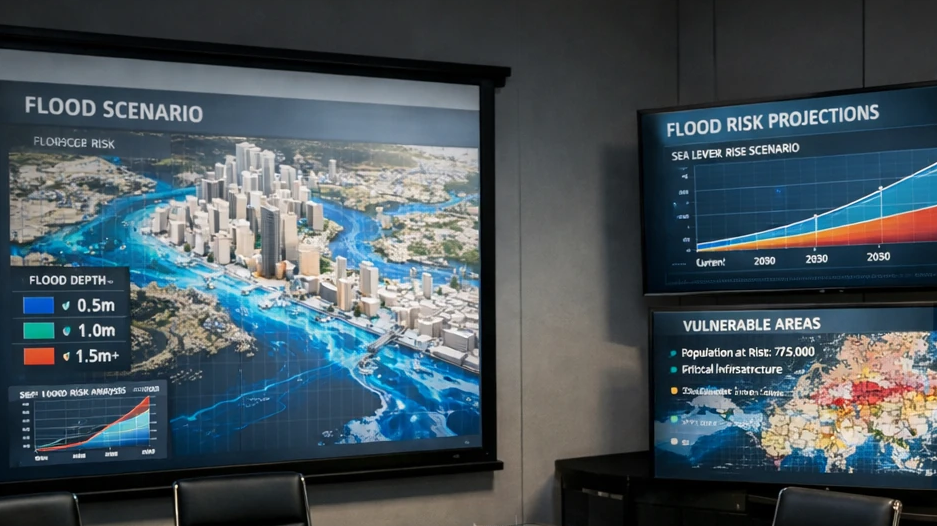
۱. نمایی از مدل‌سازی رایانه‌ای پهنه‌بندی خطر سیلاب در محیط شهری ۲. دستگاه آب‌شیرین‌کن خورشیدی با غشای نانویی سیاه رنگ در آزمایشگاه ۳. مقایسه سطح غشای معمولی و غشای اصلاح شده با نانوذرات کربن زیر میکروسکوپ

Technological Revolution in Iran’s Water Sector: Simultaneous Review of Two Achievements in Flood Prediction and Solar Desalination

This report presents an inspiring picture of a technological revolution in Iran’s water sector, where artificial intelligence and ...

Read More
The desalination industry plays a critical role in global water security by providing a drought-resilient, non-conventional water supply. As climate change depletes traditional surface and groundwater reserves, large-scale desalination plants transform unlimited seawater and brackish resources into high-quality water, ensuring a reliable supply for drinking, industrial sectors, and modern agriculture in arid regions.
Reverse Osmosis (RO) dominates the desalination industry due to its superior energy efficiency and modular flexibility compared to thermal methods like Multi-Stage Flash (MSF) distillation. RO eliminates the need for thermal phase transitions (boiling water), instead utilizing high-pressure hydraulic pumps and semi-permeable membranes, which drastically reduces both operational costs (OPEX) and carbon footprints.
Thanks to advancements in Energy Recovery Devices (ERDs) and high-permeability nano-membranes, modern seawater Reverse Osmosis (SWRO) plants have reduced energy consumption to a range of 3 to 4 kWh per cubic meter of purified water. This is a massive improvement over traditional thermal distillation systems, which require up to three times more energy.
The primary environmental concern is the management of brine (high-salinity wastewater mixed with anti-scalant chemicals) and its impact on marine ecosystems when discharged. Additionally, the greenhouse gas emissions associated with the high energy demands of older facilities remain a challenge, pushing the industry toward green energy integration and sustainable disposal methods.
Zero Liquid Discharge (ZLD) is an advanced wastewater treatment strategy designed to eliminate all liquid waste from a facility. In the desalination industry, ZLD utilizes thermal evaporators and crystallizers to separate the water from the brine, recycling 100% of the liquid into pure distilled water and converting the remaining concentrated salts into solid, commercially valuable minerals.
Advanced pre-treatment is essential to prevent membrane fouling—the accumulation of suspended solids, algae, organic matter, and mineral scales on membrane surfaces. Utilizing modern technologies like Ultrafiltration (UF) and automated chemical dosing optimizes the Silt Density Index (SDI) of feed water, protecting expensive RO membranes and ensuring a stable permeate flux over time.
Major macro-scale desalination projects are transforming hyper-arid zones and economic hubs globally by decoupling industrial expansion and municipal survival from depleted natural aquifers. Massive infrastructures—most notably across the MENA region, Australia, and parts of the Americas—deploy mega-capacity Reverse Osmosis (RO) networks to secure coastal cities and supply vital economic sectors via extensive trans-regional water transfer pipelines.

Climate Sustainability Gateway: A Macro Analysis of Technical and Strategic Shifts in the Desalination Industry

Severe climate change, prolonged droughts, and the alarming depletion of groundwater aquifers are posing an unprecedented threat to global water security. In this critical landscape, relying on conventional water resources is no longer sufficient to meet the skyrocketing demands of municipal, industrial, and agricultural sectors. Modern seawater desalination technologies have emerged as a strategic imperative to ensure ecosystem survival and regional resilience.

Today, developing sustainable frameworks within the desalination industry has become a cornerstone of modern water governance. In this analytical insight, Water Insight Hub conducts a deep dive into the technical dimensions, environmental challenges, and future horizons of this advanced sector, looking far beyond conventional paradigms.
Read More

Chapter 1: Technological Power Balance; Absolute Supremacy of Reverse Osmosis (RO) over Thermal Systems

The reason membrane technology dominates large-scale purification infrastructure lies in the key parameters of energy economics. Classic thermal systems, such as Multi-Stage Flash (MSF) distillation, consume massive amounts of thermal energy because they require a constant phase transition from liquid to vapor. Conversely, the Reverse Osmosis process bypasses this thermal cycle entirely, relying on hydraulic pressure to achieve significantly higher energy efficiency.
Today, with the integration of advanced Energy Recovery Devices (ERDs) and high-permeability nano-membranes, the specific energy consumption of modern seawater Reverse Osmosis (SWRO) facilities has dropped to a range of 3 to 4 kWh per cubic meter—roughly one-third of what traditional thermal distillation systems require.
The high flexibility of membrane processes in handling fluctuations in feed water salinity, combined with the modular nature of operational units, guarantees the economic viability of these capital investments. These features have turned Reverse Osmosis into the backbone of macro-scale desalination infrastructure in arid and coastal regions worldwide.

Chapter 2: Review of Desalination Mega-Infrastructures in Iran; From the Persian Gulf to the Central Plateau

In recent years, Iran has taken substantial strides toward utilizing deep aquifers and non-conventional surface waters. Mega-scale water transfer projects stretching from the Persian Gulf and the Oman Sea to the central plateau serve as the primary hubs for deploying modern desalination technologies across the country. Below, we review the most vital of these infrastructures:

1. Bandar Abbas Desalination Mega-Plant (Saqi Kowsar Project)

Designed entirely around seawater Reverse Osmosis (SWRO) technology, this massive complex stands as one of the largest desalination facilities in Western Asia. With an ultimate projected capacity of one million cubic meters per day developed across multiple phases, this project aims to provide a sustainable drinking water supply for Hormozgan province while transferring fresh water to the major industrial and mining hubs of Kerman and Yazd.

2. Oman Sea Desalination and Transfer Project to Sistan & Baluchestan

This vital national initiative was launched to alleviate severe water stress and drive socio-economic development in the eastern part of the country. Located on the coastlines of Chabahar, the facility features a capacity of roughly 200,000 cubic meters per day in its initial phase, delivering purified water via a pipeline spanning hundreds of kilometers to the cities of Zahedan and Zabul, as well as local industrial operations.

3. The 100,000-Cubic-Meter Bandar Abbas Desalination Site

This facility was brought online specifically to address acute drinking water deficits in the metropolitan area of Bandar Abbas and its surrounding suburbs. The implementation of advanced physical pre-treatment and Dissolved Air Flotation (DAF) systems at this center represents a successful case study in mitigating the impact of Persian Gulf algal blooms on desalination workflows.

Chapter 3: Pre-Treatment Engineering; Precise Flow Surgery to Protect Membrane Integrity

The beating heart of any desalination plant is its array of semi-permeable membranes. The single greatest threat to these high-cost assets is fouling—the accumulation of suspended solids, organic matter, marine algae, and mineral scales on membrane surfaces. Advanced pre-treatment system design serves as the first line of defense against premature degradation. Utilizing Ultrafiltration (UF) as a replacement for traditional sand filters sharply lowers the Silt Density Index (SDI) of the feed water, feeding a consistently stable stream into high-pressure pumps.

Chapter 4: Brine Mitigation; Environmental Approaches of Zero Liquid Discharge (ZLD)

The Achilles’ heel of the desalination industry has long been the management of highly concentrated brine. Responsibly returning this hypersaline waste stream to marine environments can severely jeopardize fragile coastal ecosystems. The modern strategy for sustainable industries is shifting toward Zero Liquid Discharge (ZLD).
ZLD Technology in Desalination: By utilizing advanced thermal evaporation and crystallization processes, all liquid content within the wastewater stream is recovered. The output is transformed into pure distilled water and solid, mineral-rich salts that hold distinct commercial value.

Conclusion and Future Horizons

Securing sustainable water resources in an era of intense hydrological scarcity demands the courage to adopt disruptive technologies. The optimized scaling of desalination infrastructure—when paired with principled brine management and high energy efficiency—presents the most viable pathway to bridge the widening gap between supply and demand. As a reference for strategic analysis, Water Insight Hub asserts that localizing and implementing these advanced standards holds the master key to the sustainable development of critical infrastructures.

Shape the Future of Water with Us

Water Insight Hub has established a premium scientific and technological platform to publish your valuable contributions—ranging from specialized research, scientific studies, innovative and technological insights, and translations of international news and articles, to policy reviews and water sector product introductions—all under your own name and credentials. Sharing your experiences and scientific perspectives can serve as a vital source of inspiration and fresh knowledge for other researchers, professionals, and readers in the fields of water technology, water resource management, and innovation in the water industry. Therefore, if you wish to share your research findings, specialized analysis, or introductions to emerging water technologies with the global water scientific community, you can get in touch with us through the Scientific Communications Department at Water Insight Hub.
📧 Official Email of Water Insight Hub: info@waterinsighthub.com

Water Insight Hub – The Leading Authority for Water Data and Analytics in the MENA Region

Water Insight Hub welcomes collaboration with researchers, industry experts, and academic professionals dedicated to water sustainability and environmental technology. Join us in shaping the future of water resource management through scientific research and strategic initiatives. For partnership inquiries or joint event proposals, please reach out to us at:
info@waterinsighthub.com

Subscribe to our Newsletter

+200

Followers

+1500

Followers

20

Followers

Water Insight Hub - All Rights Reserved