

Water Technology on the Verge of Semi-Autonomous Systems: A Global Exploration of Non-Linear Innovations, from Infrastructure to Decision Intelligence
Introduction: Transitioning from the Mechanical Era to Liquid Intelligence
Our world is undergoing a fundamental shift in how we handle our most vital resource. Water technology no longer means simply laying pipes, building dams, or mechanical pumping; we are entering an era where infrastructure “thinks,” “learns,” and makes decisions in a “semi-autonomous” manner. This shift represents a transition from linear management (extraction, consumption, discharge) to non-linear and circular models, where every drop of water is tracked as both a digital and physical asset. Climate crises and water stress have acted as catalysts, pushing the conservative water industry toward adopting radical innovations.
In this new landscape, water technology integrates with Artificial Intelligence (AI), the Internet of Things (IoT), and advanced materials science to challenge traditional definitions of water security. Semi-Autonomous Systems are now capable, without direct human intervention, of analyzing consumption patterns, predicting leaks before they occur, and adjusting water quality at the molecular level. This analytical article not only reviews global trends but also seeks to clarify the vital role of these technologies in saving fragile ecosystems, particularly in arid and semi-arid regions like the MENA (Middle East and North Africa) region.
Today, leading analysts view water technology as the sole solution to bridging the massive gap between supply and demand. Non-linear innovations, where system outputs do not necessarily correspond to traditional inputs (such as producing water from air or energy-positive treatment plants), have expanded the boundaries of the possible. Below, we will explore the layers of this technological revolution, from the depths of the seas to the clouds, and from physical infrastructure to decision-making algorithms.
AI and Digital Twins: The Mastermind of Modern Water Management
The Rise of Semi-Autonomous Decision Systems
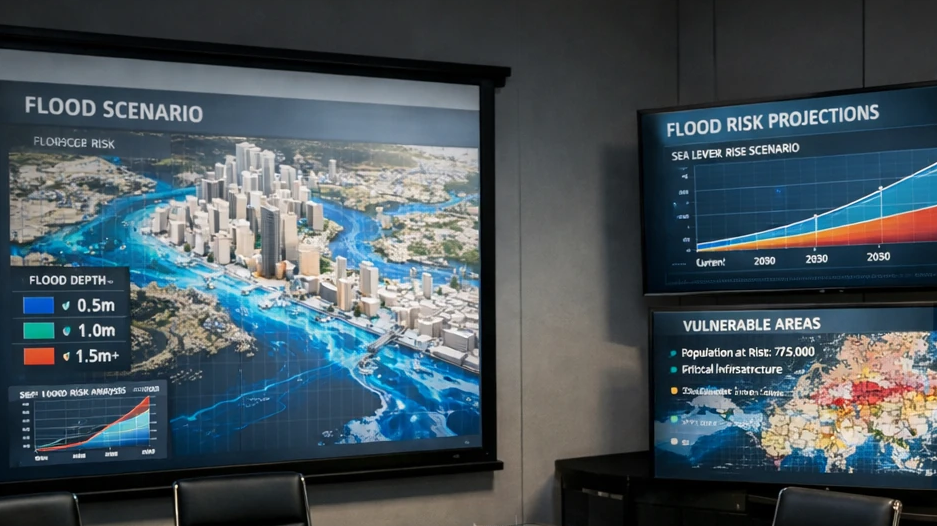
The beating heart of recent developments in water technology is AI and Machine Learning. We have surpassed the “monitoring” phase and SCADA systems, arriving at the stage of “Operational Intelligence.” Modern systems, by creating a “Digital Twin” of the entire water network, provide a space to simulate various crisis scenarios. These systems can adjust network pressure based on real-time demand to reduce pipe wear and minimize water loss to the lowest level. International collaborations, such as the Santa Clara and K-water collaboration: Digital Twin in water management and the role of water tech diplomacy, demonstrate how leading cities are applying these models to achieve maximum resilience.
Data-Driven Governance and Removing Human Error
In traditional management, decisions were often Reactive; meaning action was taken after a pipe burst or water contamination occurred. However, modern water technology adopts a Proactive approach. Advanced algorithms analyze historical and real-time data to identify anomalies invisible to the human eye. This is crucial in treatment plants, where the Automated Water Purification Control System; KICT’s new achievement in South Korea showed how human error can be eliminated to ensure effluent quality and optimize energy consumption.
The Future of AI in Water: Beyond Automation
The future of water technology in AI is heading towards “self-healing” and fully autonomous systems, although we are currently in the semi-autonomous phase. Integrating Large Language Models (LLMs) and Generative AI with hydrological data has opened new horizons. Strategic partnerships like the Collaboration between K‑Water and OpenAI attest to the pursuit by tech giants and water officials to create “specialized water chatbots” and intelligent advisory systems for executives to facilitate decision-making amidst climatic uncertainty.
Revolution in Desalination: Moving Toward the Deep and Smart Membranes
Surpassing Traditional Reverse Osmosis
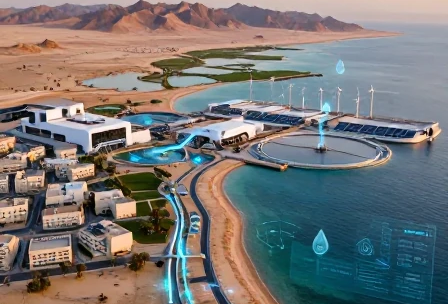
Desalination has long been known as a costly and energy-intensive process, a major challenge for Gulf nations and the broader MENA region, but the new wave of water technology has changed cost and energy equations. Innovations are no longer limited to improving pumps but have targeted the material structure and facility locations. One bold idea is moving the desalination process to the seabed to utilize natural water pressure. Recent reports on Desalination Technology 20,000 Leagues Under the Sea; The Future of Deep-Sea Plants indicate how marine engineering can significantly lower pumping and transport costs and manage the environmental impacts of brine discharge.
Materials Science and Modern Membranes
At the microscopic level, developing fouling-resistant and high-permeability membranes is a top priority for R&D centers. The use of nanomaterials and carbon structures has revolutionized membrane efficiency. Water technology in this sector is moving towards biomimetic membranes and Innovation in Desalination: Sustainable Polyimide Membranes, which increase system lifespan and reduce the need for chemical cleaning. These advancements are vital for nations heavily reliant on desalination.
Integrating Energy and Water in Desalination
Another non-linear aspect of desalination is its convergence with renewable energies and energy recovery. Desalination is no longer just an energy consumer. Emerging technologies like Membrion’s funding in Electro-Ceramic Membranes show how electrochemical processes can be used to treat difficult wastewater and recover valuable materials simultaneously. This approach transforms desalination from an emergency solution into a sustainable and economic industry.
Wastewater Treatment and Recycling: Modern Chemistry and the Circular Economy
Wastewater as a Gold Mine
In the new paradigm of water technology, the term “wastewater” is gradually being replaced by “used water” or “new source.” Future generation treatment plants are factories producing water, energy, and nutrients. Resource recovery technologies have enabled the extraction of valuable materials like phosphorus, nitrogen, and even precious metals from sewage sludge. The analytical article How does wastewater turn into liquid gold? The future of water technology illustrates this shift in thinking and how yesterday’s pollutants have transformed into today’s investments.
Energy-Positive Treatment Plants
The dream of achieving treatment plants that not only consume no energy but sell energy back to the grid has now been realized. Using advanced anaerobic digesters and biogas production technologies, energy efficiency has reached its peak. A review of successful models in the report Energy-Positive Treatment Plants; Analysis of Successful Models in the Netherlands and Denmark shows how water technology can play a key role in reducing carbon footprints and achieving Net-Zero goals.
Combating Emerging and Forever Contaminants
One of the biggest public health challenges is emerging contaminants like PFAS (forever chemicals) and microplastics, which traditional treatment methods fail to remove. Water technology has entered this front using advanced oxidation, plasma, and nano-adsorbent materials. The warning report PFAS: The Silent Threat in Water Resource Management and Technological Solutions highlights the necessity of investing in specialized removal technologies. Without these, the water recycling cycle would be incomplete and dangerous.
Satellite Leak Detection and Invisible Infrastructure
Seeing the Unseen from Space
Water loss in aging networks (Non-Revenue Water) is a major global dilemma, especially in both ancient and modern cities across the MENA region. Traditional acoustic detection methods are slow and costly. However, the entry of space technologies and remote sensing has changed the game. Water technology now uses Synthetic Aperture Radar (SAR) to monitor soil moisture changes and ground movement around pipes. The report on The Revolution of Satellite Leak Detection in Water Resource Management explains how hidden leaks in vast urban areas can be identified with high precision, allowing for control before they turn into sinkholes or massive waste.
Smart Pipes and the Internet of Things (IoT)
Water distribution infrastructure is transforming into neural networks. Water quality sensors, real-time pressure gauges, and smart meters produce a continuous stream of data. This equipment allows managers to ensure water quality at the point of consumption and detect unauthorized tampering. Market analysis on The Global Market for Water Quality Sensors points to explosive growth in demand for these tools. IoT has brought transparency to dark underground networks and realized the concept of the “Smart Water Grid.”
New Materials in Infrastructure
Beyond digital intelligence, material intelligence is part of water technology. Using pipes with self-healing capabilities and corrosion-resistant coatings extends infrastructure life by decades. Furthermore, technologies like Sustainable Carbon Materials; A Revolution in Water Purification and Energy Technology show how chemistry and materials engineering are redefining the physical components of the water industry.
Modern Extraction Technologies: Creating Water from Nothing
Atmospheric Water Generation (AWG)
When surface and groundwater sources dry up, eyes turn to the sky. Not necessarily for rain, but for the moisture present in the air. AWG technologies using porous Metal-Organic Frameworks (MOFs) and solar energy are capable of producing drinking water even in low humidity. The Revolutionary Innovation by MIT in Water Technology: Ultrasonic Device for Rapid Water Extraction from Air is an example of these developments, which could be a lifesaving solution for remote and water-scarce areas in the deserts of the world.
Cloud Seeding: Science or Dream?
Intervening in the weather has long been a controversial topic, but technological advancements in nanocatalyst materials and drones have increased the precision and efficiency of cloud seeding. Countries in the MENA region like the UAE and Saudi Arabia alongside global powers have made massive investments in this field. The report Cloud Seeding in the World; From America and China to the Persian Gulf covers the scientific and practical examination of this technology and its potential to alter precipitation patterns.
Rainwater Harvesting and Sponge Systems
On an urban level, rainwater collection and storage technologies, coinciding with the concept of “Sponge Cities,” are a solution to combat both floods and droughts simultaneously. Using smart permeable pavements and modular underground cisterns is part of the water technology arsenal for urban resilience.
Why Are These Technologies Vital for Water Security in MENA and Globally?
The MENA region sits at the heart of unprecedented water stress. The critical state of groundwater resources, as depicted in reports similar to Groundwater Crises and the Accumulated Deficit of Billions of Cubic Meters, illustrates that traditional management methods are no longer viable globally. We cannot solve the crisis with the same tools that caused it.
For nations in the Middle East and North Africa, water technology is not a luxury option, but the only path to survival.
- Smart Agriculture: Given that the agricultural sector consumes the vast majority of water in the region, using Smart Irrigation and Precision Agriculture: A Lifeline for Water Resource Management can save billions of cubic meters of water.
- Rescuing Water Basins: The phenomenon of drying rivers and water bodies worldwide, and the exacerbation of land subsidence, requires 100% wastewater recycling with advanced technologies and precise satellite leak detection. An analysis of Lessons from Dam and River Drought Crises shows the depth of the disaster that can only be controlled by immediate technological interventions.
- Demand Management: Installing smart meters and creating a transparent, data-driven water market is a prerequisite for any economic reform in the water sector in MENA countries.
Conclusion and Future Outlook
We are on the verge of an era where water technology breaks physical and digital boundaries. Semi-autonomous systems will raise efficiency to levels previously unimaginable. From deep-ocean desalination to extracting water from air moisture and treating wastewater with positive energy, all this points to one fact: Water is no longer just a natural resource, but a technological product.
For officials and decision-makers in the MENA region and the world, the message is clear: Not investing in modern water technologies means accepting existential risks to national and social security. The future belongs to those who manage water droplets with “bits” of data.
Frequently Asked Questions
1. What exactly does Water Technology include?
Water technology covers a wide spectrum of innovations; ranging from advanced treatment and desalination systems, wastewater recycling, and atmospheric water generation, to smart management software based on AI, IoT, and satellite leak detection.
2. How does AI help in managing the water crisis?
AI, by analyzing Big Data, predicts consumption patterns, identifies leaks, and optimizes treatment plant processes to reduce energy and chemical consumption. Digital twins also allow for crisis simulation.
3. Are new desalination technologies harmful to the environment?
Modern desalination technologies like Reverse Osmosis with energy recovery and controlled brine discharge have significantly reduced environmental impacts. Furthermore, the use of renewable energy has minimized the carbon footprint of this process.
4. How much does it cost to implement smart water systems?
Although the initial cost of installing smart infrastructure (like meters and sensors) is high, the Return on Investment (ROI) through reducing Non-Revenue Water (NRW), lowering energy consumption, and improving workforce efficiency occurs very quickly and is highly economic in the long run.
5. What is the most important water technology for solving the crisis in the MENA region?
For the MENA region, a technological mix is vital: “Sustainable Desalination” for drinking supplies, “Smart Irrigation” for the agricultural sector, and “Advanced Wastewater Recycling” for industry and green spaces are top priorities.
Meta Title:
The Future of Water Technology: From AI and Semi-Autonomous Systems to Modern Desalination
Meta Description:
A comprehensive analysis of global water technology trends; reviewing the role of AI, desalination, wastewater recycling, and non-linear innovations in water security and their applications in the MENA region.
 Official Email of the Water Insight Hub: